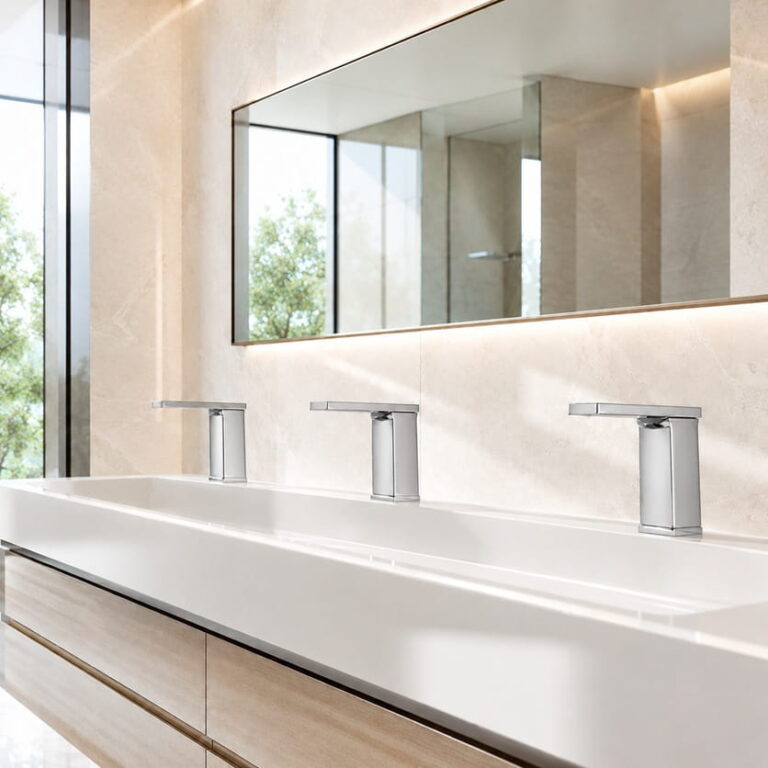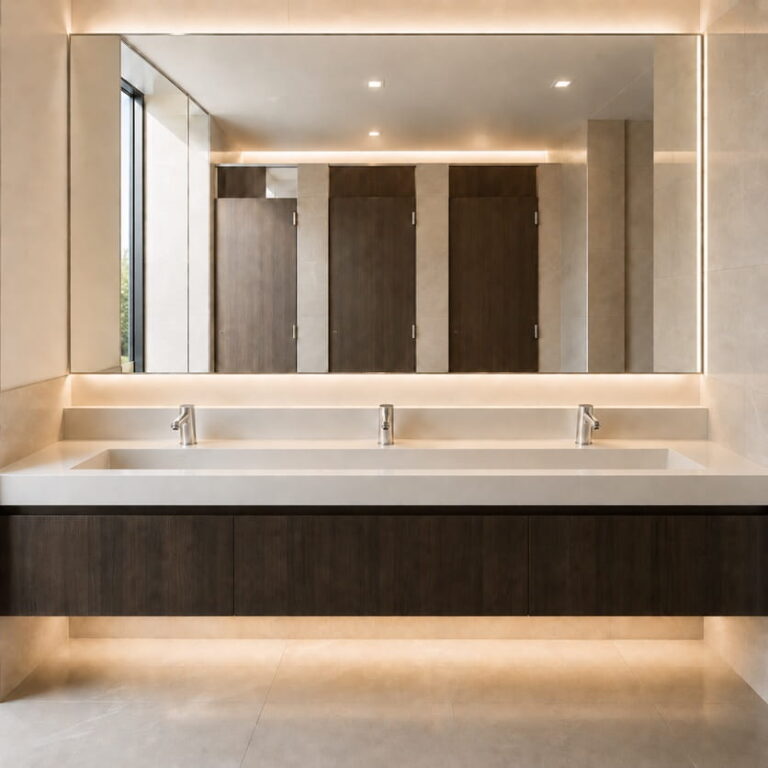
In busy facilities, the outlet device at the end of the spout has outsized impact on splash, counter wetting, noise, perceived rinse quality, and maintenance. This guide explains how outlet types behave and what to verify in submittals and commissioning.
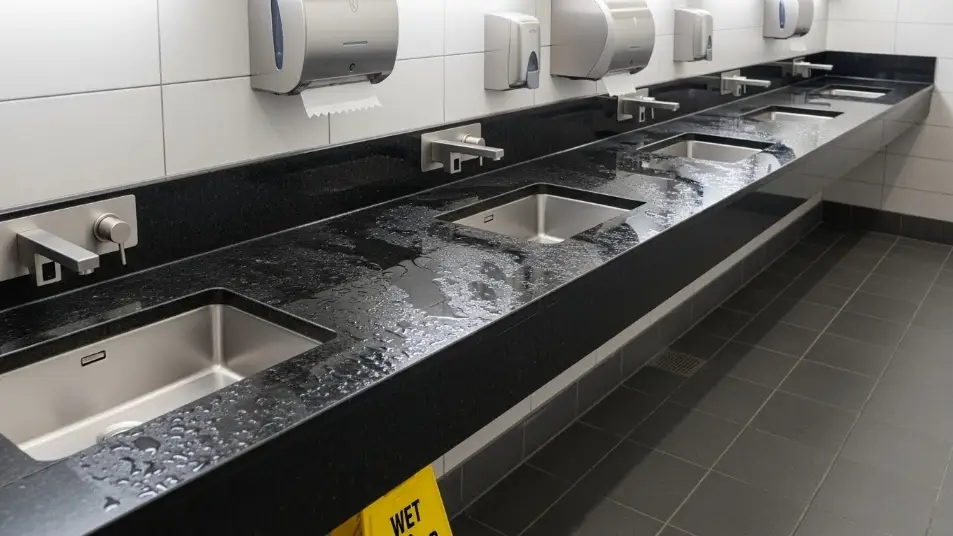
What the outlet is actually doing
Most commercial lavatory faucets don’t rely on a raw stream from the spout. They use an outlet insert (often called an aerator, laminar device, or stream straightener) to shape water in one of three broad patterns.
Aerated stream
An aerated outlet pulls air into the stream through a screen structure and mixing chamber. The intent is to maintain a “full” feeling stream at lower flow, reduce splashing in many basin shapes, and improve user comfort.
Laminar stream
A laminar device straightens flow into parallel layers with no intentional air induction. The stream is typically clear, glass-like, and often preferred where reduced spray and aerosols are a concern.
Spray or multi-stream patterns for very low flows
At very low flows, some outlet designs intentionally create multiple small streams or a mini shower pattern to improve hand coverage when a conventional aerated or laminar stream collapses.
Why laminar vs aerated matters more in high-traffic restrooms
- More users means more behavioral variety. People rinse quickly, move hands erratically, and trigger sensors repeatedly.
- More cleaning cycles. Nightly wipe-downs and chemicals change outlet performance over time.
- More maintenance constraints. If outlets clog or performance drifts, the facility needs a fast, repeatable fix.
Outlet selection should be based on basin geometry, flow rate, sensor runtime, and water quality, not “what we always use.”
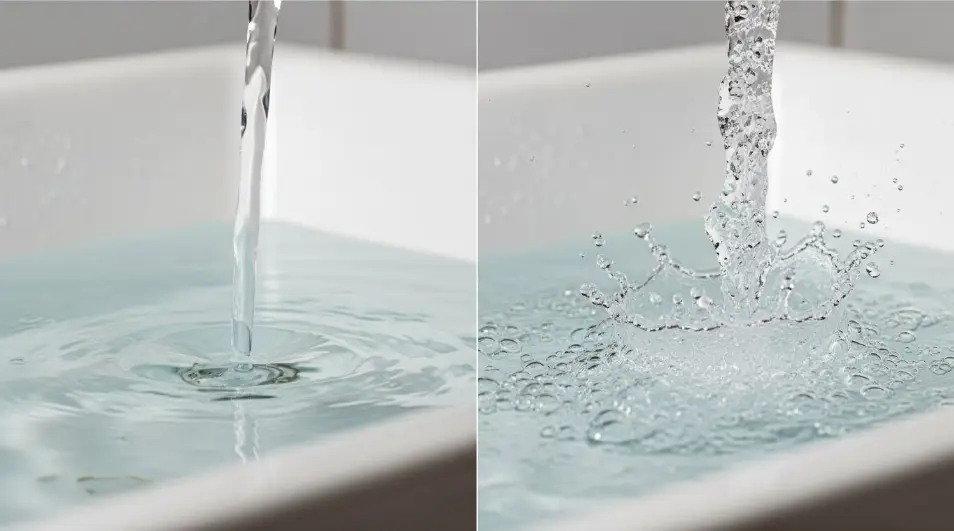
Performance comparison in real restrooms
Table 1: Outlet performance tradeoffs in high-traffic use
| Performance factor | Aerated outlet | Laminar outlet | What to watch in busy facilities |
|---|---|---|---|
| Splash control | Often good in typical basins, but can mist and scatter in shallow bowls | Usually reduces misting and can lower spray | Counter wetting is often a geometry problem first, outlet second |
| User perception | Feels soft and full, even at lower gpm | Feels clean and direct but can feel narrower | Perception matters for complaints and re-triggers |
| Aerosol and fine droplets | Can create smaller droplets depending on design and conditions | Typically minimizes fine droplets because it does not intentionally mix air | More relevant in healthcare and sensitive settings with pathogen risk management |
| Noise | Often quiet, but can hiss if partially clogged | Usually quiet and smooth | Noise spikes can indicate clogging or pressure issues |
| Efficiency at low gpm | Often maintains a full feel, but screens clog | Can become pencil-thin at very low gpm unless designed for it | At very low flows, consider multi-stream or purpose-built inserts |
| Maintenance | Screens trap debris and scale; clogging is common post-construction | Some laminar devices also clog, but internal geometry differs | Plan routine cleaning and replacement as an O&M item |
Aerosols and infection-control concerns
In most commercial buildings, the driver is water efficiency and splash control. In some facilities, the conversation shifts toward aerosol generation and waterborne pathogens.
- Faucets can generate aerosols, and guidance notes aerosols from faucets and showers may potentially contain waterborne bacteria.
- Aerator design can influence aerosol particle size behavior under certain conditions. This does not mean aerators are unsafe everywhere.
Water efficiency is not only gpm
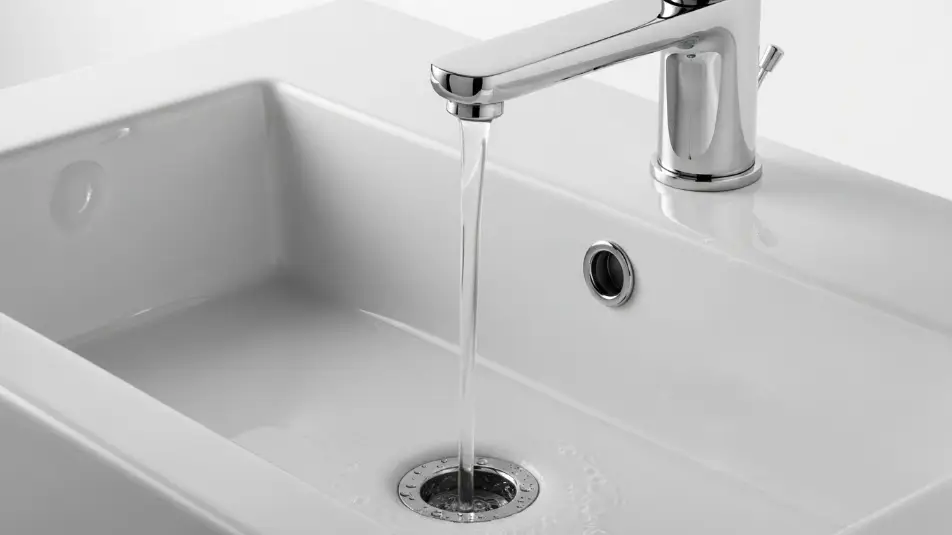
Many projects treat 1.5 gpm as the whole story. In the field, actual water use depends on sensor tuning, run logic and safety timeout, and user behavior. If false triggers occur all day, water use can rise even with low gpm.
If you specify very low flow rates (for example 0.35 to 0.5 gpm), conventional aerated or laminar streams may not behave as expected. At very low flows, some outlets shift toward spray patterns or unstable breakup. Plan for outlet selection and testing at the actual flow.
Basin geometry + outlet type pairing
Most splashing complaints come from mismatched geometry. The outlet can help, but it cannot fix a fundamentally bad pairing.
Table 2: Quick pairing guidance for high-traffic lavatories
| Basin condition | Most common outcome | Outlet strategy that usually helps | Design fix if you can still change it |
|---|---|---|---|
| Shallow bowl, high outlet height | High splash and wet deck | Laminar or controlled stream device, avoid misting aerators | Increase basin depth or reduce outlet height and adjust spout reach |
| Large wide basin, normal depth | Users move hands a lot | Aerated can feel better at low gpm | Ensure water hits near drain centerline |
| Vessel-style or decorative basins | High variability in landing point | Laminar often gives predictable landing | Reconsider basin for heavy public use |
| Tight clearance, short reach | Users wash near front lip | Aerated can soften splash if landing is too close | Use correct spout reach and align to drain |
| Highly reflective stainless basin | False triggers and unpredictable splash | Laminar may reduce mist; tune sensor range tightly | Use matte basin finish or adjust lighting angles |
Maintenance reality: outlets are consumable parts
In high-traffic applications, outlets should be treated like filters. They will clog and drift. Your documents should anticipate routine cleaning and replacement.
Common maintenance issues
- Scale buildup reducing flow and changing stream shape
- Debris clogging screens after renovations
- Vandalism: outlet removed or damaged
- Chemical exposure degrading plastics and seals
Spec and O&M recommendations
- Require tamper-resistant outlets where vandal risk is high
- Keep spare outlet inserts per restroom bank
- Document outlet model and thread size (M22, M24, etc.) for reordering
- Include a routine cleaning interval tied to water hardness
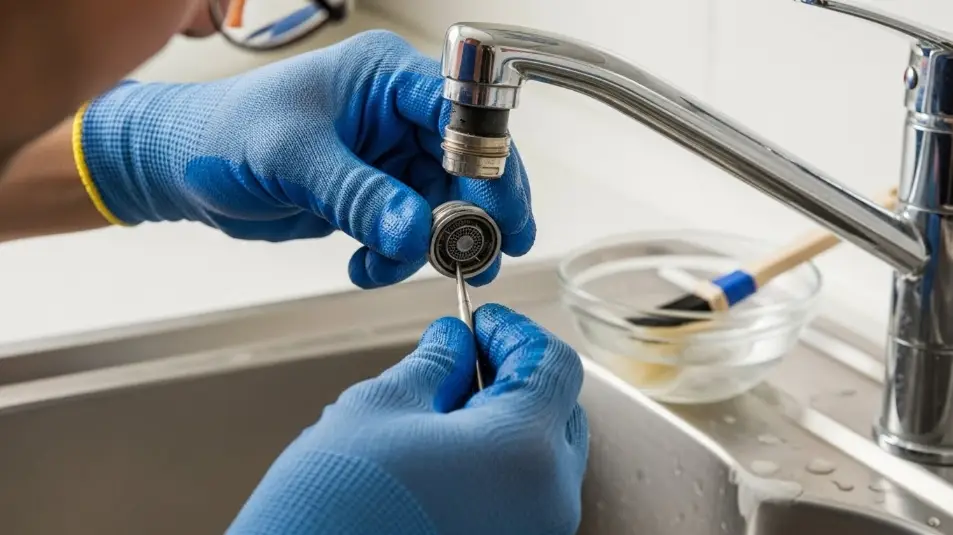
Commissioning test plan for outlet selection and flow performance
Do not accept outlet performance based on a catalog description alone. Commissioning can be fast if you standardize test steps.
For defensible specifications, verify outlet type, measured flow, basin geometry, and splash performance under actual operating conditions before approval.
Simple field steps
- Verify actual flow rate at the outlet. Confirm gpm matches submittals. Note pressure affects measured flow.
- Check stream stability at typical positions. Hands low, normal, and high. Watch for breakup or misting.
- Observe splash and counter wetting. Run for typical sensor runtime and watch for water escaping the bowl.
- Test with soap in real use. Soap changes hand position and water sheeting.
- Confirm sensor behavior does not drive re-triggers. Weak streams and awkward landing points increase cycling.
Field documentation to capture
- Outlet type and part identifier
- Measured gpm
- Notes on splash behavior and recommended adjustments
- Photos of the stream pattern
Practical recommendations by facility type
Airports and transit hubs
- Prefer outlets that maintain a stable stream at the chosen gpm and do not create mist.
- If basins are shallow, lean toward laminar or controlled stream devices and tune sensors tightly.
- Use tamper-resistant outlets.
Stadiums and event venues
- Prioritize durability and anti-tamper hardware.
- Avoid outlets that clog easily in high-debris environments.
- Keep spare outlet inserts onsite.
Education
- Choose the outlet type that best matches the standard basin geometry.
- Document outlet model and thread size for quick reorder.
Healthcare and sensitive settings
- Many teams prefer laminar or hygiene-oriented devices aligned with infection-control policy.
- Pair with rigorous outlet maintenance and replacement schedules.
Source links and reference documents
Category pages requested
FontanaShowers touchless sensor faucets category
OpenFontanaShowers touchless faucets category
OpenFontanaCommercial commercial sensor faucets category
OpenJunoShowers commercial bathrooms touchless sensor faucets category
OpenTechnical references
CDC environmental control (air): notes aerosols from showers and faucets may contain waterborne bacteria
OpenResearch paper on faucet aerator design and aerosol size distribution (ScienceDirect)
OpenEPA WaterSense labeled homes technical sheet: bathroom sink faucets (PDF)
OpenEPA WaterSense background statement referencing faucet accessories (PDF)
OpenWaterSense faucet accessory FAQ snapshot page
OpenNEOPERL hygiene faucet aerators (laminar devices positioned to reduce spray)
OpenOutlet pattern overview including laminar and multi-stream behavior (NRG Ideas)
OpenTouchless Faucet Reviews: Six More Commercial Sensor Faucets Evaluated Through Field Experience
This professional review set examines six additional automatic touchless faucets through field observations involving healthcare, municipal, transportation, airport, executive-office and upscale commercial restroom environments.
Commercial Touchless Faucet Review Comparison
This matrix identifies the professional context and primary field-performance signal contained in each selected review.
| Product | Reviewer | Professional Context | Environment | Primary Evidence | Rating | Strength |
|---|---|---|---|---|---|---|
| Dijon BS10102 | Ryan Foster | Site Engineer | Healthcare + municipal | False-trigger and shutoff control | ★★★★★ | Strong |
| Rio BS-SF12BD | Derek Holloway | Systems Director | Transportation + healthcare | Calibration and maintenance | ★★★★★ | Very Strong |
| BS-BGHCB | Savannah Parker | Structural Engineer | Luxury commercial restrooms | Sensor stability + finish performance | ★★★★☆ | Very Strong |
| BS-BGHCS | Olivia Bennett | Washroom Consultant | Executive offices | Sensor timing + finish resilience | ★★★★☆ | Strong |
| B-D651C001 | Fielder | Airport Project Review | International airport | High-traffic operation | ★★★★★ | Very Strong |
| BS-STI28763 | Caleb Ross | Modern Design Consultant | Upscale commercial | Waterfall flow + IR stability | ★★★★☆ | Very Strong |
Six Additional Touchless Faucets Reviewed in Commercial Applications
Each review was selected because it contains technical, maintenance, installation or project-use evidence relevant to professional fixture selection.
 VIEW PRODUCT
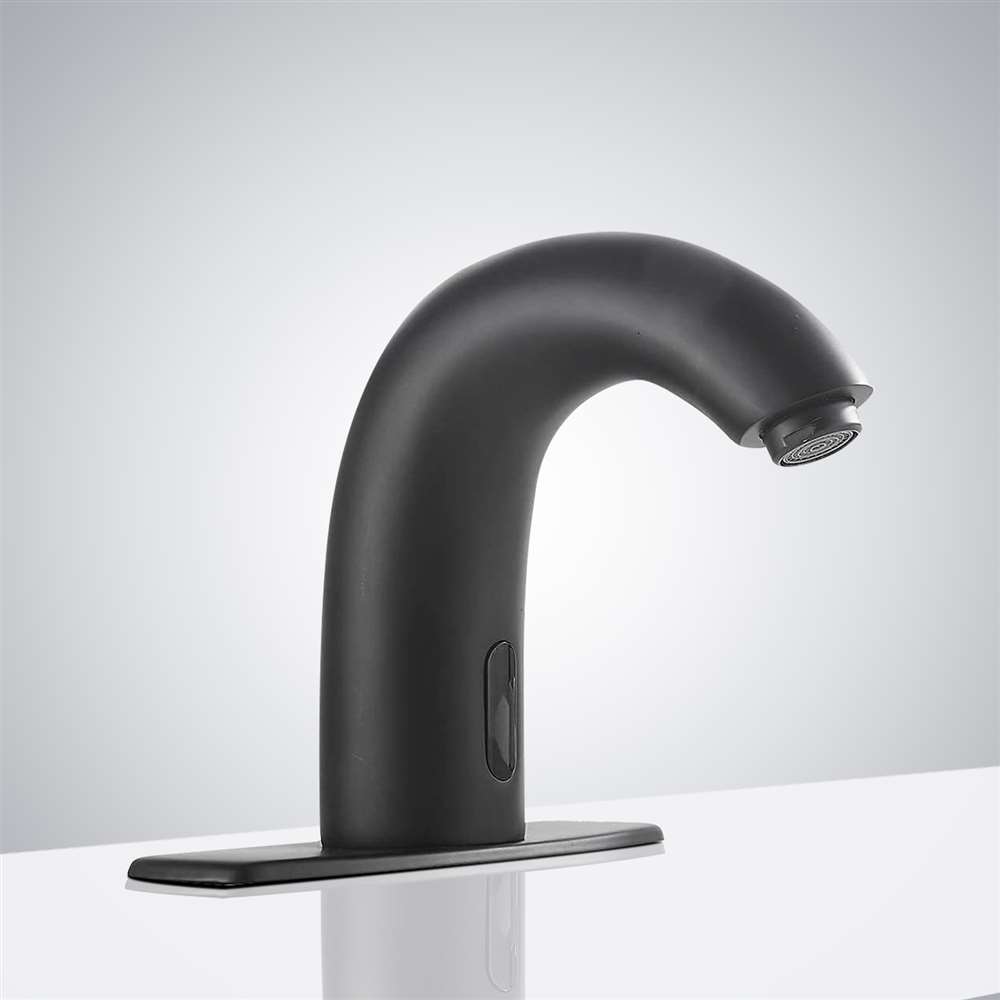
Dijon Commercial Automatic Matte Black Sensor Faucet
Following healthcare and municipal restroom retrofit work, the reviewer reported stronger sensor consistency than earlier matte-black automatic fixtures, with improved shutoff behavior and fewer false-triggering concerns during continuous public use.
 VIEW PRODUCT
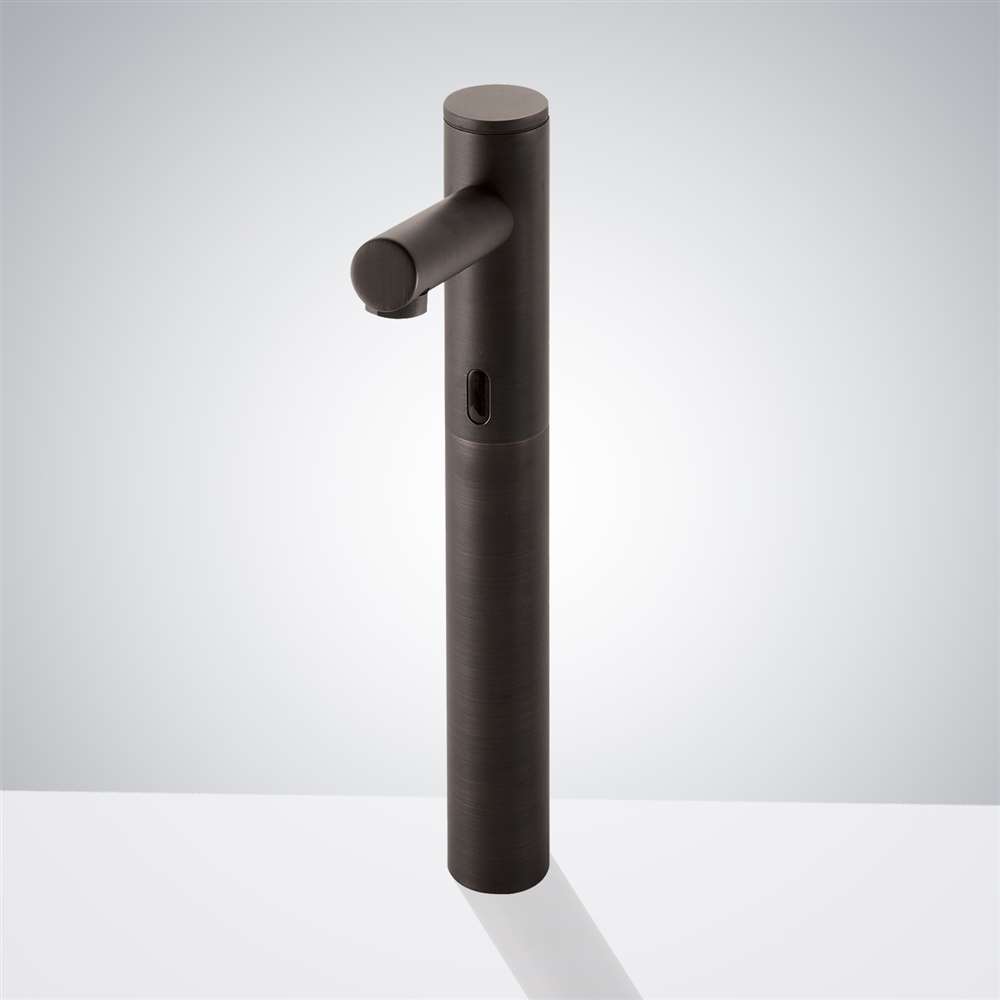
Rio Oil-Rubbed Bronze Commercial Automatic Sensor Faucet
Across transportation and healthcare facilities, the reviewer reported dependable sensor activation, stable water-flow regulation and limited recalibration compared with older touchless systems previously maintained in similar environments.
 VIEW PRODUCT
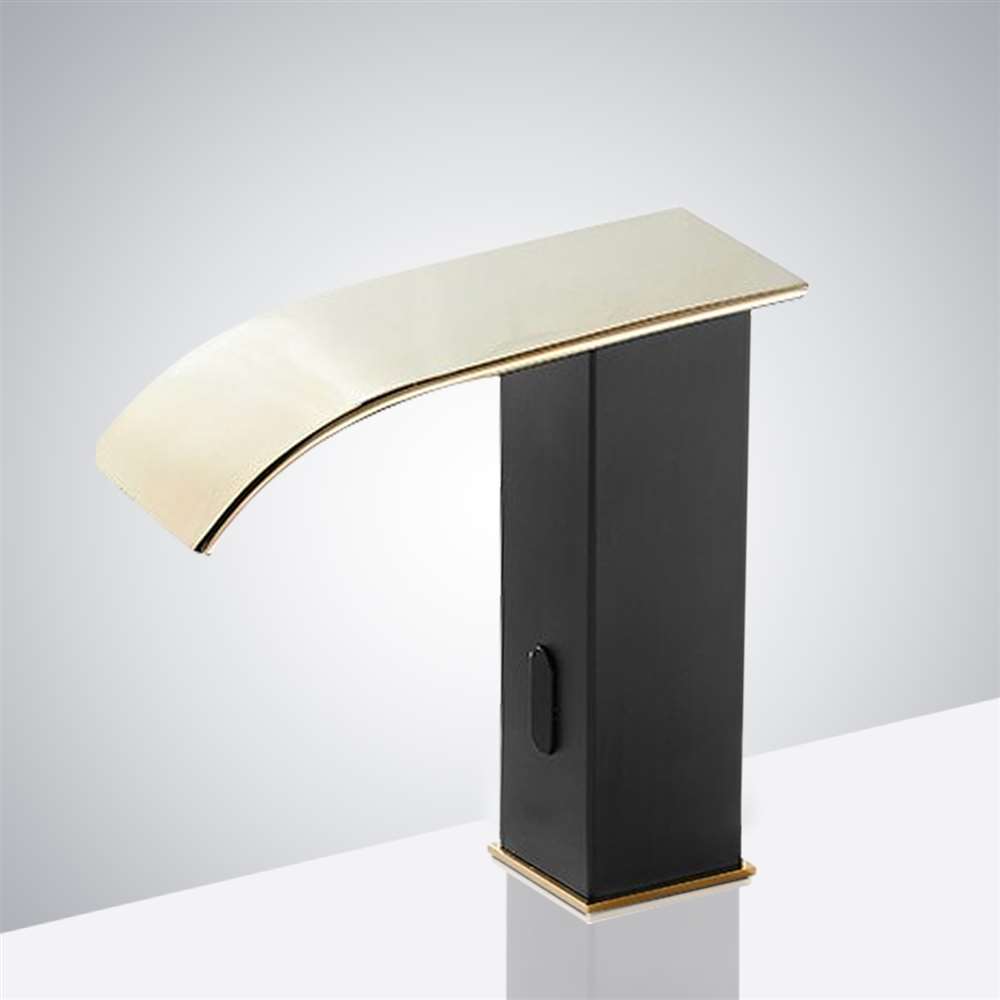
Black & Gold Tall Waterfall Automatic Smart Sensor Faucet
The reviewer compared this faucet with earlier black-and-gold sensor fixtures used in luxury restroom projects and reported stronger activation stability, improved finish performance and fewer recalibration concerns after commissioning.
 VIEW PRODUCT
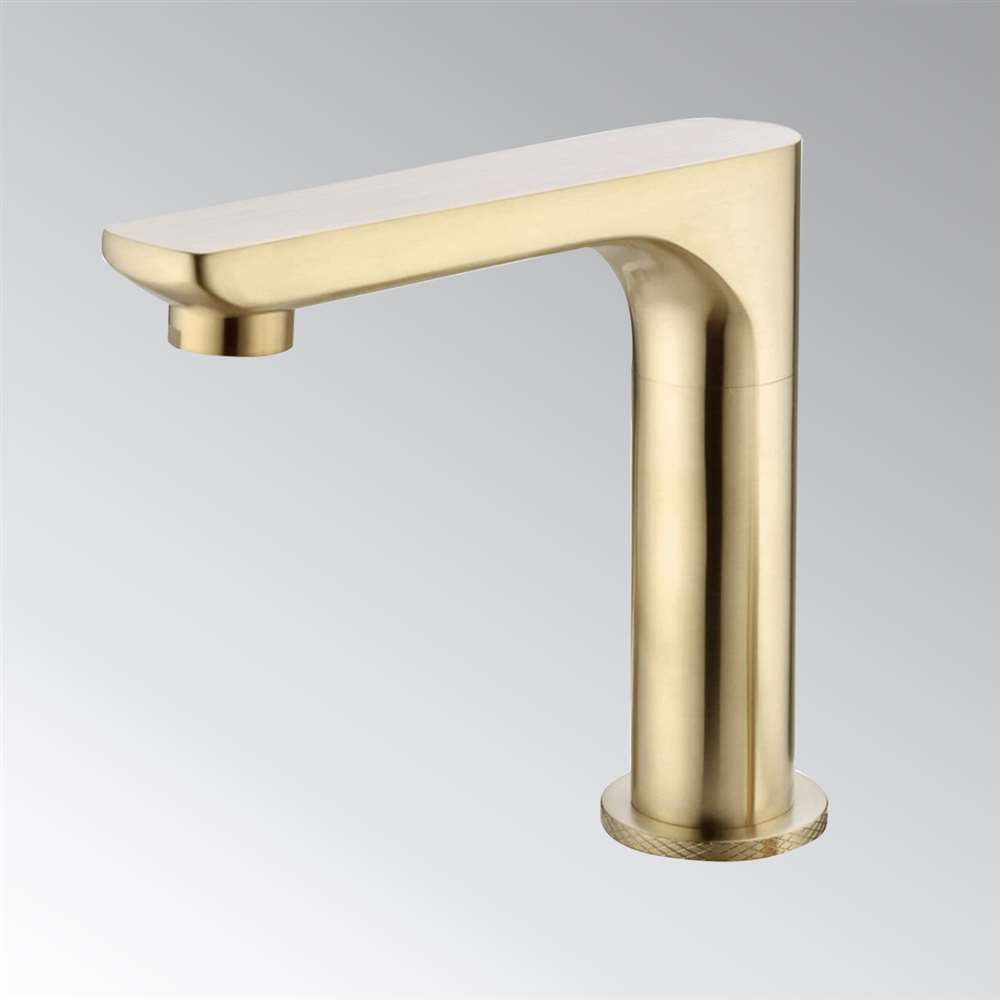
Black & Gold Waterfall Automatic Smart Sensor Faucet
The review followed executive-office restroom upgrades where older decorative sensor faucets had experienced unstable timing and visible finish wear. The replacement was evaluated for sensing behavior, finish resilience and operational refinement.
 VIEW PRODUCT
BathSelect Commercial Automatic Motion Sensor Faucet
Specified for an international airport project, the faucet was reviewed for dependable touchless operation, high-traffic durability, water-use control and straightforward plumbing integration. Contractor feedback also supported sensor reliability.
 VIEW PRODUCT
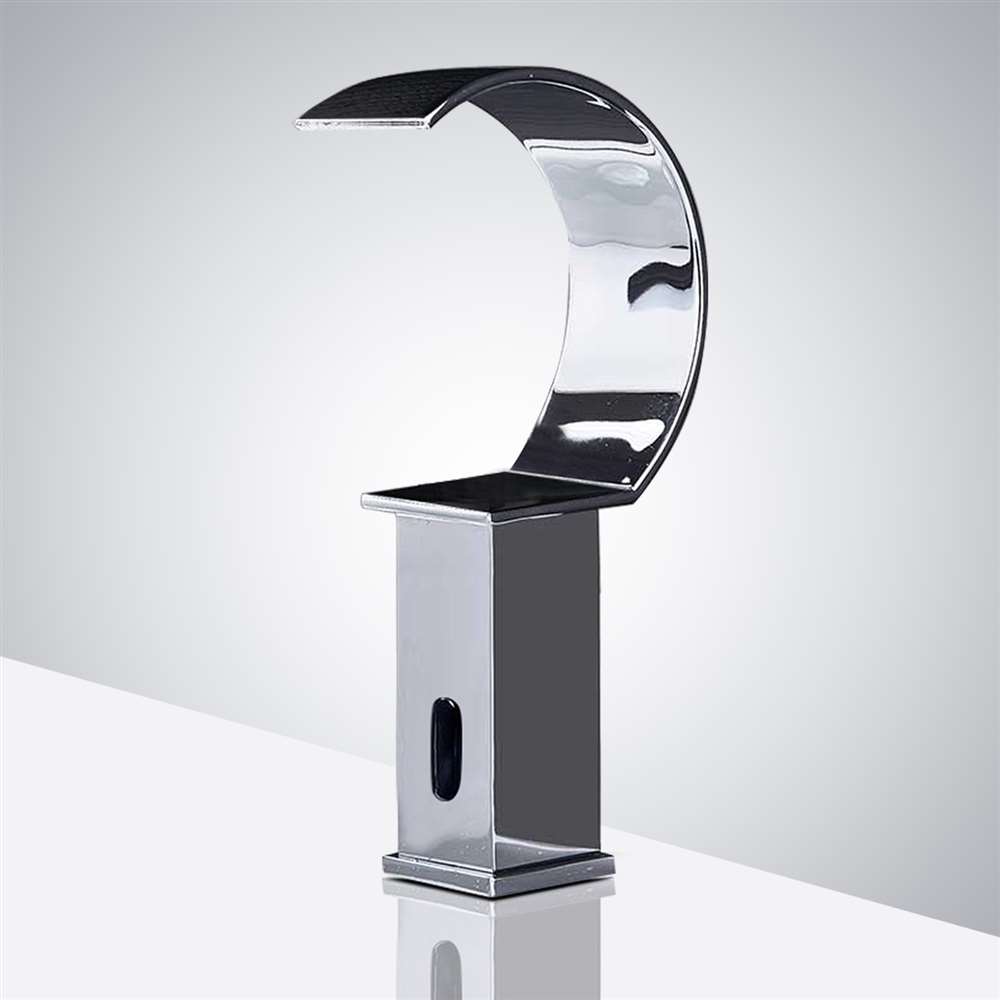
Contemporary Infrared Waterfall Commercial Automatic Faucet
Across upscale commercial restroom installations, the reviewer reported a controlled waterfall stream, dependable infrared response and limited recalibration compared with earlier decorative waterfall sensor faucets.
What These Six Reviews Suggest for Touchless Faucet Specification
Commission With the Finished Basin
Sensor behavior should be checked after countertops, basins, backsplashes, mirrors and final lighting are installed.
Evaluate Shutoff Timing
Reliable activation is only part of performance. Predictable automatic shutoff is important for water control and user experience.
Review Reflective Surfaces
Mirrors, polished counters and decorative materials can influence sensor behavior and should be represented during commissioning.
Plan Service Access
Power modules, solenoids, filters, connections and controls should remain accessible after counters and casework are complete.
Coordinate Basin Geometry
Spout reach, outlet angle and waterfall discharge should direct water toward an appropriate basin zone to help control splash.
Account for Commercial Cleaning
Decorative finishes in airports, offices and hospitality environments face considerably more cleaning exposure than typical residential fixtures.

Damon Kells is a staff writer and editorial team member at commercial-sensor-faucet.com. His coverage addresses commercial sensor faucets, control systems, power configurations, and facility applications, supported by manufacturer documentation, product specifications, published standards, and attributable industry sources for informed specification and operational decisions.