


Make Better Decisions
Use Commercial-Sensor-Faucet to answer the practical questions behind a reliable sensor-faucet specification. Compare sensor behaviour, power strategy, basin coordination, water efficiency, accessibility, maintenance access, commissioning, durability, and long-term operation in one place.
Whether you are designing, engineering, specifying, installing, or maintaining the restroom, use the research to turn fixture choices into coordinated decisions you can review and carry through the project.
Check Before You Specify
Use these four checks to catch common coordination issues before selection, submittal, installation, and commissioning.
Check Faucet Fit
Confirm mounting style, spout reach, basin depth, sensor position, splash behaviour, and where users naturally place their hands.
Check fixture fit →Choose Power Access
Compare battery, hardwired, and hybrid options based on service access, maintenance intervals, and your project electrical plan.
Compare power options →Set Water Performance
Check flow rate, aeration, supply pressure, mixing, shutoff timing, short cycling, and the water targets your project needs to meet.
Review water factors →Plan for Service
Make sure batteries, solenoids, filters, mixing components, and under-deck connections can be reached without unnecessary disruption.
See service examples →
Compare Real Conditions
Use this matrix to compare the faucet in context—not by appearance alone. Check how it will work with your basin, water conditions, user demand, power access, cleaning routine, maintenance plan, and operating expectations.
Match the Facility
Start with where the faucet will operate. Occupancy, operating hours, cleaning frequency, user needs, design expectations, and maintenance staffing should shape your criteria.

Keep Busy Restrooms Running
Prioritize uptime, tamper resistance, cleaning access, replacement parts, and predictable sensing during peak use.
Design for Hygiene
Check accessible reach, touchless response, cleanability, controlled water delivery, and serviceability for hygiene-sensitive settings.

Refine Guest-Facing Spaces
Balance finish continuity, quiet operation, splash control, intuitive use, and discreet maintenance access.
Commercial Sensor Faucet Planning Considerations
A reliable commercial sensor faucet specification depends on how sensing, basin geometry, power, water delivery, commissioning, and maintenance work together throughout the fixture lifecycle.
Evaluate the Complete Sink Zone
Sensor performance should be evaluated together with spout reach, basin depth, reflective surfaces, user hand position, and nearby fixtures. A faucet that performs reliably in one sink configuration may behave differently when basin geometry or surrounding surfaces change. Review these conditions before approval so sensing and water delivery can be evaluated as one coordinated system.
Plan for Long-Term Maintenance
Battery, hardwired, and hybrid power strategies create different requirements for installation and future service. Project teams should consider replacement access, wiring routes, controller locations, and the ability to reach serviceable components without removing surrounding fixtures. Documenting these conditions during design can reduce unnecessary troubleshooting and maintenance disruption after occupancy.
Verify Performance Before Turnover
Commissioning should confirm activation behavior, shutoff timing, flow, spray pattern, leaks, supply conditions, and power operation under the actual installed conditions. Record sensor settings and any adjustments made during startup so facility personnel have an as-left reference. Consistent commissioning records also make later troubleshooting easier when operating conditions or fixture behavior changes.
Coordinate Flow With the Basin
Flow rate alone does not determine successful handwashing performance. Aerator characteristics, supply pressure, spout projection, basin shape, and run time can influence splash and user experience. Review water performance as part of the complete sink assembly rather than evaluating the faucet independently from its installation conditions.
Check Real User Interaction
Accessible planning should consider clear approach, reach, fixture location, basin relationship, and intuitive sensor activation. Project teams should verify applicable accessibility requirements together with the actual sink and counter configuration. This helps identify coordination issues before installation rather than relying only on individual product dimensions.
Keep Technical Information Available
Maintain product data, installation instructions, wiring information, commissioning records, replacement-part references, and maintenance procedures with the facility documentation. A clear record gives operations teams a faster starting point when diagnosing sensor, power, flow, or service issues and supports more consistent maintenance across multiple restrooms.
Follow the Project
Move through the research in the same order you are likely to make, review, and maintain fixture decisions.
Define What Matters
Set your occupancy, basin type, finish direction, water goals, accessibility needs, power strategy, service expectations, and project standards.
Coordinate the System
Check the faucet against sinks, dispensers, counter spacing, plumbing, power, controls, clearances, and cleaning zones.
Verify Before Approval
Confirm dimensions, flow, sensor behaviour, installation conditions, finish, power source, maintenance access, and compatibility before approval.
Plan Long-Term Service
Keep commissioning, sensor setup, cleaning, power service, filter access, spare parts, troubleshooting, and replacement strategy documented for the facility team.
Know What to Check
Use these six topics to focus your comparison on the conditions most likely to affect performance in new construction and retrofit work.
Get Reliable Detection
Check activation range, response timing, reflective surfaces, lighting, hand position, and unintended triggers before installation.
Control Water Use
Compare aerators, pressure, run time, short cycling, mixing behaviour, and expected restroom use to set realistic water performance.
Design for Everyone
Verify reach, spout projection, basin depth, clear approach, sensor visibility, and intuitive handwashing for a wider range of users.
Choose Serviceable Power
Choose battery, hardwired, or hybrid power based on replacement intervals, wiring access, and the way your team will service the fixture.
Commission With Confidence
Before handoff, verify sensing, shutoff timing, flow, leaks, supply conditions, alignment, and expected operating behaviour.
Simplify Future Maintenance
Make future service easier by planning filter cleaning, solenoid access, batteries, mixers, sensors, vandal repair, spare parts, and troubleshooting steps.
Explore Forms and Finishes
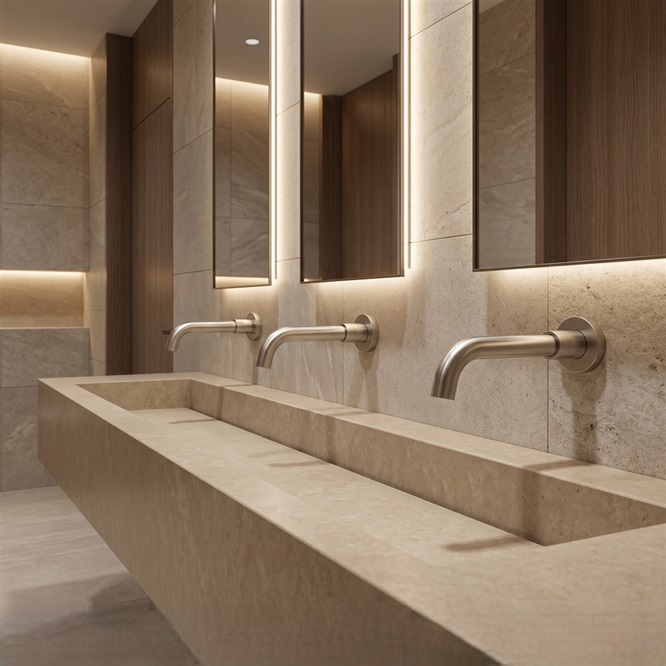
Use the image set to quickly compare fixture form, mounting language, finish direction, and possible restroom applications before you narrow the specification.
Research You Can Use
Come here when you need a practical reference for reliability, hygiene, sustainability, technical coordination, and lifecycle performance. Use the material to support design, engineering, specification, installation, ownership, and facility decisions.