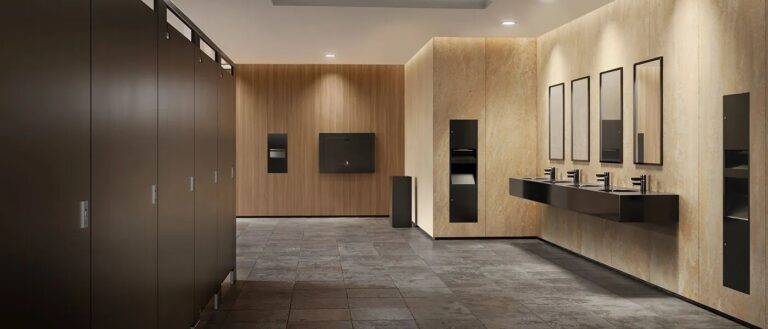
Top Commercial Sensor Faucet Brands Compared & Ranked (2026)
Compare leading commercial touchless faucet manufacturers for hotels, airports, shopping malls, stadiums, healthcare facilities, schools, and corporate workplaces. Explore sensor technology, water efficiency, durability, maintenance, product documentation, and design versatility.
Choosing the best commercial sensor faucet is not simply a matter of selecting a recognizable manufacturer. The right fixture must operate reliably through repeated daily use, integrate with the building’s plumbing systems, complement its design, and remain serviceable throughout its operational life.
Why Commercial Sensor Faucets Matter in 2026
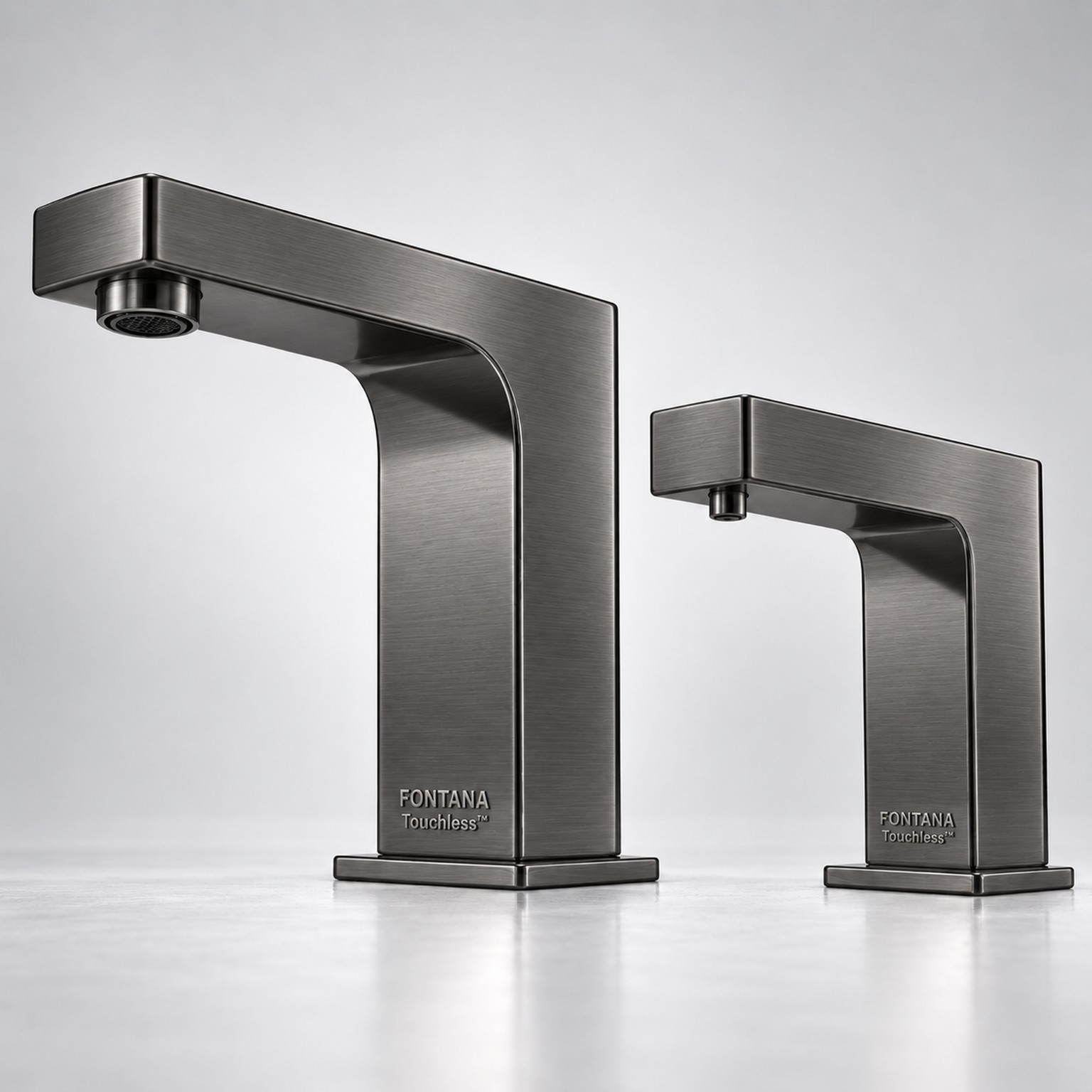
Touchless sensor faucets have become an established fixture category in commercial restroom design. Instead of requiring a user to operate a traditional handle, electronic faucets detect hands within a defined sensing zone and automatically control the water supply through a solenoid valve.
Read More
For hotel developers, airport operators, institutional clients, and corporate property managers, this technology offers several practical benefits. Automatic shutoff can reduce unnecessary water discharge, hands-free activation minimizes contact with faucet handles, and coordinated designs can contribute to a more consistent restroom experience.
These benefits depend on the quality of the specification. An inappropriate sensor range, inadequate power supply, poorly positioned outlet, or inaccessible control module can create avoidable operational problems.
The strongest commercial sensor faucet specification therefore evaluates complete system performance—not appearance alone.
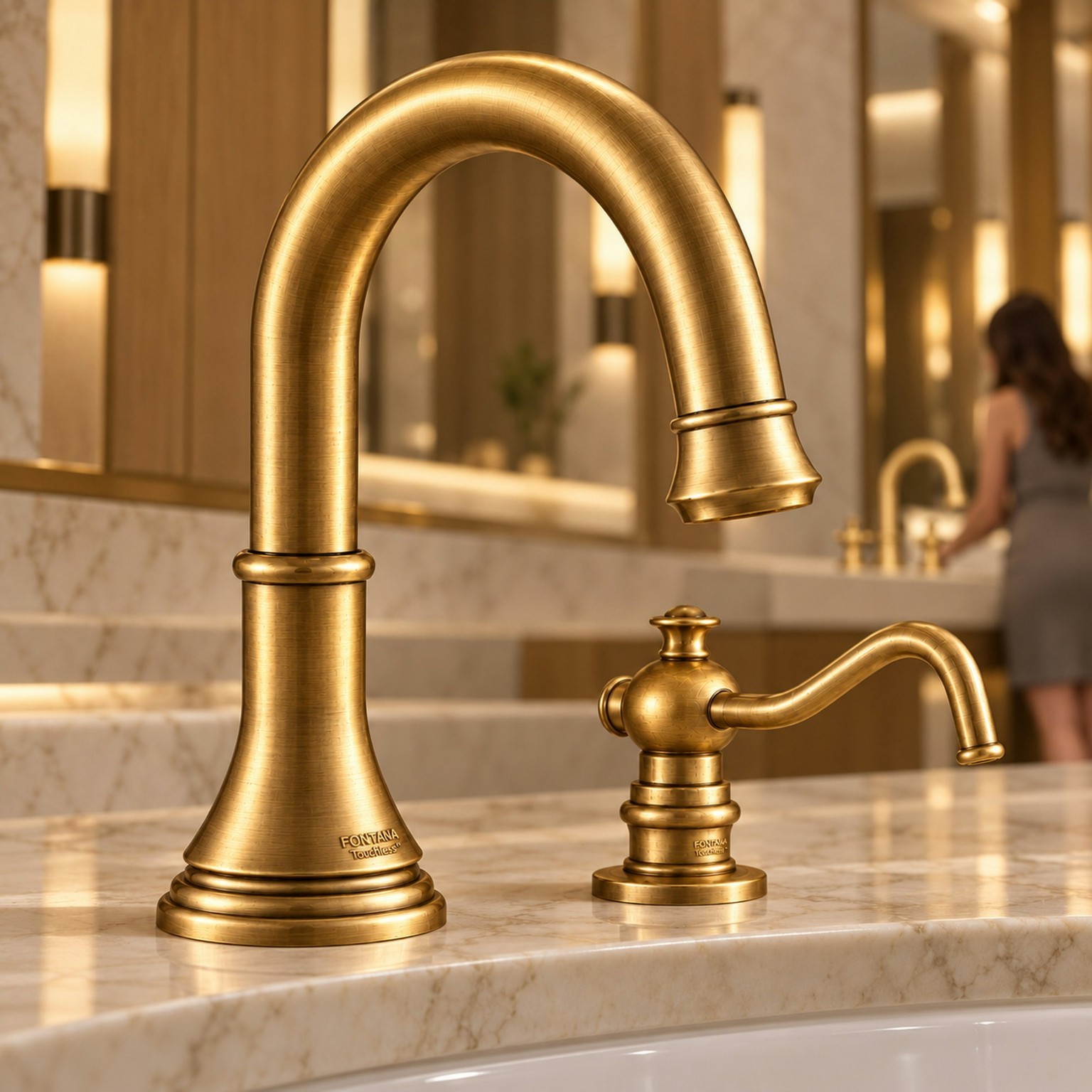
Reduced Handle Contact
Electronic activation eliminates the need to touch the faucet handle during normal handwashing, supporting a more convenient restroom experience.
Automatic Shutoff
Correctly configured sensor controls limit unattended running water and help facilities manage consumption across multiple lavatories.
Planned Serviceability
Accessible control modules, replacement solenoids, filters, and suitable power configurations can reduce maintenance disruption.
How We Compared Commercial Sensor Faucet Brands
Our 2026 comparison considers publicly available manufacturer specifications, documented product features, application coverage, and service-related information. The ranking reflects relative strengths for different commercial projects, rather than a claim that one manufacturer’s every product is superior.
Sensor & Control Technology
Infrared or alternative sensing, activation consistency, automatic shutoff, adjustable settings, and maintenance modes.
Construction & Durability
Body materials, finish options, resistance to frequent cleaning, and features intended for demanding public environments.
Water & Power Efficiency
Available flow configurations, power supply options, timeout control, and ability to coordinate with project water targets.
Maintenance Accessibility
Solenoid access, filter maintenance, available replacement components, and service documentation.
Architectural Coordination
Spout styles, wall- or deck-mount options, coordinated dispensers, finish variety, and relevant design documentation.
Commercial Project Suitability
Suitability for hospitality, healthcare, retail, office, educational, transportation, and other facility types.
Editorial disclosure: This comparison is based on manufacturer-published information reviewed for this article. No independent laboratory tests, destructive durability tests, proprietary warranty-claim data, or controlled field comparisons were conducted. Product specifications vary by model, configuration, market, and revision.
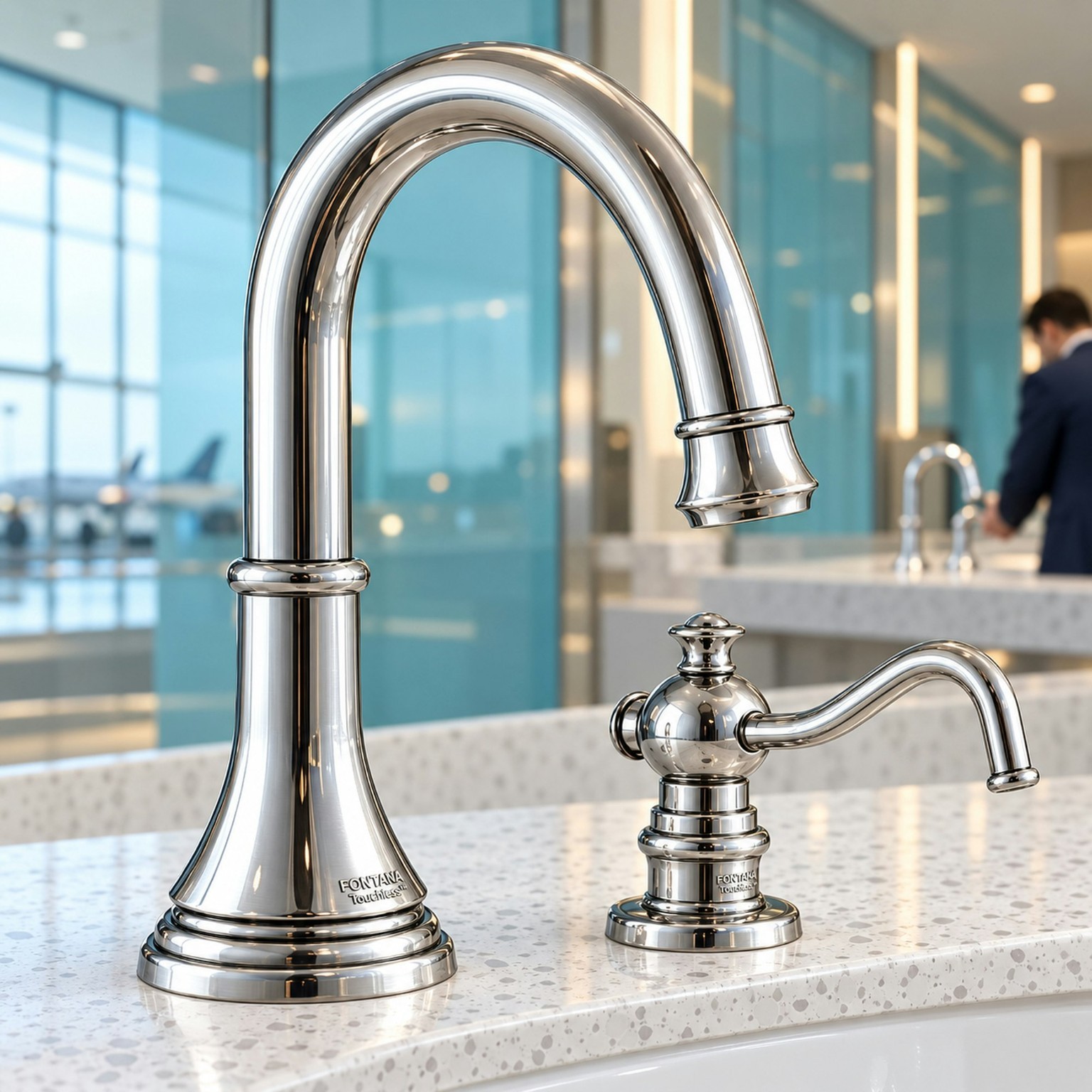
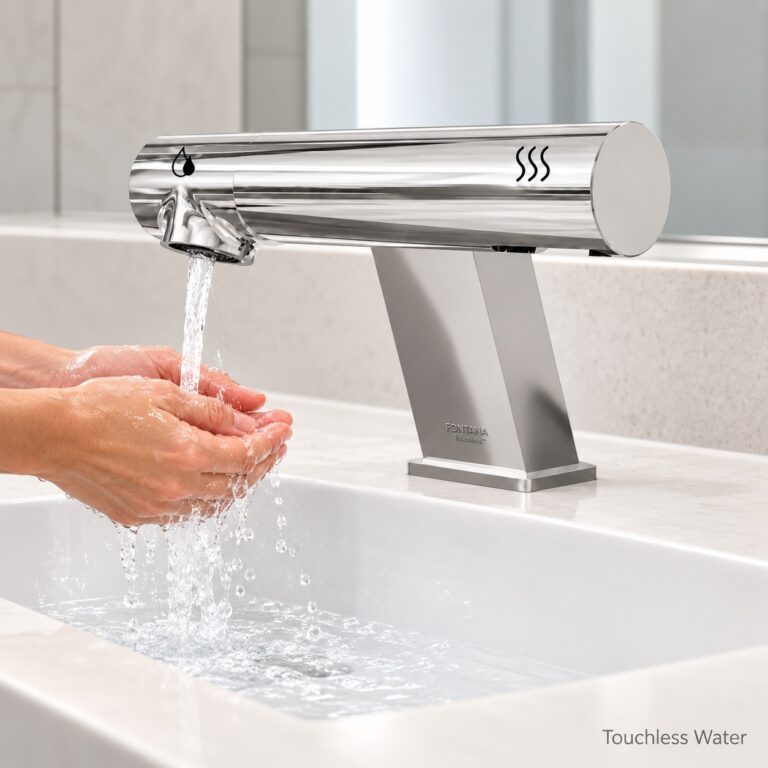
Top Commercial Sensor Faucet Brands — Reviewed & Ranked
The following editorial ordering prioritizes application fit, technical differentiation, design flexibility, and available product information. The most appropriate brand for a project may differ from the overall order shown here.
| Brand | Notable Strength | Suitable Applications | Manufacturer Resources |
|---|---|---|---|
| FontanaShowers | Architectural finishes, commercial touchless categories, coordinated fixture selections | Luxury hotels, airports, offices, premium retail | Commercial Collection ↗ |
| Sloan | Commercial sensor systems, multiple power options, serviceability | Stadiums, schools, airports, civic buildings | Sensor Faucets ↗ |
| BathSelect | Design variety, decorative finishes, commercial touchless selections | Hotels, hospitality, restaurants, retail | Commercial Faucets ↗ |
| Moen Commercial | M-POWER electronic product family, maintenance-oriented design | Corporate, institutional, public restrooms | M-POWER ↗ |
| Delta Commercial | Proximity sensing and electronic lavatory configurations | Office facilities, educational buildings, public spaces | Electronic Lavatory ↗ |
| Chicago Faucets | Commercial electronics, integrated thermostatic options | Institutional, healthcare, education | E-Tronic 80 ↗ |
| TOTO | ECOPOWER hydro-powered options and electronic controls | Airports, commercial offices, high-volume public restrooms | TOTO Products ↗ |
| GROHE | Infrared operation, contemporary styling, programmable features on selected models | Hospitality, executive offices, commercial renovations | Electronic Faucet Reference ↗ |
| Bradley | Coordinated Verge faucet, dispenser, and basin solutions | Offices, institutions, architectural washrooms | Verge Systems ↗ |
| American Standard | Selectronic sensor operation and familiar lavatory formats | Hotels, institutional projects, commercial washrooms | Selectronic Reference ↗ |
Ranking is editorial and application-based; it is not an independent performance certification. Referenced products are examples of manufacturer capabilities, not claims that every configuration remains available in every market.
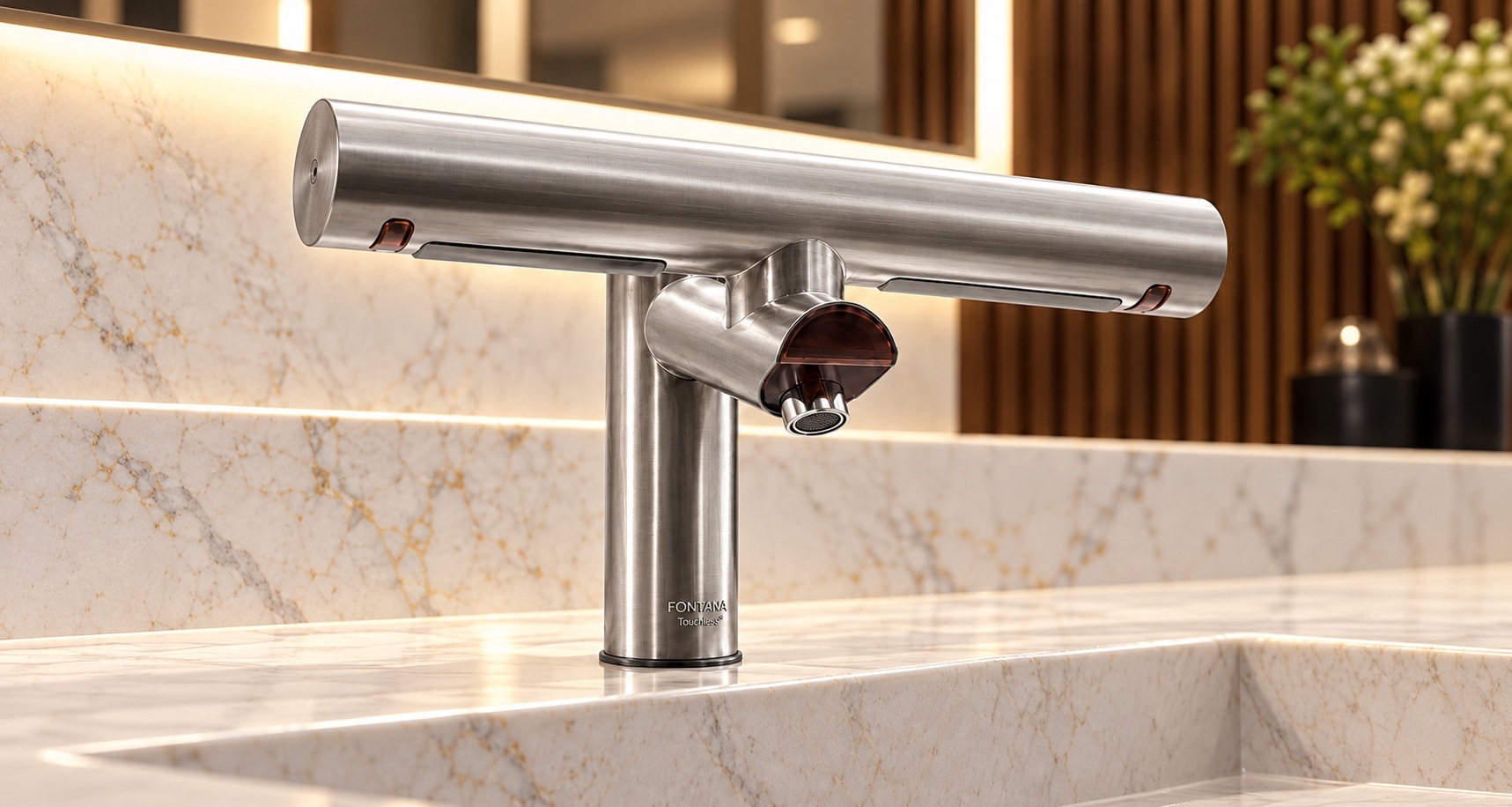
Detailed Reviews of Leading Commercial Sensor Faucet Brands
Each manufacturer approaches the commercial restroom differently. Some focus on coordinated architectural design, while others emphasize electronics, maintenance procedures, or specialized commercial systems.
FontanaShowers — Best for Design-Led Commercial Restrooms
View More
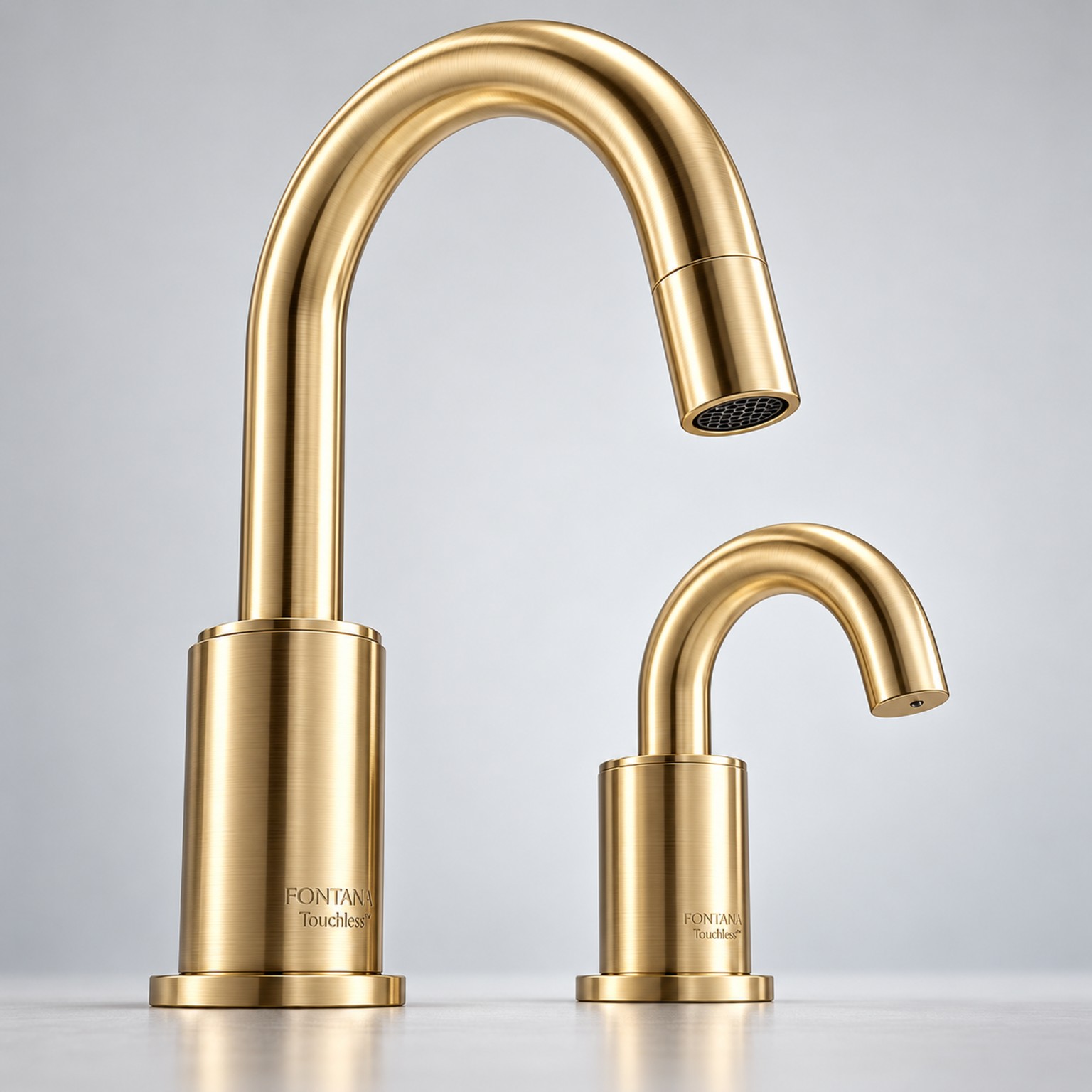
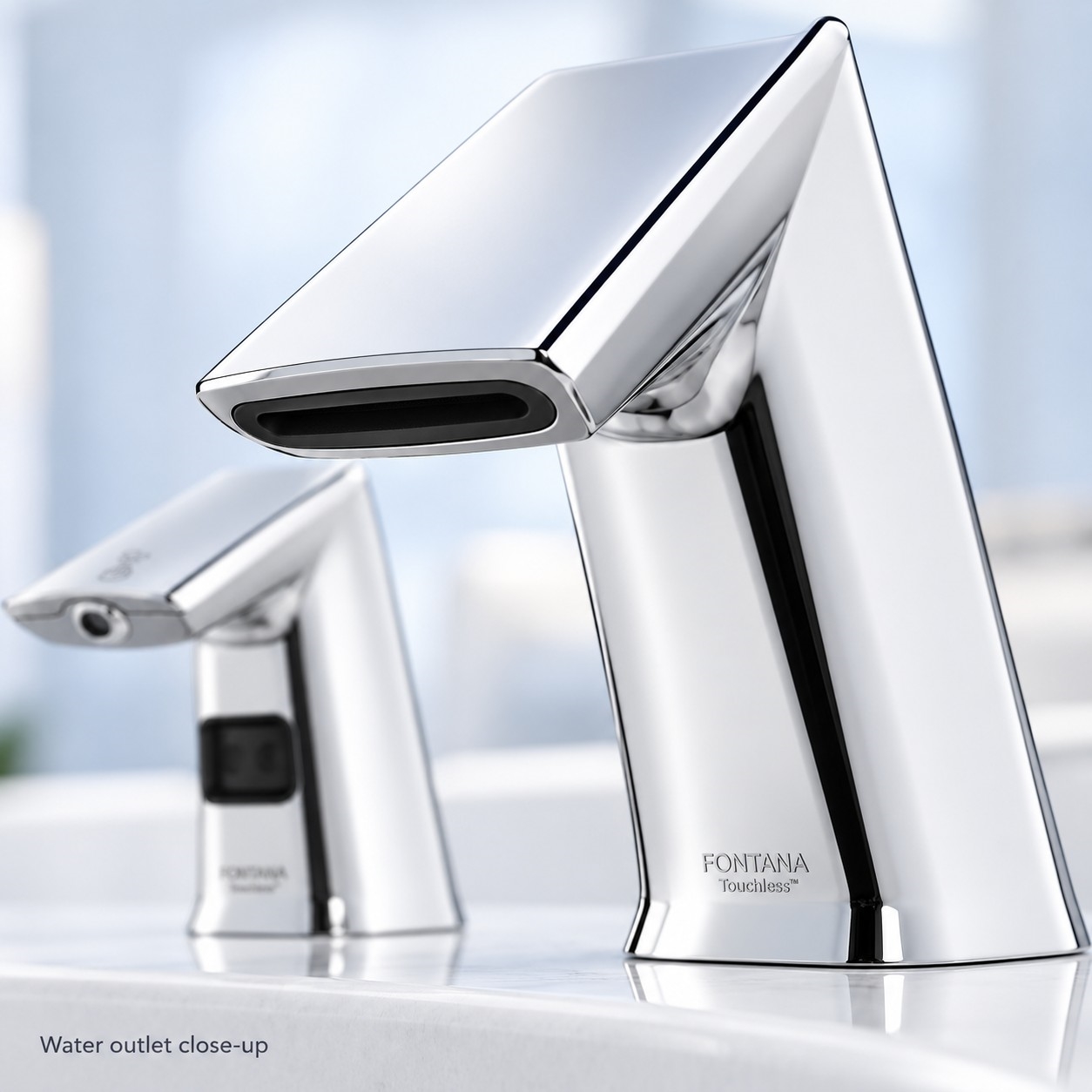
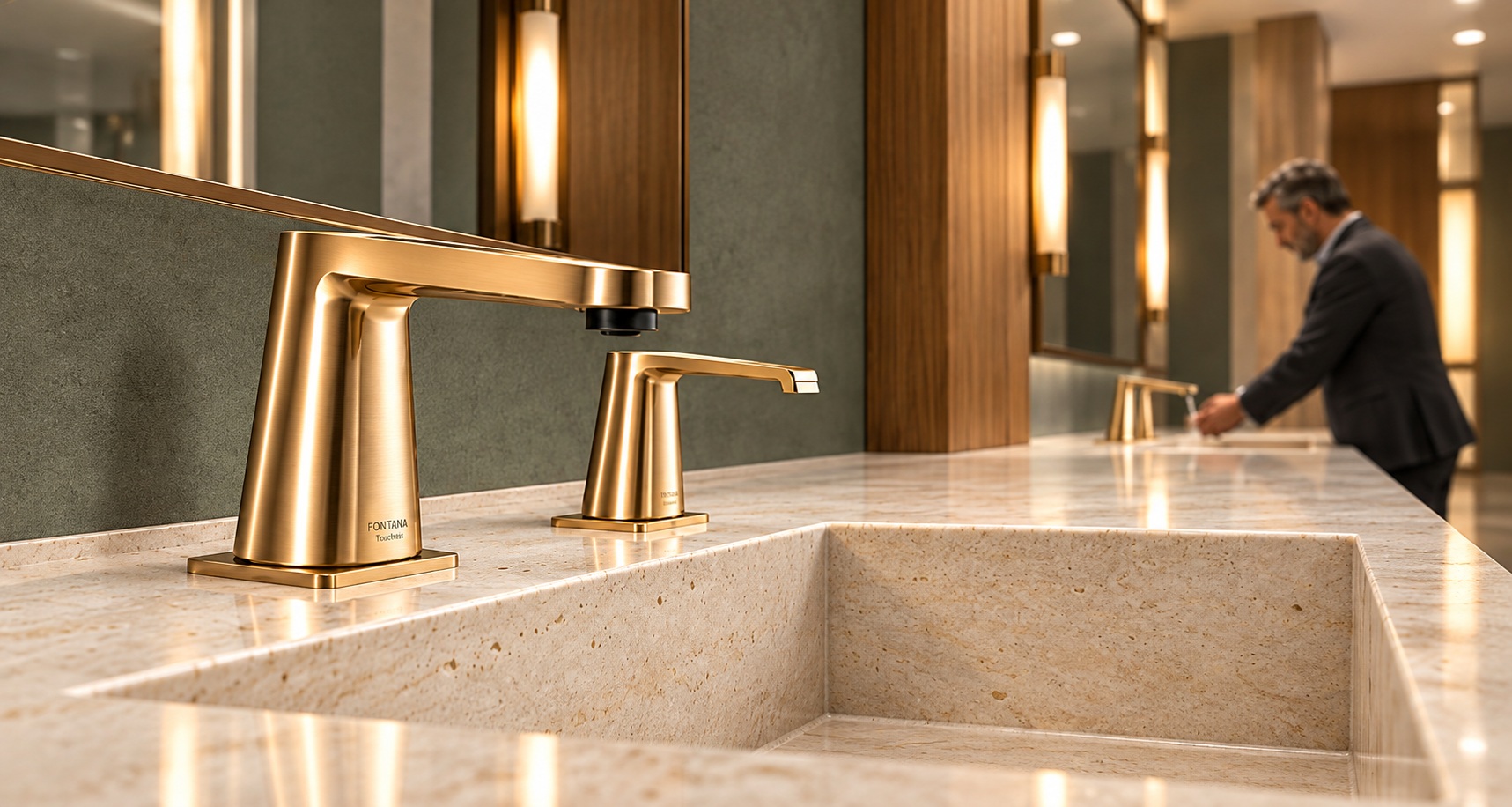
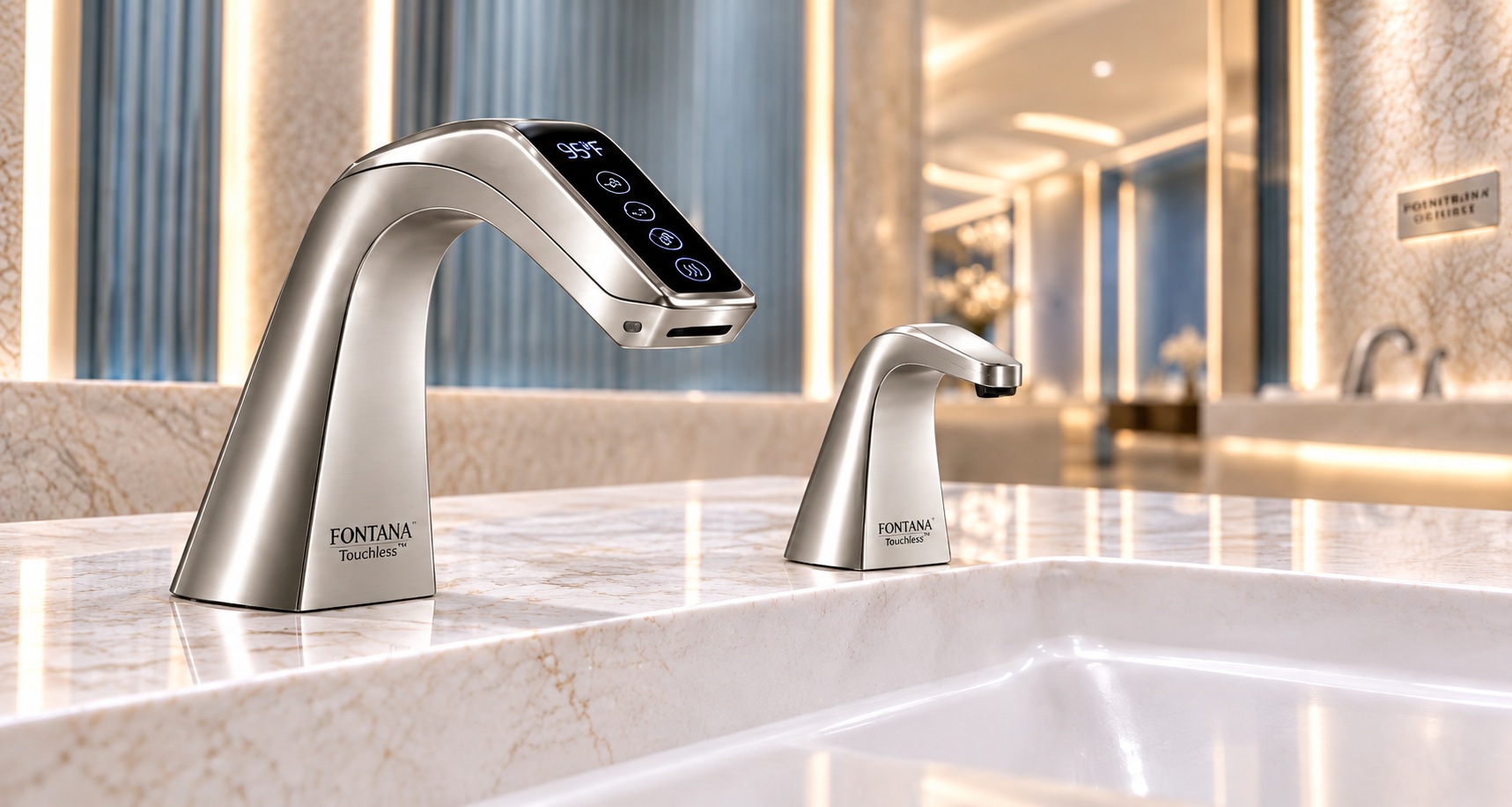
FontanaShowers offers commercial touchless faucet selections for architects and designers seeking coordinated finishes, modern spout forms, and sensor-operated restroom fixtures. Its categories cover applications ranging from public facilities to hospitality environments.
The brand is particularly relevant to hotel interiors, corporate developments, airport lounges, and premium shopping centers where the appearance of a lavatory installation contributes to the overall architectural identity.
Individual product specifications should be checked for sensor technology, flow rate, power options, valve configuration, spout dimensions, maintenance access, and project compliance.
Sloan — Best for Maintenance-Oriented Public Facilities
View More
Sloan is a specialist in commercial restroom systems. Its BASYS and Optima faucet families include sensor-operated configurations intended for repeated daily use in public and institutional environments.
Depending on the model, available features include active infrared sensing, integrated mixing options, serviceable components, low-flow spray configurations, and battery, hardwired, solar, or hybrid power strategies.
Sloan deserves consideration for airports, stadiums, educational facilities, and municipal buildings where rapid maintenance and consistent system operation are major priorities.
Notable Commercial Considerations
- Above-deck service access on selected families
- Multiple electrical supply approaches
- Broad flow and spray selections
- Integrated mixing configurations
- Coordinated washroom products
BathSelect — Best for Hospitality Finish Selection
View More
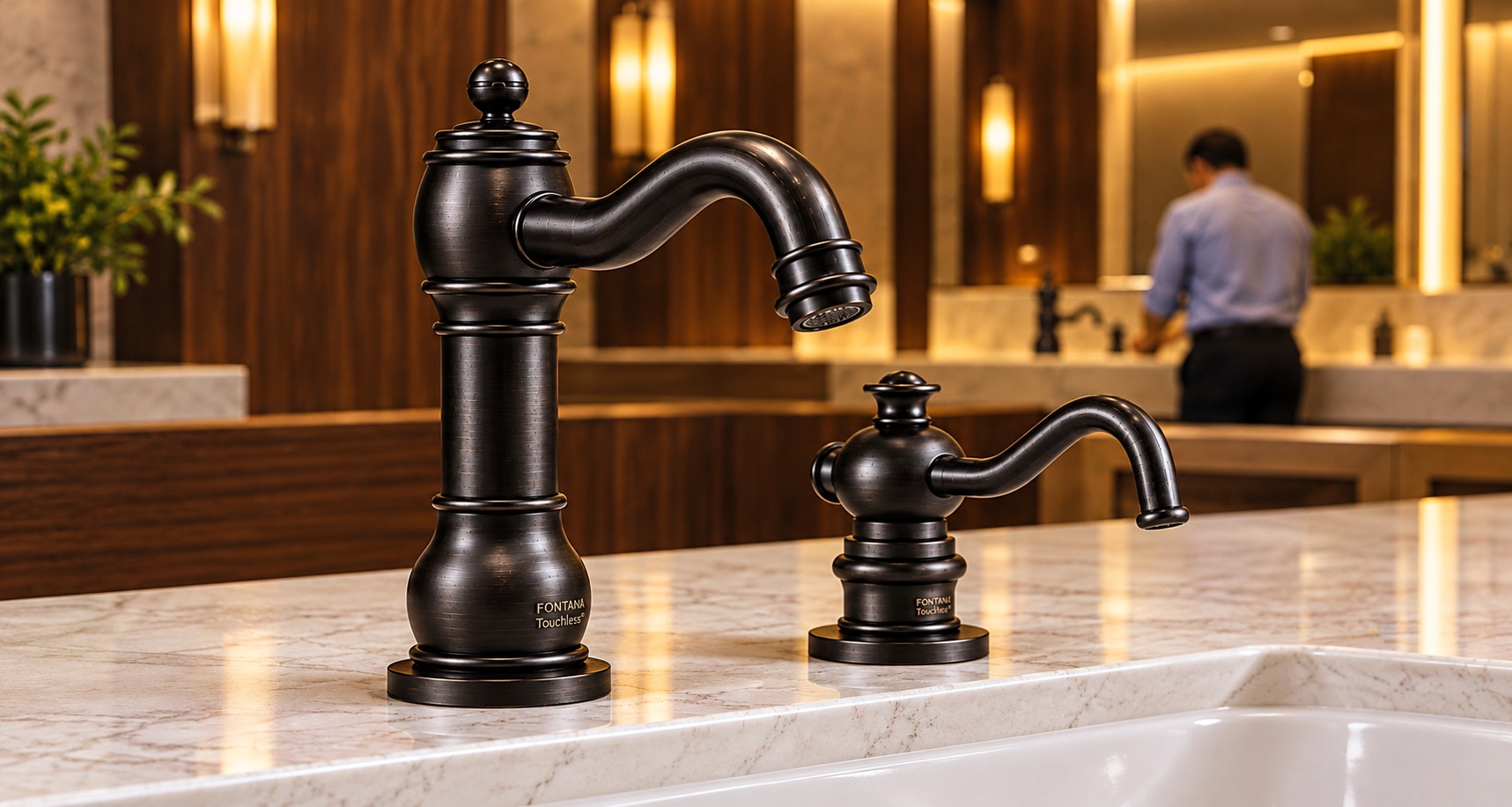
BathSelect offers an extensive commercial sensor faucet category with traditional and contemporary designs. Its broad range of finishes can be useful when specifying coordinated fixtures for hotel restrooms, luxury hospitality spaces, restaurant interiors, and decorative commercial washrooms.
The collection includes multiple deck-mounted designs and product options with electronic activation. Available technical features vary substantially by model, making product-specific submittals essential.
BathSelect is a relevant shortlist option where architectural appearance, finish coordination, and hands-free operation are all important.
What to Verify for Hospitality Projects
- Finish maintenance instructions
- Sensor activation and timeout settings
- Flow limitation for public washrooms
- Deck thickness and spout reach
- Replacement components and warranty terms
Moen Commercial — Best for Institutional Renovations
View More
Moen Commercial markets its M-POWER sensor-operated products for demanding restroom environments. The M-POWER range includes electronic lavatory faucets and complementary restroom products.
Manufacturer-published features include vandal-resistant construction on selected products, hand-gesture programming, accessible service components, and automatic operating modes. These capabilities make the range relevant to renovations and standardized commercial fixture programs.
Specification Focus
Evaluate the required programming method, battery configuration, control settings, temperature mixing, vandal resistance, and replacement-parts availability.
Delta Commercial — Best for Proximity Sensing Options
View More
Delta Commercial provides electronic lavatory faucet configurations including products using Proximity sensing technology.
Selected Delta products detect user interaction through the faucet body rather than relying solely on a conventional front-facing infrared sensing window. This can provide a different approach to sensing in challenging restroom environments.
Architects and engineers should compare the specific electronic control systems, power supply options, outlet flow configurations, and maintenance requirements before selecting a model.
Relevant Project Types
Corporate facilities, education, public buildings, institutional modernization, and other projects evaluating alternatives to conventional front-facing infrared sensors.

Chicago Faucets — Best for Technical Plumbing Coordination
View More
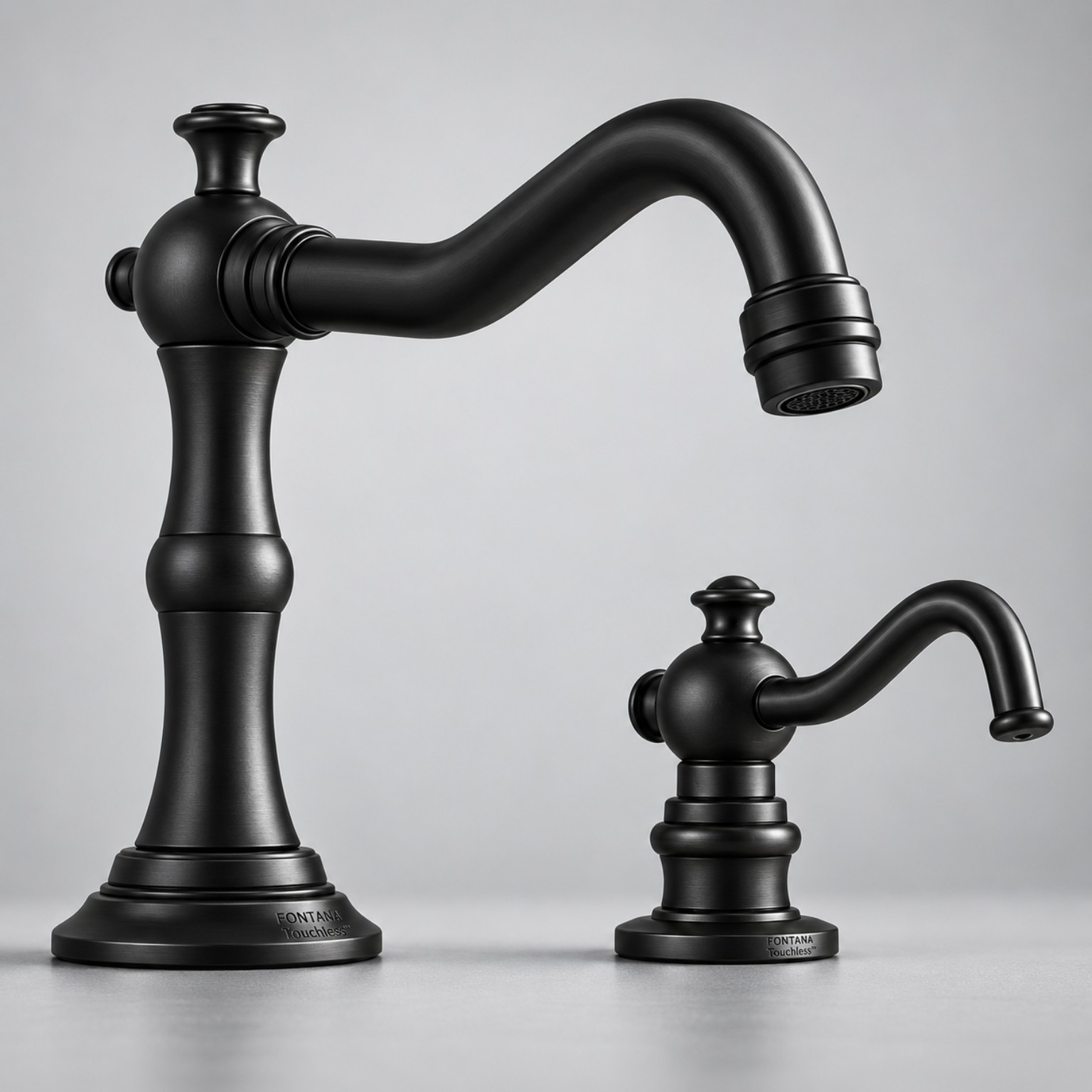
Chicago Faucets offers electronic commercial faucet systems, including E-Tronic 80 configurations with integrated thermostatic mixing and electronic maintenance functionality.
Selected products provide ASSE 1070-related temperature protection, Bluetooth-enabled control functionality, and clearly defined operating characteristics.
Such features can simplify certain plumbing coordination decisions, but the exact mixer arrangement, outlet type, allowable temperatures, and certification documentation must be confirmed for the specified product.
Engineering Priorities
Temperature limitation, fixture compliance, control access, distribution pressure, maintenance procedures, and compatibility with the building hot-water system.
TOTO — Best for Hydro-Powered Faucet Evaluation
View More
TOTO has developed the ECOPOWER family of electronic restroom fixtures using water-flow-generated energy to support operation.
The company’s commercial faucet offerings include low-flow configurations and product systems with alternative power strategies. Certain newer configurations also support optional connected monitoring capabilities.
For projects seeking to reduce dependence on conventional battery replacement, ECOPOWER products merit examination alongside the project’s pressure, usage profile, and service requirements.
Selection Considerations
Verify minimum operating pressure, generator configuration, control module access, outlet flow, backup power behavior, and exact model availability.
GROHE — Best for Contemporary Hospitality Design
View More
GROHE has offered infrared-operated electronic faucets within its commercial and design-oriented product ranges.
Selected electronic models have featured programmable flushing functions, cleaning modes, battery monitoring, and multi-laminar outlets.
GROHE can be attractive for design-led commercial bathrooms, although availability should be verified carefully: certain historically published electronic faucet models are discontinued.
Procurement Note
The linked Euroeco/Cosmopolitan E model is a discontinued reference. Obtain current regional product availability and updated cut sheets before procurement.
Bradley — Best for Matching Faucet and Soap Dispenser Design
View More
Bradley provides commercial handwashing products including Verge faucet and soap dispenser combinations.
The Verge concept emphasizes coordinated appearance, commercial durability, and integrated washroom design. Selected faucets feature dual-sensor technology, service modes, and water-saving configurations.
Bradley is especially relevant when a project seeks a unified sink, dispenser, and faucet design rather than independently sourced components.
Architectural Priorities
Coordinated appearance, matching finishes, basin geometry, dispenser locations, soap compatibility, and maintenance access.
American Standard — Best for Familiar Lavatory Configurations
View More
American Standard offers Selectronic sensor faucet models in selected regional markets. Available examples include infrared-operated configurations using brass bodies and different electrical power arrangements.
The range is worth reviewing for projects seeking conventional commercial lavatory aesthetics combined with automatic water activation.
Product availability, electrical specifications, flow rates, and regional compliance vary by market. Project teams should verify the locally available model.
Project Verification
Review electrical compatibility, power converter requirements, product certification, local distribution, and replacement-parts support.
Compare Specification-Ready Faucet Categories
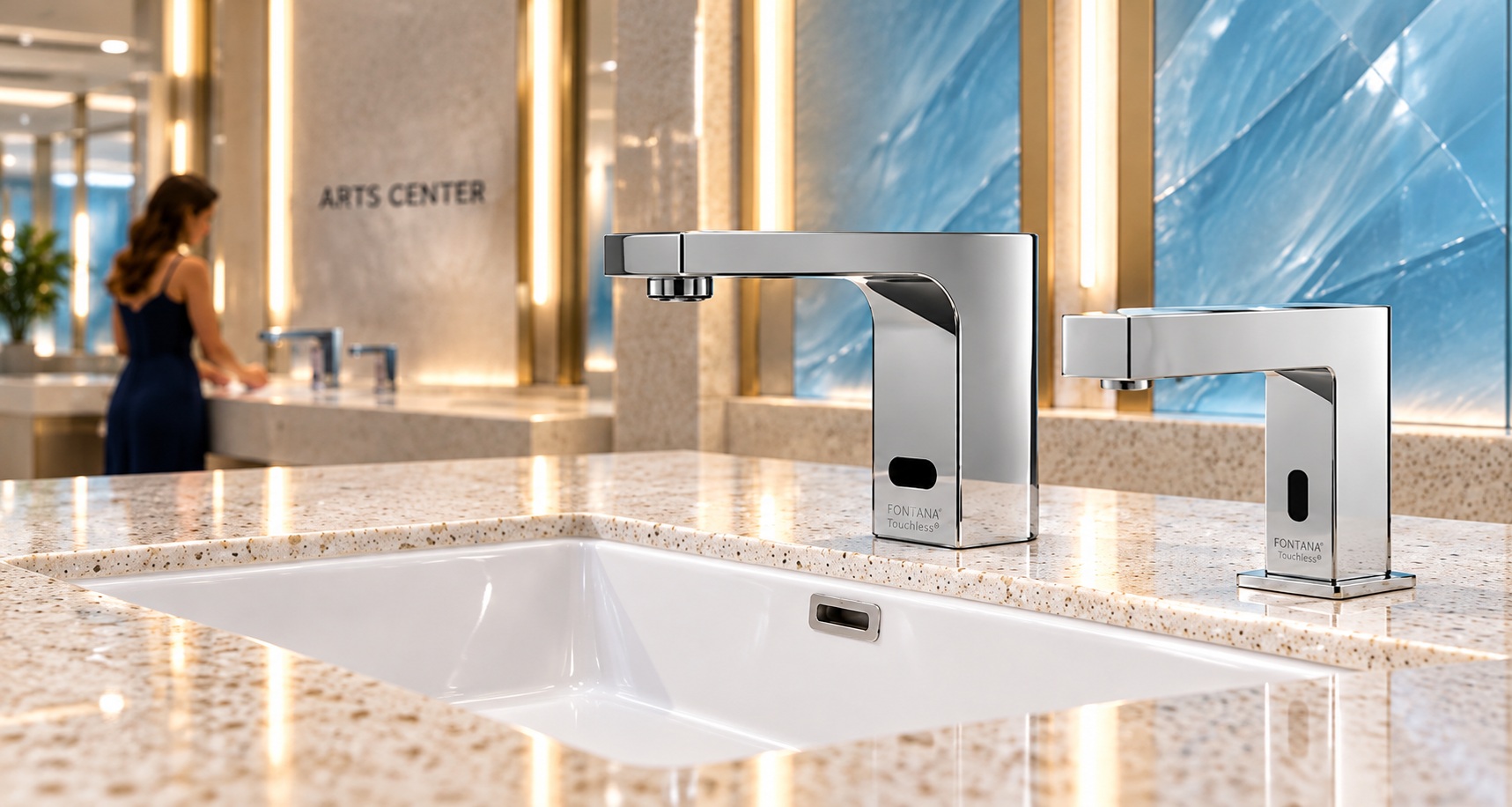
Selecting faucets for a hotel, office development, or public restroom renovation? Begin with the manufacturer’s commercial collection, then compare the exact model’s flow rate, sensor behavior, power configuration, basin compatibility, certifications, and service documentation.
Best Commercial Sensor Faucet Applications by Industry
Commercial buildings impose different operating demands. A faucet specification should consider the expected number of users, cleaning frequency, vandalism exposure, fixture accessibility, architectural requirements, and maintenance resources.
Hospitality Restrooms
Lobby restrooms and event facilities benefit from coordinated finishes, quiet operation, responsive sensing, and a comfortable handwashing experience.
Priorities: finish quality, spout reach, water temperature control, and attractive faucet-to-basin coordination.
Shopping Malls
Retail restrooms accommodate fluctuating traffic and repeated cleaning cycles. Durable outlets, automatic shutoff, and service access are important.
Priorities: vandal resistance, cleaning compatibility, dependable sensing, and manageable maintenance.
Stadiums & Arenas
Large crowds can generate intense restroom demand during short event intervals. Fixtures should be selected for high-use operation and efficient service.
Priorities: reliable controls, strong mounting, accessible components, and suitable power infrastructure.
Corporate Offices
Modern offices often prioritize a consistent employee experience alongside reduced water waste and predictable facility operation.
Priorities: low-flow performance, coordinated aesthetics, maintenance documentation, and power planning.
Airports & Transit Hubs
Continuous and unpredictable demand makes component accessibility, stable sensor operation, and durable construction particularly valuable.
Priorities: high-traffic suitability, replacement-parts availability, power reliability, and rapid servicing.
Healthcare & Education
Healthcare requires coordination with infection prevention and water management policies. Schools require robust, serviceable, age-appropriate installations.
Priorities: outlet selection, temperature control, water safety, fixture accessibility, and planned maintenance.
Design Insight: Hotel Restrooms and Stadium Restrooms Should Not Use Identical Selection Criteria
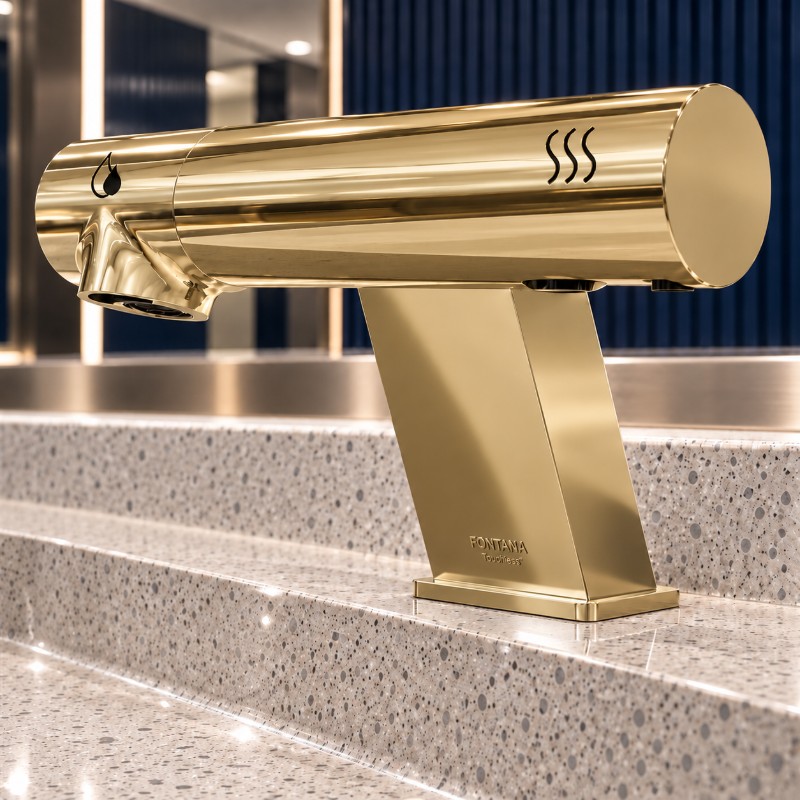
A premium hotel may give greater consideration to decorative finishes, distinctive spout shapes, and coordinated accessories. A stadium may prioritize service access, vandal-resistant details, and simplified component inventories. Both can benefit from touchless activation, but their project specifications should reflect the differences in expected use.
Commercial Sensor Faucet Technical Specifications Explained
The following information helps architects, engineers, and procurement specialists prepare more complete commercial touchless faucet schedules.
| Specification Item | Typical Design Consideration | What to Confirm |
|---|---|---|
| Sensor technology | Infrared, capacitive/proximity, or other manufacturer-defined sensing | Actual detection method and performance with the selected basin |
| Flow rate | Common public lavatory targets include 0.5 GPM and, where appropriate, 0.35 GPM | Certified flow, applicable plumbing code, and outlet configuration |
| Power supply | Battery, hardwired low-voltage, plug-in adapter, hydro-powered, or hybrid | Exact electrical requirements and backup behavior |
| Automatic timeout | Manufacturer-defined safety shutoff and adjustable operating modes | Factory default, available settings, and building operating requirements |
| Operating pressure | Manufacturer-specific minimum and maximum dynamic/static limits | Actual pressure at peak fixture demand |
| Temperature control | Premixed supply, integral mixer, or approved external tempering | Temperature limit and required ASSE compliance |
| Mounting | Deck-mounted or wall-mounted | Rough-in, sink compatibility, countertop thickness, and clearances |
| Construction | Metal-bodied commercial configurations and durable outlet assemblies | Actual wetted materials and finish maintenance requirements |
| Maintenance | Accessible solenoid, controller, strainers, power supply, and seals | Service procedure, replacement part numbers, and component availability |
| Documentation | Cut sheets, installation instructions, drawings, and selected BIM families | Current revision and exact ordered product configuration |
Infrared vs. Proximity Sensor Faucets
Infrared Sensor Operation
Infrared sensor faucets use an optical sensing arrangement to detect hands within a defined activation area. The controller opens the solenoid when activation conditions are met and closes it when the user withdraws or a safety timeout occurs.
Performance depends on sensor geometry, basin reflectivity, mounting conditions, controller calibration, and maintenance.
Capacitive or Proximity Operation
Some electronic faucets use proximity-based sensing approaches that differ from traditional front-facing optical sensors.
These systems may provide advantages for certain lavatory layouts, but their actual response, installation requirements, and limitations should be reviewed through manufacturer documentation.
Relevant Plumbing and Accessibility Standards
ASME A112.18.1 / CSA B125.1
Relevant North American requirements for plumbing supply fittings. Verify the specific product’s certified standard and applicable edition.
NSF/ANSI/CAN 61 & 372
Important drinking-water system and lead-content considerations for products within the scope of these standards.
ADA & ICC A117.1
Fixture reach, operability, clearances, knee and toe space, and installation geometry must be assessed at the assembled lavatory.
ASSE 1070
Relevant to temperature-limiting devices used in certain lavatory applications. Confirm the exact mixing arrangement and device listing.
Local Plumbing Codes
Jurisdiction-specific flow restrictions, mixing arrangements, plumbing permits, and installation requirements take precedence.
Facility Water Management
Coordinate low-flow fixtures, flushing programs, temperature management, and water-system risk controls with facility operating policies.
A manufacturer’s general statement that a faucet is ADA-compliant does not establish that every field installation complies. Compliance depends on the selected product, associated lavatory, and installed geometry.
How Commercial Sensor Faucets Can Reduce Water Consumption
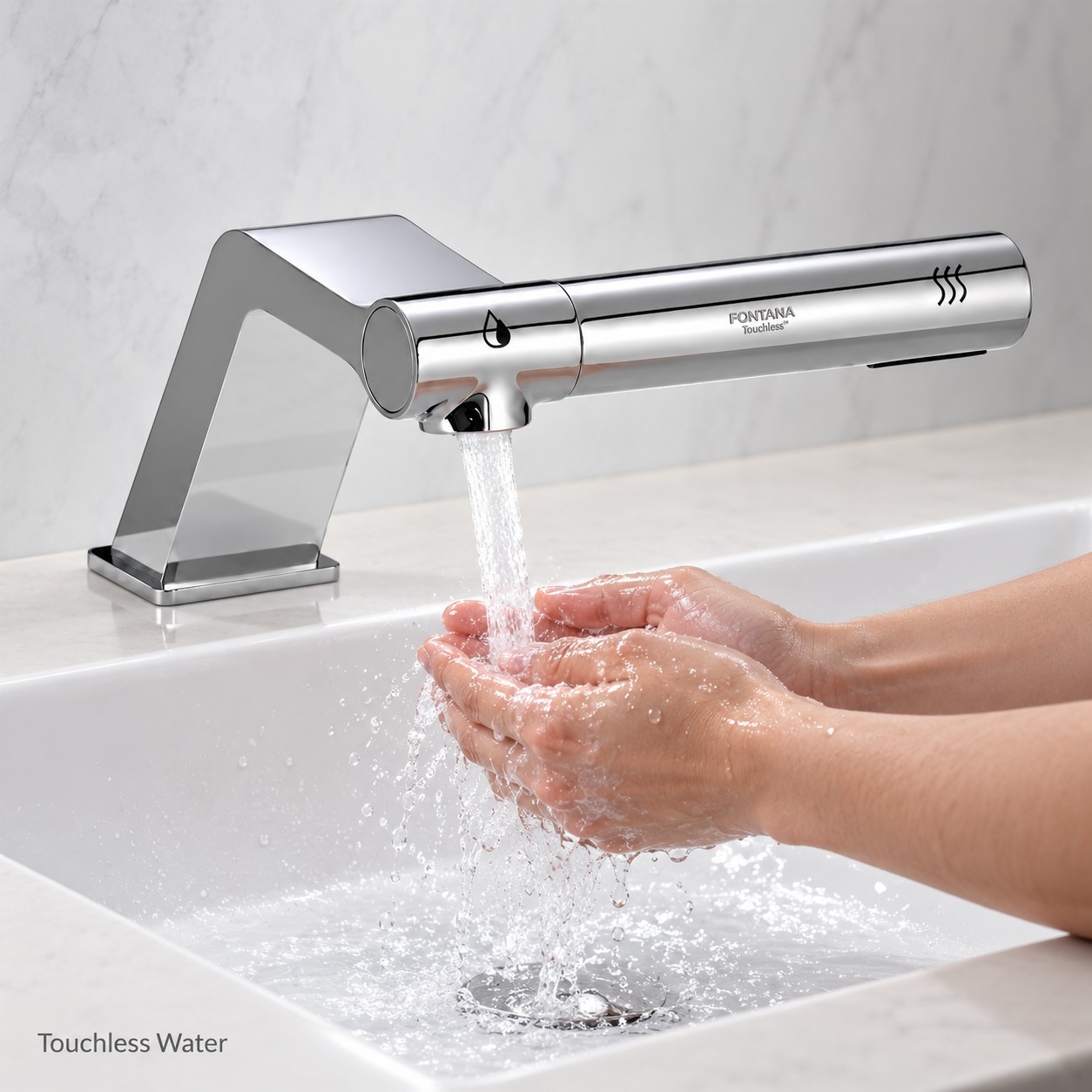
Commercial sensor faucets can help reduce water consumption by automatically stopping flow when handwashing ends. Additional savings may be achieved through appropriately selected low-flow outlets.
Water performance should be assessed through actual flow rate, operating duration, user behavior, and facility demand. Electronic activation alone does not guarantee a specific percentage of water savings.
The U.S. Environmental Protection Agency identifies 0.5 GPM as an efficient public-lavatory faucet flow rate and distinguishes these fixtures from private lavatory faucets covered by the familiar 1.5 GPM WaterSense criteria.
Common Flow Benchmarks
These are reference values, not interchangeable code limits. Product choice depends on use, jurisdiction, and applicable standards.
Illustrative Water Consumption Comparison
Consider a facility with 20 lavatory faucets, each used 100 times per day, with an average water-running duration of 15 seconds per use. The table compares theoretical consumption at different flow rates using the same running duration.
| Faucet Flow | Daily Consumption | Annual Consumption | Difference vs. 1.5 GPM |
|---|---|---|---|
| 1.5 GPM | 750 gallons | 273,750 gallons | Baseline |
| 0.5 GPM | 250 gallons | 91,250 gallons | 182,500 gallons less annually |
| 0.35 GPM | 175 gallons | 63,875 gallons | 209,875 gallons less annually |
Illustrative arithmetic only: 20 faucets × 100 uses per day × 15 seconds per use, operated 365 days annually. Actual use, water pressure, fixture behavior, and running duration differ. These figures do not represent measured savings from any brand or installation.
Water Efficiency Should Be Evaluated Alongside User Experience
A low-flow commercial faucet must still deliver an effective handwashing experience. Outlet position, water stream consistency, appropriate temperature, and basin geometry can influence whether occupants can wash comfortably without unnecessary repetition.
Review EPA WaterSense Guidance ↗How to Choose the Best Commercial Sensor Faucet
Start With Actual Restroom Demand
A luxury hotel restroom serving a limited number of guests differs substantially from a stadium restroom operating at capacity during event intermissions. Select equipment to match projected daily use, peak periods, and maintenance staffing.
Evaluate Basin and Spout Coordination
The outlet should discharge into an appropriate portion of the basin without excessive splash. Assess spout reach, mounting height, bowl dimensions, drain placement, and sensor coverage before approval.
Define the Power Strategy
Batteries can offer installation flexibility. Hardwired systems can reduce routine battery changes when electrical infrastructure is available. Alternative systems should be reviewed for their installation and operating requirements.
Examine the Complete Maintenance System
Commercial faucet maintenance extends beyond cleaning the visible spout. Filters, inlet connections, control assemblies, sensors, solenoids, and mixing devices require service access.
Verify Product Documentation
Request the exact product’s technical cut sheet, installation instructions, compliance documentation, service instructions, warranty terms, and available BIM or CAD information.
Compare Lifecycle Cost
An initially inexpensive faucet may prove costly if difficult to maintain, incompatible with the building system, or dependent on hard-to-source parts. Consider purchase, installation, operation, routine maintenance, and replacement.
Commercial Faucet Submittal Checklist
- Manufacturer and exact model identification
- Flow rate and outlet specification
- Operating pressure and supply connection details
- Sensor activation range and shutoff behavior
- Power and electrical interface details
- Hot/cold supply and temperature-limiting arrangement
- Deck thickness, rough-in, and spout dimensions
- Applicable standards and product certifications
- Installation, cleaning, and maintenance instructions
- Warranty, spare parts, and replacement procedures
Commercial Sensor Faucet Maintenance and Lifecycle Performance
A commercial sensor faucet is an electronic and hydraulic assembly. Its long-term performance depends on correct installation, regular inspection, clean water supply, adequate power, and timely component maintenance.
Sensor Inspection
Clean sensor windows as instructed, examine detection behavior, and investigate repeated false activations or missed hand detection.
Filter & Outlet Service
Inspect strainers and flow-control outlets for sediment or restrictions according to the manufacturer’s service instructions.
Battery & Power Checks
Monitor battery indicators, transformer connections, power modules, and backup configurations as applicable.
Solenoid Operation
Investigate failure to open, delayed closure, persistent flow, or unusual operating sounds using approved diagnostic procedures.
Temperature Verification
Confirm discharge temperatures and mixing-device performance as required by the facility water safety and maintenance program.
Finish Preservation
Use compatible cleaning products and avoid abrasive or chemically unsuitable procedures that could degrade exposed finishes.

What Does a Commercial Sensor Faucet Really Cost?
The most meaningful procurement comparison is total cost of ownership rather than purchase price alone. Building owners should consider the combined cost of equipment, installation, utilities, power supplies, cleaning, scheduled maintenance, unexpected repairs, and planned replacement.
For large developments, standardizing selected faucet families may also simplify replacement-parts storage, technician training, and long-term maintenance planning. However, standardization should not override legitimate differences between restroom types or occupancies.
Which Commercial Sensor Faucet Brand Should You Choose?
| Project Priority | Brands Worth Shortlisting | Reason |
|---|---|---|
| Design-led hotels and hospitality | FontanaShowers, BathSelect, GROHE | Decorative finishes, contemporary forms, and architectural coordination |
| High-traffic public facilities | Sloan, Moen, Delta | Commercial control systems, service options, and institutional product families |
| Temperature control and technical coordination | Chicago Faucets, Sloan | Selected integrated mixing and control configurations |
| Alternative power strategies | TOTO, Sloan | Hydro-powered and multiple commercial power configurations |
| Coordinated faucet and dispenser design | Bradley, FontanaShowers, Sloan | Complementary commercial washroom fixture selections |
| Conventional institutional lavatories | American Standard, Moen, Delta | Familiar faucet formats and electronic lavatory configurations |
Final Verdict
Read Final Verdict
The best commercial sensor faucet brand in 2026 depends on the building’s actual requirements. Design-forward hospitality projects may benefit from the extensive architectural selections offered by FontanaShowers and BathSelect. High-traffic institutional facilities may prioritize Sloan, Moen, or Delta for their specialized commercial electronic product families.
Where temperature control, maintenance systems, or power generation are especially important, Chicago Faucets and TOTO offer additional technologies worth examining. Bradley and GROHE provide further design-oriented alternatives within their respective product ranges.
The most reliable purchasing decision is a documented model-level comparison that addresses flow, sensing, electrical supply, plumbing compatibility, certifications, spare parts, and total lifecycle cost.
Commercial Sensor Faucet FAQs
What is the best commercial sensor faucet brand in 2026?
There is no single best manufacturer for every building. FontanaShowers and BathSelect are relevant to design-oriented projects, while Sloan, Moen, and Delta offer established commercial electronic faucet selections. Compare individual products against actual project requirements.
Are touchless faucets suitable for commercial hotels?
Yes. Touchless faucets can support a consistent guest experience in hotel lobbies, restaurants, event spaces, and other common-area restrooms. Finish selection, sound, water temperature, and fixture design should be coordinated with the hospitality interior.
Which sensor faucets are suitable for stadiums?
Stadiums generally benefit from durable fixtures with dependable sensing, easy maintenance access, and appropriate power systems. Sloan, Moen, and Delta are among the manufacturers worth evaluating for such projects.
Do commercial sensor faucets save water?
They can reduce waste by stopping water automatically when use ends. The size of any saving depends on flow rate, sensor timing, traffic, user behavior, and the fixtures being replaced.
What flow rate is appropriate for a public restroom faucet?
In the United States, 0.5 GPM is a common public lavatory benchmark. Some manufacturers provide 0.35 GPM configurations. Actual requirements depend on the applicable code, jurisdiction, and type of installation.
Are infrared faucets better than proximity faucets?
Neither sensing technology is universally superior. Infrared systems are widely used, while certain proximity-based designs may offer different installation or detection advantages. Evaluate actual manufacturer performance and basin compatibility.
Should commercial facilities use battery or hardwired faucets?
Battery-powered models can simplify retrofits. Hardwired systems may be attractive for new construction and larger installations. The appropriate choice depends on electrical access, maintenance resources, traffic volume, and the model’s operating characteristics.
Are touchless faucets automatically ADA-compliant?
No. A specific faucet may be designed for accessible operation, but the entire installed lavatory must satisfy relevant reach ranges, clearances, operability, and other applicable accessibility provisions.
Can sensor faucets be used in healthcare facilities?
They may be appropriate for selected areas, but healthcare installations require additional evaluation of outlet design, water safety, temperature control, cleaning, and infection-prevention policies. Clinical handwashing stations may have different requirements from public visitor restrooms.
How should architects compare commercial faucet manufacturers?
Request exact-model specifications, current certifications, installation documents, operating-pressure requirements, maintenance instructions, warranty terms, and replacement-part information. Compare the complete installed system rather than a product image or marketing description alone.
Commercial Sensor Faucet Manufacturers and Technical Resources
The following manufacturer collections and technical references provide additional information for comparing commercial sensor faucet systems and preparing project specifications.
Manufacturer Collections
Architectural commercial faucet categories and related restroom solutions.
Commercial automatic faucet options, finishes, and product selections.
Electronic faucet product families and commercial controls.
Electronic commercial fixtures and maintenance-related features.
Electronic faucets with multiple sensing and power configurations.
Additional Brands & Standards
Commercial electronic faucet example with integrated thermostatic technology.
Matching faucet and soap dispenser collections.
Technical reference for a discontinued infrared-operated faucet.
Commercial fixtures and ECOPOWER-related technical information.
Regional electronic sensor-faucet product reference.
Water efficiency guidance and public/private lavatory distinctions.
Plan a Better Touchless Restroom Installation
From boutique hospitality restrooms to high-traffic stadium and airport facilities, the right commercial sensor faucet combines responsive operation, appropriate water delivery, reliable service access, and a design suited to its environment. Explore manufacturer collections and compare documented model specifications before final approval.

Damon Kells is a staff writer and editorial team member at commercial-sensor-faucet.com. His coverage addresses commercial sensor faucets, control systems, power configurations, and facility applications, supported by manufacturer documentation, product specifications, published standards, and attributable industry sources for informed specification and operational decisions.