
Projects and documentation tools for U.S. commercial restrooms
Projects
A practical workflow for planning, specifying, installing, and supporting sensor faucets in commercial restrooms.
Commercial sensor faucet projects require coordinated planning across specification, installation, commissioning, and maintenance. This project hub gives architects, engineers, contractors, and facility teams a practical workflow for managing sensor faucet projects in commercial restrooms.
Use the playbook, checklists, and templates to standardize field notes, reduce install surprises, and document
outcomes like reliability, service time, and water use.
Start the project playbook
Open standards and references
Project case study format
Best practice: treat sensor faucets like a small system, not a single part.
The basin, aerator, power method, shutoff, and maintenance access matter as much as the body style.
Document early: take photos of rough in, stop locations, power routing, and underside clearances.
These images become your fastest troubleshooting tool later.
Commercial Sensor Faucet Project Documentation
Use these frames for your install photos, field notes, and as-left commissioning records.
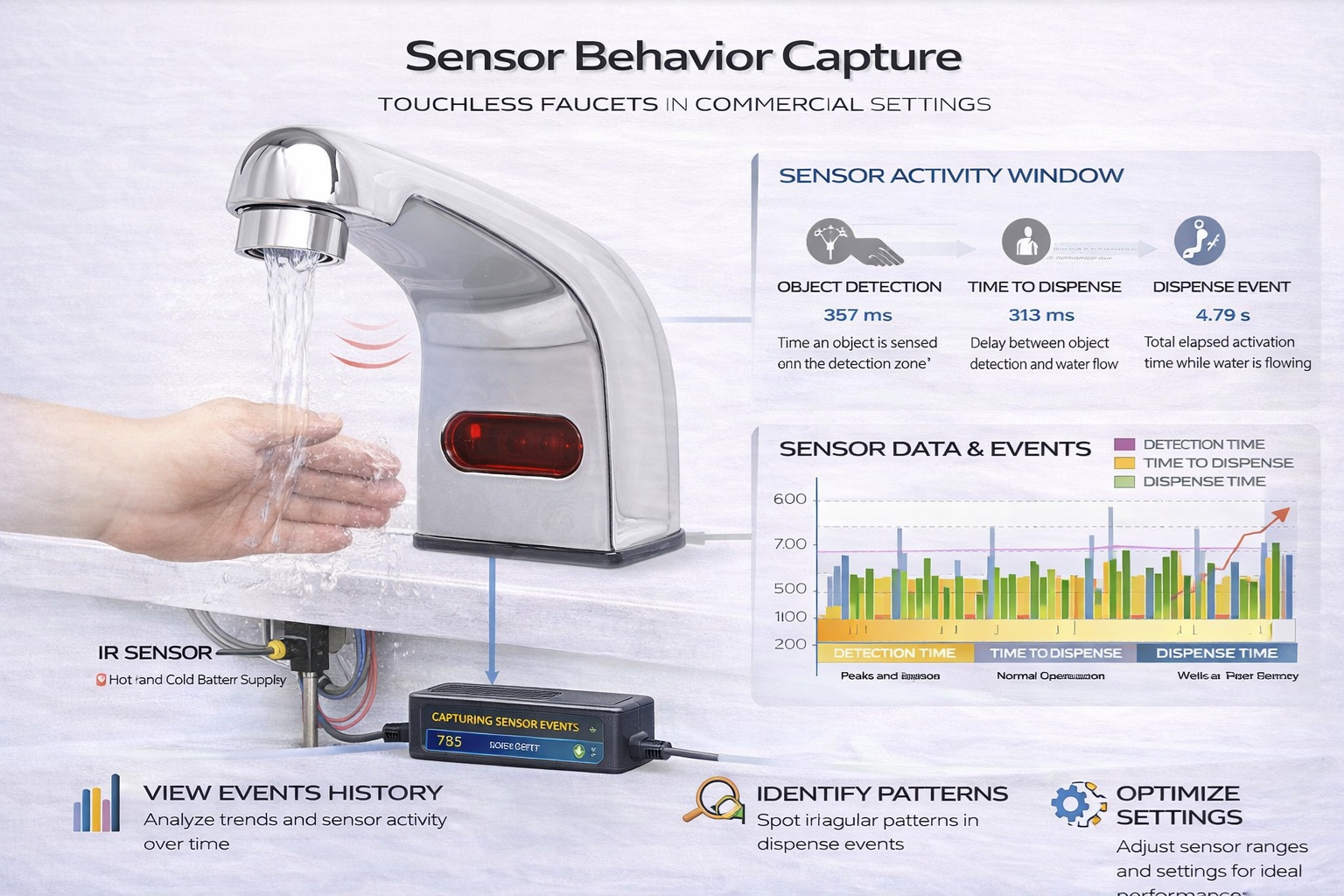
Sensor behavior capture
Trigger stability, user positioning, and shutoff timing
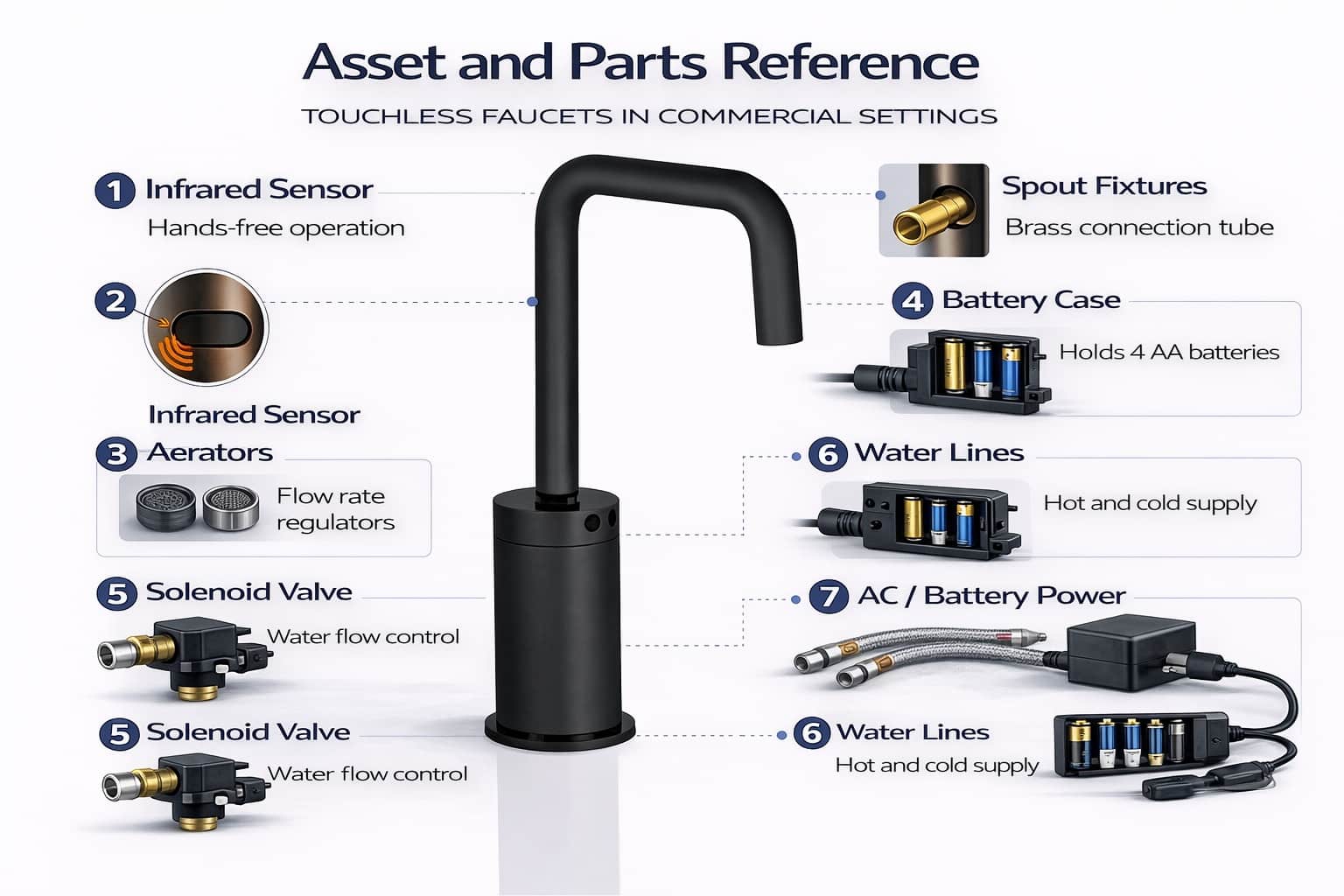
Asset and parts reference
Model ID, trim details, and service parts mapping
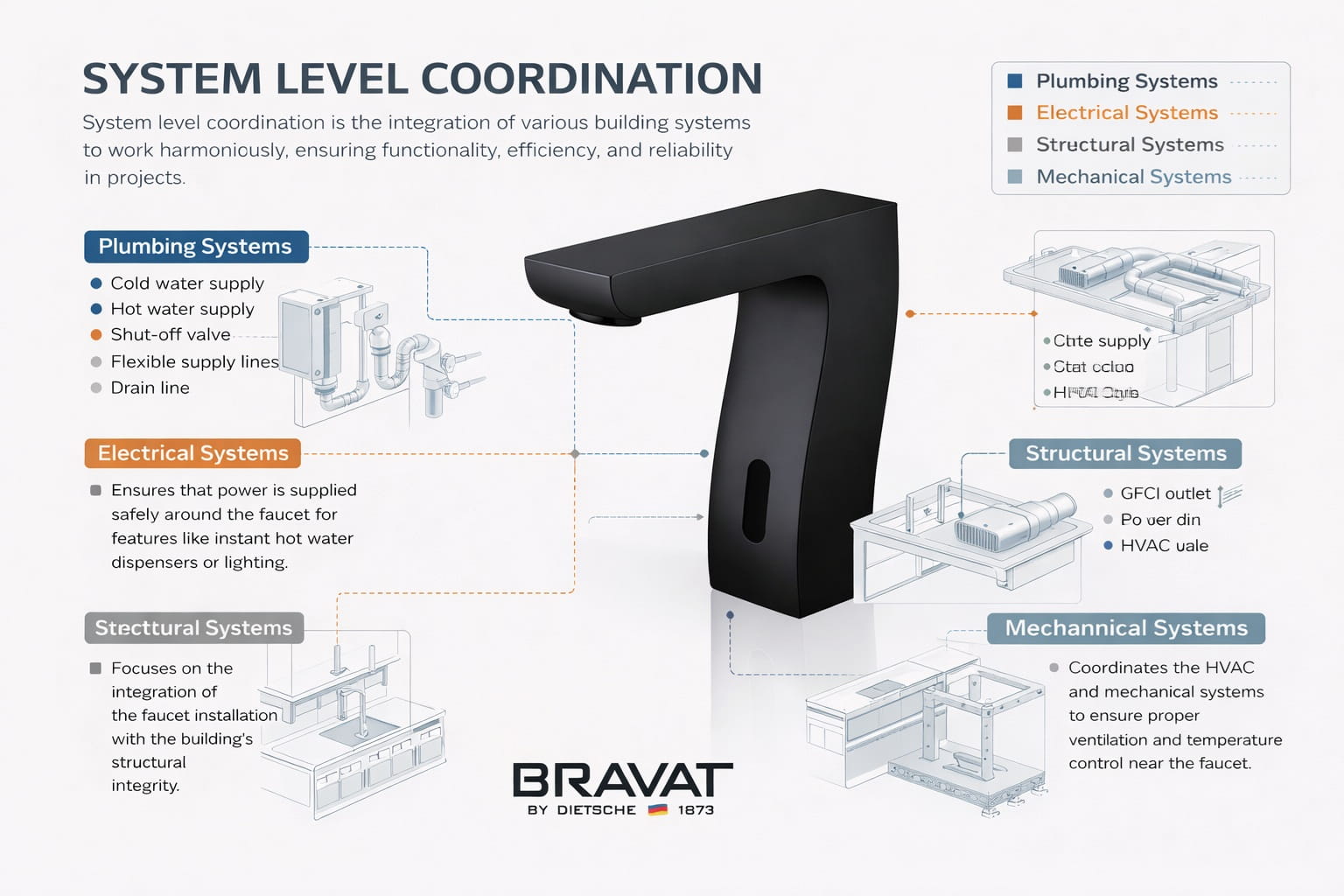
System level coordination
Soap, faucet, basin geometry, and user flow across multi-sink counters
Project playbook
A step-by-step flow you can reuse across new builds, tenant improvements, and retrofits.
Define the restroom context
Start with the real operating environment. High traffic locations, patient care, schools, airports, and
stadium restrooms all behave differently.
Traffic profile
Vandal risk
Staffing model
Cleaning products
Water pressure range
Confirm compliance targets
Confirm ADA sink and control requirements early, then align water efficiency requirements and local code expectations.
Capture what the AHJ will actually check in the field.
ADA controls
Knee clearance
Flow limits
Submittals
Choose power and maintenance strategy
Decide how you will keep faucets running for years. Battery can be fine, but only if replacement is planned and documented.
Hardwired and hybrid options reduce surprises but need coordination.
Battery plan
Hybrid option
Hardwire routing
Service access
Specify the full assembly
Treat the faucet, aerator, stops, mixing method, and mounting hardware as one assembly. Write the spec so that
substitutions still meet clearance, flow, and service requirements.
Aerator type
Mixing method
Stops and strainers
Tamper resistance
Build a commissioning routine
Commissioning is how you catch false triggers, poor shutoff timing, spray issues, and power instability before turnover.
Document sensor settings and as-left conditions.
Trigger stability
Shutoff time
Splash control
As-left photos
Hand off an O&M package that is usable
Do not hand over a binder that nobody opens. Provide a one-page quick reference, parts list, battery plan, and
the minimum troubleshooting tree that helps maintenance staff resolve issues fast.
Parts list
Battery schedule
Cleaning notes
Common failures
Checklists you can copy into your workflow
Use these as task lists for site walks, submittals, installation, and turnover.
Site survey checklist
Measure and document what the drawings usually miss: shutoff access, backsplash constraints, deck thickness,
interference under the sink, and cleaning realities.
Photos of underside
Stop locations
Spout reach
Basin depth
Reflective surfaces
Submittal review checklist
Confirm the standard, flow rate, power method, sensor adjustability, and service method. If it is not in the cut sheet,
it becomes a field problem later.
ASME A112.18.1
Flow at test pressure
Control method
Warranty terms
Spare parts plan
Installation readiness checklist
Before setting fixtures, confirm rough-in, angle stop orientation, power routing, and access panel decisions.
Small errors here multiply across multi-sink restrooms.
Rough-in verification
Power routing
Access panels
Sealants and gaskets
Commissioning and turnover checklist
Record the as-left settings and performance. Document trigger range, shutoff time, spray pattern, and any sensor tuning
performed on site.
Trigger range
Shutoff behavior
Splash check
Label power source
Store cut sheets
Templates and documentation tools
These are simple formats you can use in your own docs, RFIs, and maintenance binders.
Sensor faucet selection brief
A one page brief that captures traffic, ADA constraints, power method, target flow rate, finish needs, and service goals.
Use it to keep the team aligned before the first submittal arrives.
Use case: Pre-design to DD
Open format
Maintenance quick reference
A short sheet for facility staff: cleaning do and do not items, battery replacement intervals, common symptoms, and the
fastest checks before swapping parts.
Use case: Turnover
Open format
Parts and spares list
A standard list by restroom type: aerators, sensors, solenoids, battery packs, power supplies, and special tools.
Include lead time notes so procurement is not guessing.
Use case: Operations
Open format
Issue log and repeat failure tracker
A field log for symptoms and fixes. Track date, sink position, observed behavior, fix applied, and time spent.
This is how you find patterns instead of chasing one-off complaints.
Use case: Post occupancy
Open format
Project case study format
A consistent outline for publishing your own field findings on this blog.
Use this outline to write a project post
Project summary: building type, location, restroom type, number of sinks, and usage profile.
Constraints: ADA clearance challenges, deck thickness, basin geometry, water pressure variability, power limitations, and vandal risk.
Decision set: sensor faucet type, power method, target flow rate, aerator selection, mixing method, and key submittal requirements.
Installation notes: what went smoothly, what caused delays, what needed rework, and how long commissioning took.
Results after occupancy: complaints, false triggers, battery life observations, service calls, and downtime.
What you would change next time: spec edits, detail changes, spare parts plan, and a better handoff step.
Maintenance quick reference format
Copy and paste this into your O&M package, then adjust to site conditions.
Cleaning and care
Record the actual cleaning chemicals used on site, then confirm finish compatibility. Include what to avoid.
If the restroom supports infection control operations, align with facility hand hygiene policy.
Tip: include chemical list
CDC hand hygiene PDF
Troubleshooting starter checks
No flow, intermittent flow, constant flow, false triggers, and poor shutoff each have different first checks.
Write a simple order: power, sensor window, stop position, solenoid, aerator.
Power state
Sensor window
Stops
Aerator clog
Solenoid
Spares planning format
Keep a short list of what fails most, plus what takes the longest to obtain.
Recommended spares categories
Aerators, sensor windows, solenoids, battery packs, power supplies, and any brand-specific adjustment tools.
Keep quantity guidance based on sink count and traffic.
Aerators
Solenoids
Battery packs
Power supplies
Special tools
Documentation to store with spares
Store cut sheets, wiring diagrams, and the as-left settings note with the spares.
It is faster than searching email threads during a downtime event.
Cut sheets
Wiring diagram
Settings note
Part numbers
Issue tracker format
A lightweight log that lets you prove patterns and improve specs over time.
Minimum fields to capture
Asset ID: restroom and sink number.
Symptom: no flow, constant flow, false triggers, low flow, or delayed response.
Observed conditions: lighting change, reflective surfaces, cleaning residue, clogged aerator, battery age.
Fix applied: reset, cleaned sensor, replaced aerator, replaced solenoid, replaced power pack.
Time spent: minutes on site plus parts used.
Outcome: resolved, temporary, needs follow-up, or replaced fixture.
Standards and references
Primary sources for accessibility, water efficiency, and common U.S. code and fitting standards.
2010 ADA Standards for Accessible Design
ADA standards cover scoping and technical requirements for accessible facilities. Use this as the anchor for sink clearances and control usability.
Accessibility
ADA.gov
Access Board guide
EPA WaterSense bathroom faucets
WaterSense provides performance and efficiency information for bathroom sink faucets, including maximum flow expectations for labeled products.
Water efficiency
EPA page
Tech sheet PDF
ASME A112.18.1 / CSA B125.1 plumbing supply fittings
A key reference standard for plumbing supply fittings between the stop and the terminal fitting. Many commercial faucets reference it in their documentation.
Fittings standard
ASME listing
International Plumbing Code flow limits
Model codes set maximum flow requirements for fixtures and fittings. Always confirm your adopted code version with the AHJ.
Model code
IPC 604.4
CALGreen overview and nonresidential measures
If you work in California projects, CALGreen is a primary reference for mandatory green building measures, including water efficiency.
California
CALGreen overview
CALGreen Chapter 5
NSF lead content and health effects standards
Lead content and health effects standards are commonly referenced for products that contact drinking water. Confirm requirements for your jurisdiction and product type.
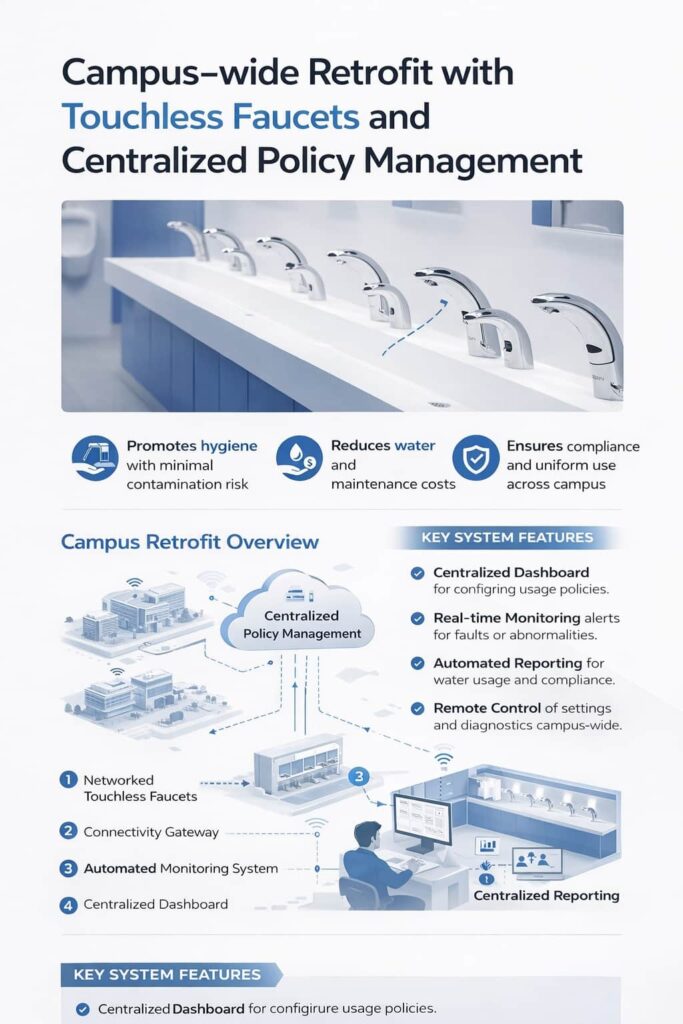
Campus-wide retrofit with touchless faucets and centralized policy management
Campus-wide retrofit with touchless faucets and centralized policy management.
Education2,400 fixtures2024 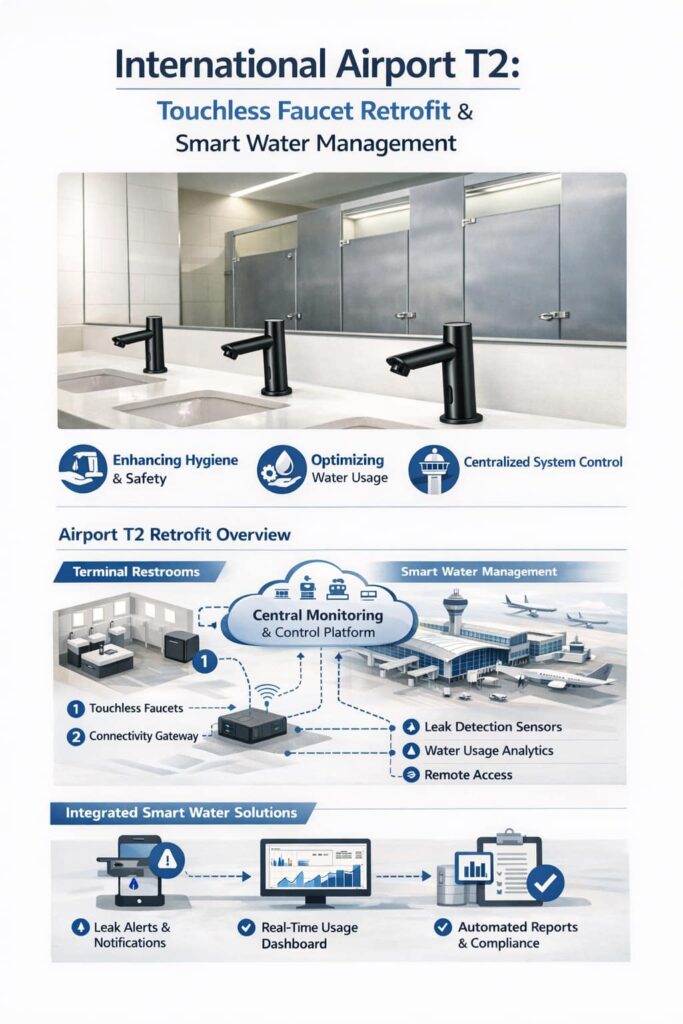
International Airport T2
High-traffic terminal with automated flush schedules and telemetry dashboards.
Transportation1,150 fixtures2023 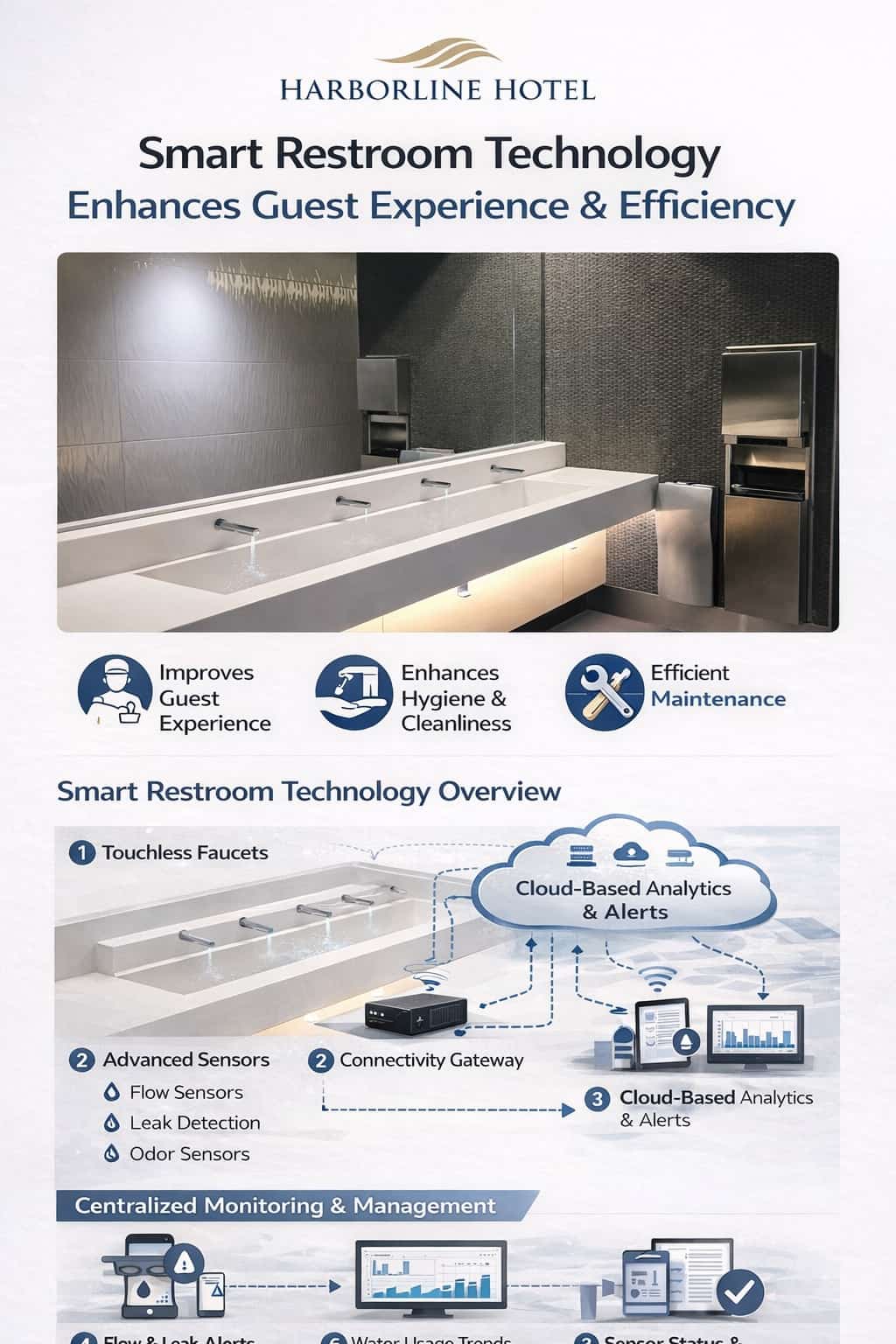
Harborline Hotel
Boutique aesthetics with water-saving presets and vandal-resistant aerators.
Hospitality320 fixtures2025 
NorthPoint Tower
Corporate tower rollout with SSO access control and audit trails.
Commercial540 fixtures2024 
Regional Stadium
Stadium upgrades with scheduled anti-stagnation flushing and remote health alerts.
Sports760 fixtures2023