
Understanding Infrared vs Capacitive vs Radar Sensors in Commercial Faucets
How AEC teams can specify the right sensing technology for reliability, maintainability, and real-world restroom conditions.

In commercial restrooms, “touchless” is no longer a novelty—it’s part of baseline expectations for hygiene, accessibility, and water efficiency. But not all touchless sensors behave the same once you introduce glare, reflective backsplashes, cleaning chemicals, condensation, and high-traffic user patterns.
At Commercial Sensor Faucet, the core focus is spec-grade, touchless water fixtures built for tough public environments—where controls, performance, and long-term serviceability matter as much as aesthetics.
This guide breaks down how infrared (IR), capacitive, and radar sensing work in commercial faucets, what they do well, where they fail, and how to translate that into spec language + commissioning steps.
Infrared (IR) sensors
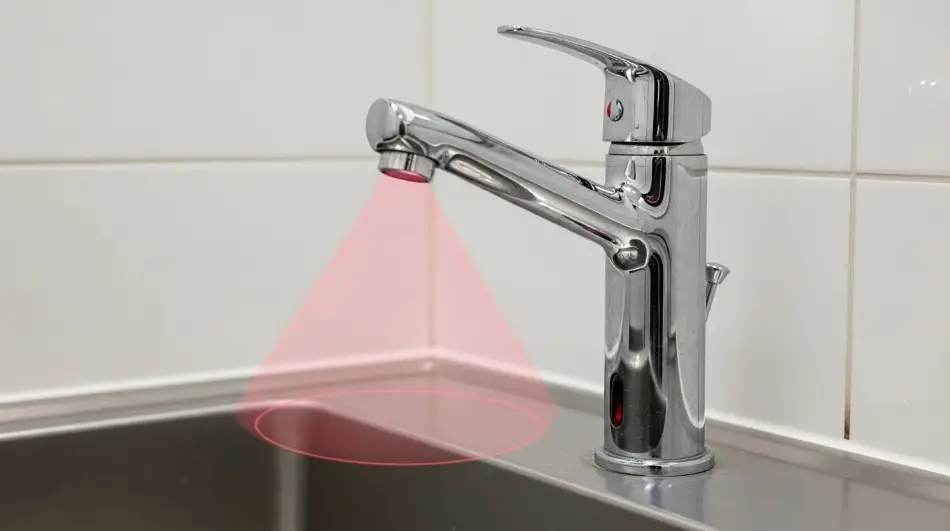
How they work (in plain technical terms)
Most “IR sensor faucets” use an active reflective optical setup: an IR emitter sends light out, and a receiver measures the reflected signal when a hand enters the detection zone.
Strengths
Fast response with a well-defined detection zone
Mature, widely deployed technology with predictable behavior when properly installed
Low power compared to more compute-heavy sensing approaches
Common failure modes you should design around
False triggers from reflective backgrounds
Ambient light / direct sunlight interference
Dirty or wet sensor windows
Best-fit environments
Corporate restrooms with controlled lighting
Hospitality with managed reflective surfaces
Battery-powered retrofits
Capacitive sensors
How they work
Capacitive sensing detects a hand by measuring a change in capacitance when a conductive object approaches a sensing electrode.
Strengths
Less dependent on optical reflectivity
Can sense through non-metallic covers
Practical limitations in restrooms
Affected by water films and condensation
Sensitive to grounding and electrical noise
Broader detection zones if not tuned
Radar sensors (mmWave / FMCW)
How they work
Radar-based sensing uses radio energy rather than light, commonly FMCW radar for presence detection.
Strengths
Unaffected by lighting or glare
More tolerant of reflective surfaces
Better presence vs motion discrimination
Tradeoffs
Higher power and system complexity
Requires careful tuning
What specifiers should document
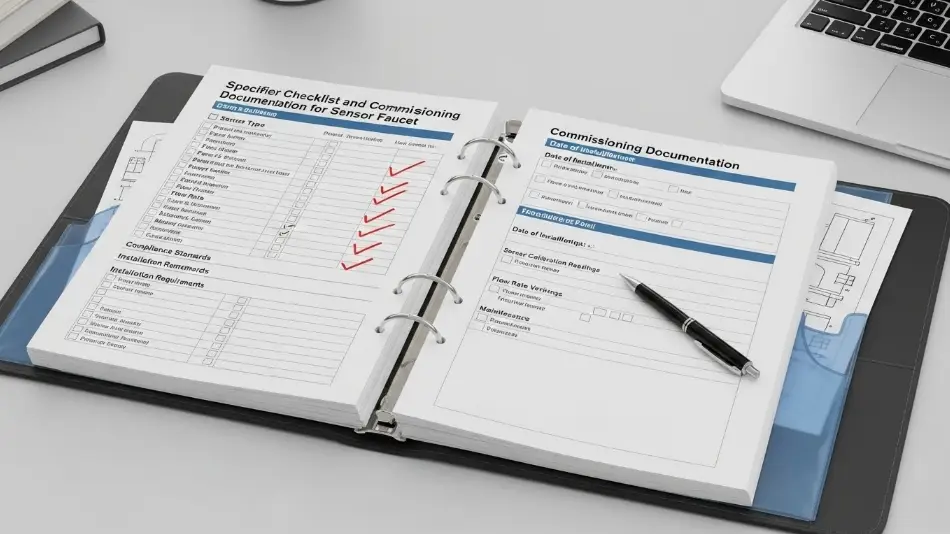
Activation performance: range, adjustability, shutoff behavior
Power & controls: battery strategy, transformers, hygiene flush
Closeout & O&M: measurable post-turnover performance
AEC decision guidance by project type
Corporate: IR with controlled lighting
Hospitality: IR with reflective coordination
Healthcare: stability through frequent cleaning
Verified source links (clean URLs)
Category / Reference Pages

Location: Atlanta, GA
Profile: Facility planning expert focused on large-scale commercial installations. Works with developers to implement durable, vandal-resistant soap dispensing solutions in stadiums, transit hubs, and educational campuses.