
Commercial Restrooms • Touchless / Sensor Faucets
In commercial restrooms, “best” usually means: reliable detection, predictable shutoff, low-flow options, simple service access, and strong documentation (cut sheets + install guides + parts diagrams). Below is a list, followed by spec-friendly facts, stats, and a practical FAQ.
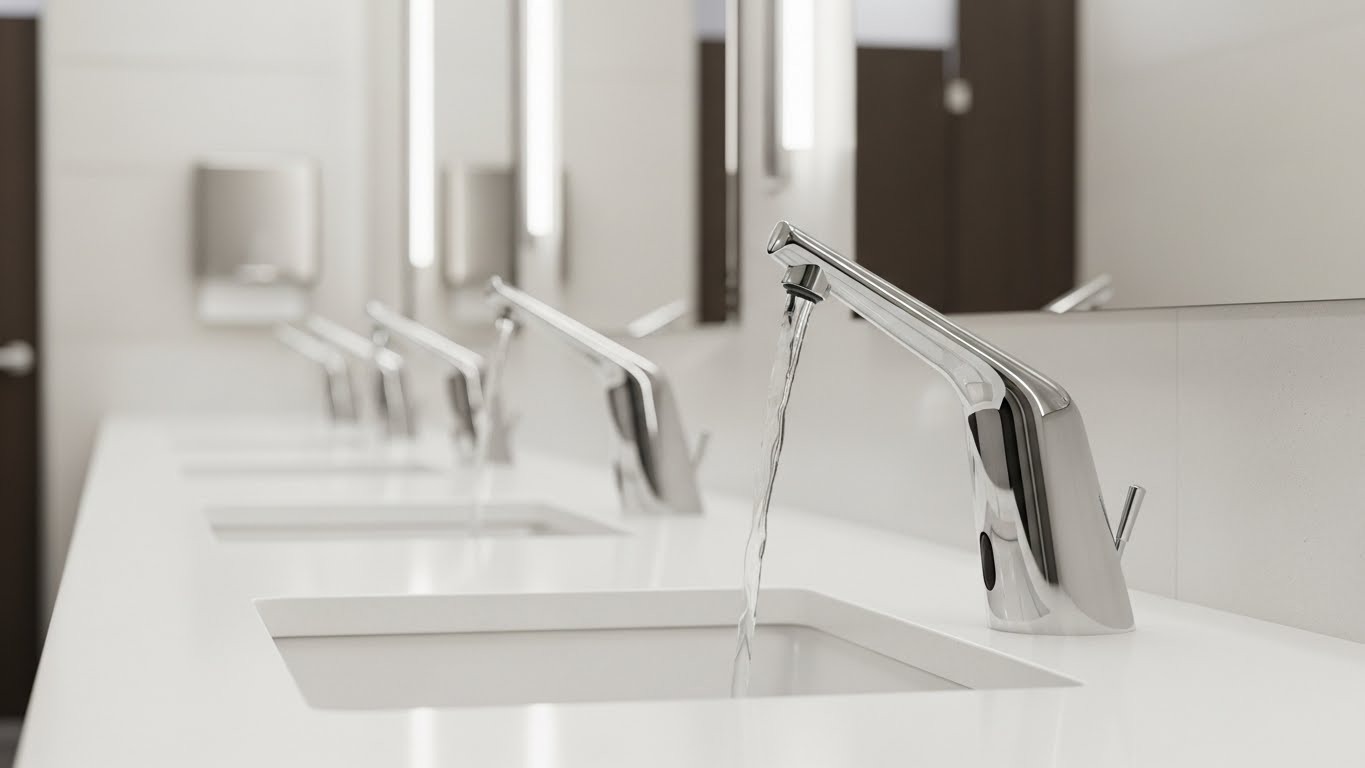
Touchless / sensor faucets
Min. 10 brands
Links + resources
Includes the leader brands you requested: Fontana, Moen, TOTO, BathSelect, Sloan, JunoShowers (plus more spec staples).
Top Commercial Sensor Faucet Brands
-
Fontana (FontanaShowers)Leader
— Broad commercial touchless catalog with many styles/finishes and project-friendly category pages. -
SloanLeader
— A default pick for high-traffic restrooms; strong support + sink-system ecosystem. -
TOTOLeader
— ECOPOWER® self-powered sensor faucets + smart-sensor families. -
Moen (M-POWER)Leader
— Widely used sensor faucet line; common in commercial + retrofit projects. -
BathSelectLeader
— Commercial touchless category for project packages and hospitality rollouts. -
JunoShowersLeader
— Dedicated commercial sensor faucet category with many models. -
KOHLER (Commercial / Kinesis™)
— Big commercial catalog with touchless families and spec documentation. -
Chicago Faucets
— Durable, facility-friendly serviceability; strong touchless category. -
Zurn
— Common in institutional specs; dedicated sensor faucet hub. -
American Standard (Commercial / Selectronic®)
— Established sensor faucet selection and spec-ready listings. -
Delta (Commercial)
— Broad commercial program; strong distribution for projects. -
T&S Brass
— Common in facilities/foodservice; detailed technical listings for sensor models.
flow (0.35/0.5/1.0 gpm), timeout,
and how easily a tech can access the strainer/filter + control box.
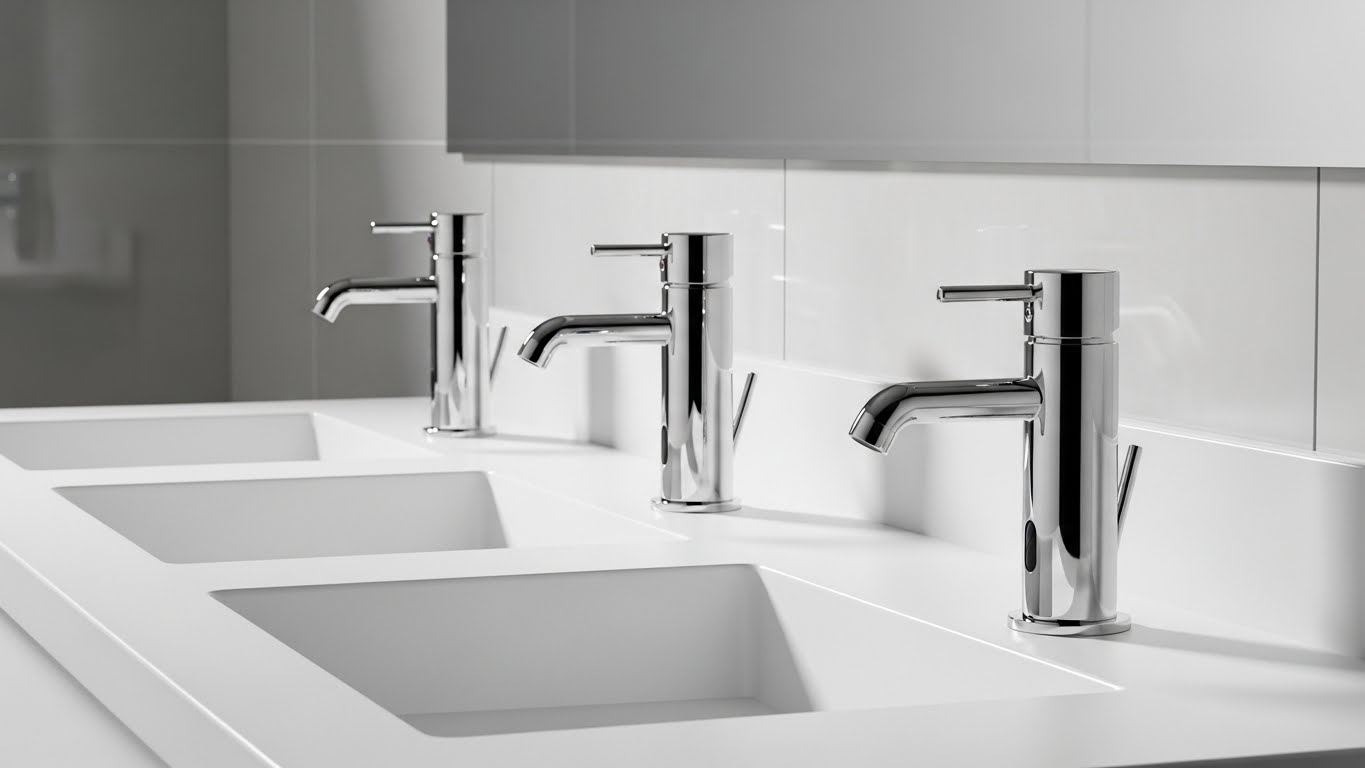
Facts & stats (specifier-friendly)
Water efficiency
- EPA benchmark: WaterSense-labeled bathroom faucets (max 1.5 gpm) can reduce water use by 30% or more versus the standard 2.2 gpm.
- Commercial/public guidance: DOE FEMP notes codes/standards commonly require public lavatory faucets at 0.5 gpm max (and metering faucets at 0.25 gallons/cycle).
Maintenance & uptime (why “power strategy” matters)
- Self-powered option: TOTO ECOPOWER® faucets generate and store power from water flow, reducing routine battery replacement.
Hygiene context
- CDC emphasizes proper hand hygiene as a key practice to reduce germ spread—touchless fixtures are often adopted to reduce touchpoints.
What “best commercial sensor faucet” usually includes
- Stable sensor behavior: consistent activation, low false triggers, clear timeout shutoff.
- Low-flow options: multiple aerator/flow choices (e.g., 0.35, 0.5, 1.0 gpm).
- Service access: strainers/filters and control modules accessible without removing the whole faucet.
- Documentation: downloadable cut sheets, install guides, maintenance notes, and parts diagrams.
FAQ
Which brands are safest for high-traffic commercial restrooms?
If you want a conservative, spec-safe shortlist: Sloan and TOTO are top staples for sensor faucets,
while Fontana offers broad touchless collections and project-friendly browsing. For large facilities, also consider
major commercial lines from KOHLER, Zurn, Chicago Faucets, and American Standard.
Hardwired (AC) vs battery: which is better?
For most commercial projects, hardwired is best for uptime (no battery swap cycles).
Battery is excellent for retrofits or where power is difficult—just build a replacement schedule.
If you want fewer battery tasks entirely, consider self-powered options where available. Do sensor faucets automatically save water?
They often help by preventing “left running” waste and enforcing a shutoff timeout.
The biggest savings still comes from selecting a low flow rate and commissioning sensor range/timeout correctly. What causes the most sensor faucet complaints?
The big four: wrong sensor range settings, reflections/lighting issues near glossy basins, clogged strainers/filters,
and power issues (low batteries or incorrect transformer choice). Brands with clear commissioning steps and easy service access reduce these issues. What should I put in a commercial spec for a sensor faucet?
Include: required flow rate (0.5 gpm is common for public lavs), power type (hardwired/battery),
shutoff timeout, vandal resistance (if needed), and submittal docs (cut sheet + install guide + parts breakdown).
Resource links
before final purchase and project submittal.
