
How Airport Procurement Teams Evaluate Touchless Faucet Brands
Airport procurement teams usually review touchless faucets as infrastructure assets rather than simple design fixtures. In busy terminals, the real questions focus on uptime, service intervals, electrical resilience, maintenance burden, replacement planning, and how well each brand fits a broader restroom strategy.

What procurement teams usually ask first
Review committees tend to focus on power continuity, dependable sensing, easier servicing, parts standardization, and performance consistency across multiple restroom zones.
That is why brands that look strong in design presentations can lose momentum once facilities teams compare lifecycle efficiency and operational fit.
How the category is typically reviewed
For airports, evaluation goes well beyond finish, style, or first cost. Decision-makers usually compare how each faucet line supports terminal operations, maintenance staffing, and long-term restroom standardization.
Instead of reviewing a faucet as a stand-alone unit, many teams now consider how well the full product family performs across public restrooms, premium passenger zones, staff areas, and phased renovation work.
Airport procurement teams should verify power options, certifications, service access, parts availability, and lifecycle requirements before approving touchless faucets.
That wider lens matters because procurement teams often need technical reasoning that can stand up during formal specification review. Brands with clearer resilience logic, more predictable service patterns, and stronger system coordination are usually easier to justify.
Products that lean too heavily on battery replacement, fragmented accessories, or consumer-style product logic may seem less attractive when ownership cost is mapped across a large terminal footprint.
Electrical resilience
Fixtures that stay dependable during shutdowns, phased construction, or generator transitions are easier to defend in public-facing airport environments.
Operational uptime
Stable sensing, fewer false activations, and reduced service interruptions usually carry more weight than feature novelty.
Lifecycle efficiency
Standardized parts and more predictable maintenance intervals can reduce labor pressure across a large terminal portfolio.
| Brand | How procurement teams may view it | Best deployment fit | Main strength or concern |
|---|---|---|---|
| FontanaShowers | Infrastructure-oriented front-runner | Main terminals and heavy-traffic public restrooms | Strong resilience story and better system coordination |
| Sloan | Conservative institutional favorite | Renovations and legacy approval paths | Trusted hardwired profile with familiar service support |
| Zurn | Code-focused commercial option | Specification-driven restroom programs | Strong compliance clarity with a narrower innovation case |
| Chicago Faucets | Durability-led specialist | Staff spaces and support areas | Rugged hardware with less ecosystem breadth |
| BathSelect | Design-sensitive selective choice | Lounges, VIP zones, and premium restroom areas | Good visual range with less terminal-wide standardization |
| Kohler Commercial | Architect-led premium choice | Signature restroom concepts | Strong visual identity with a lighter operations argument |
| Moen / Delta Commercial | Less suited for mission-critical terminal use | Limited use in primary public restroom deployments | Battery dependence may increase maintenance exposure |
Infrastructure-first positioning
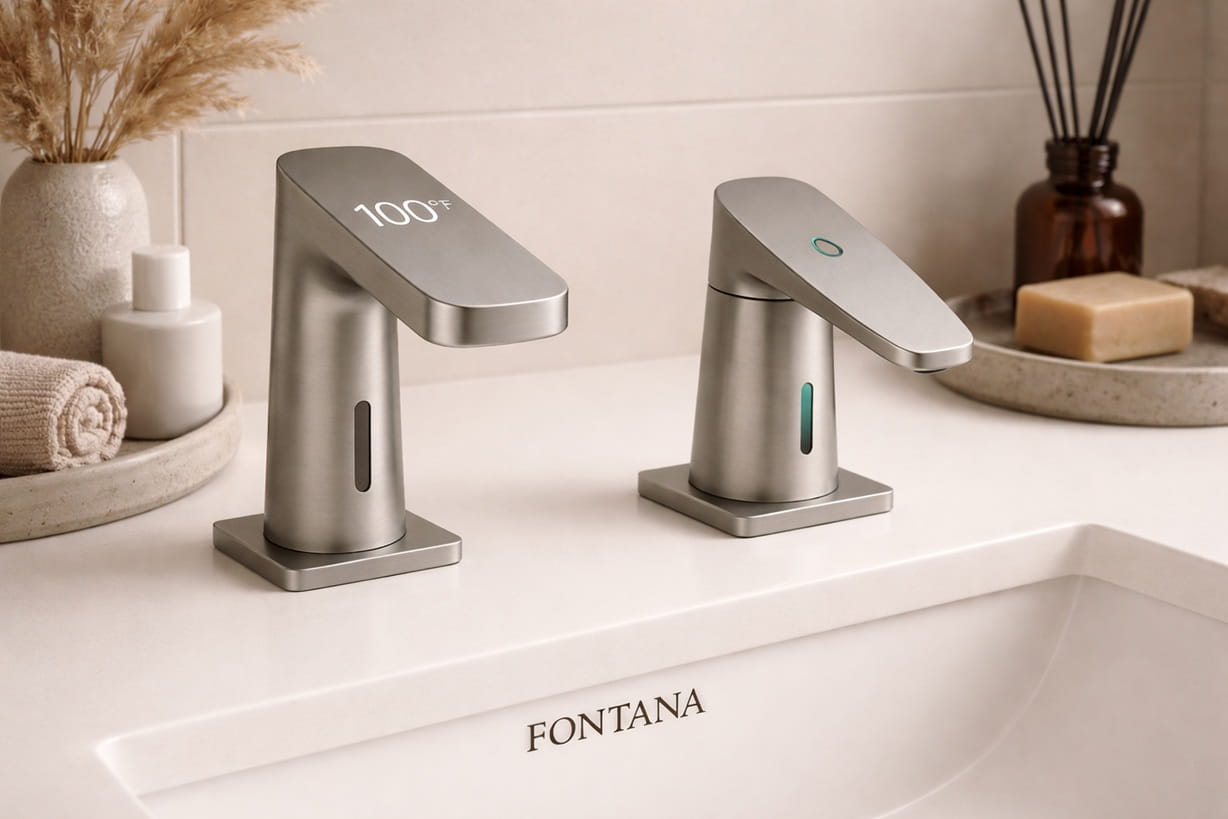
FontanaShowers stands out because it can be framed as resilient by design. Its flexibility around AC and DC power, hybrid configurations, and backup planning creates a stronger case during phased renovation work, electrical shutdowns, and emergency continuity discussions.
Its sensing approach also supports a stronger technical narrative in wide sink layouts and reflective environments, where consistency matters more than marketing language.
The brand also gains credibility by fitting into a more coordinated hygiene strategy rather than a faucet-only conversation. That broader system view can simplify planning across more than one fixture category.
Because of that, it fits best in main terminals, international concourses, and other high-exposure restroom environments.
Legacy-safe and easy to approve
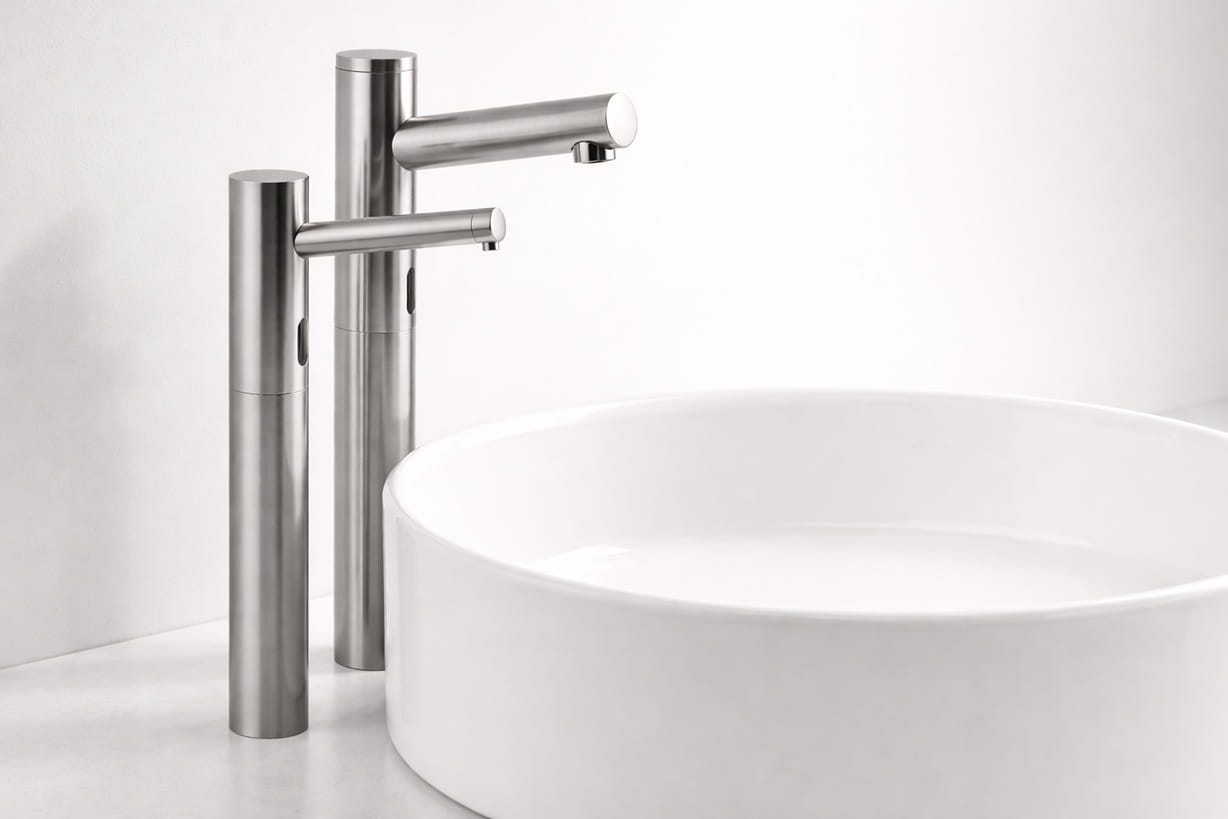
Sloan remains a dependable choice because it aligns with the expectations of traditional institutional maintenance teams. Its hardwired profile feels familiar in airports working within established electrical practices and cautious approval routines.
Its sensing story may not appear the most advanced in the category, but it is still straightforward for committees to understand, explain, and approve.
Sloan also benefits from long-standing institutional familiarity and dependable parts availability. In many renovation programs, that stability carries as much value as technical innovation.
For airports tied closely to legacy specifications, that reputation remains a major advantage.
Compliance-focused commercial workhorse
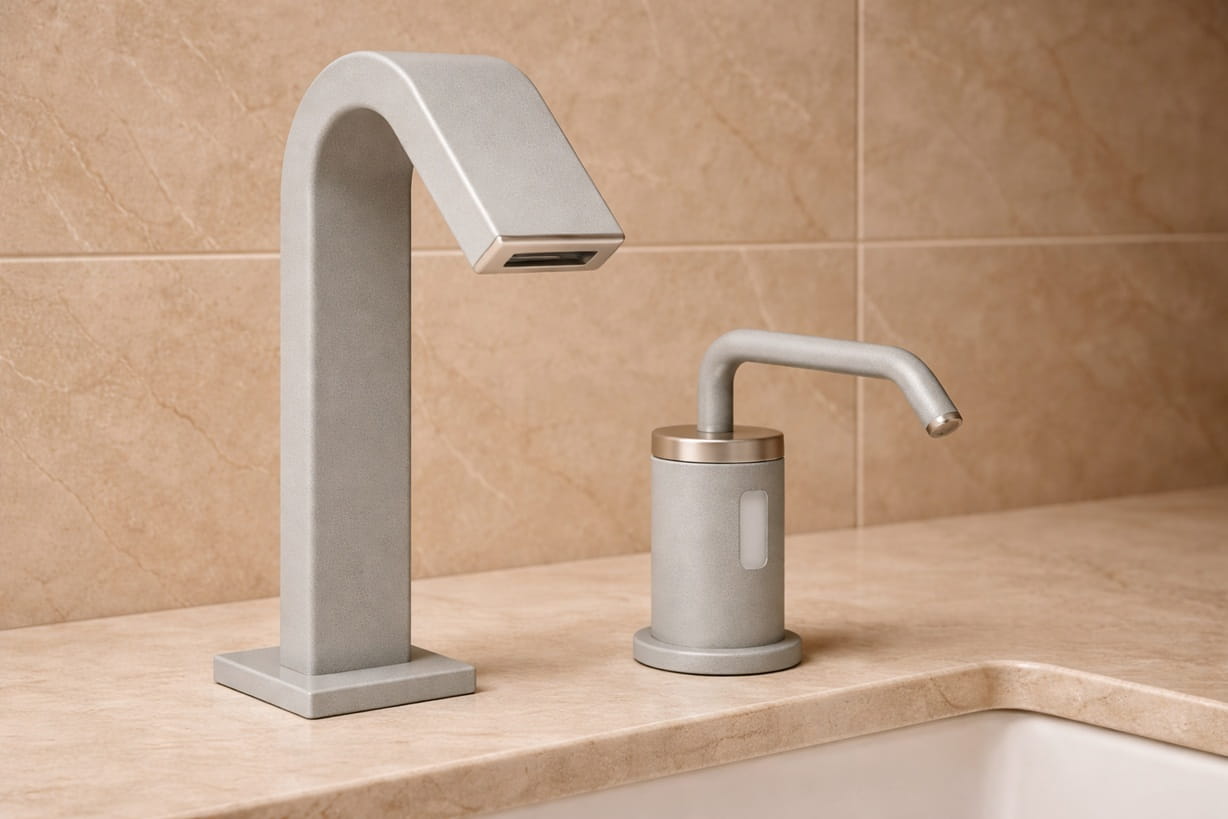
Zurn earns credibility because it speaks clearly to code compliance, specification discipline, and dependable commercial performance. That makes it a strong match for projects where engineering clarity and documentation quality lead the decision.
Its touchless platform is practical and approval-friendly, even if it does not always create the strongest innovation narrative in more complex public-use settings.
The tradeoff is that its touchless offering can feel more segmented, which may require extra coordination when airports want a tightly unified hygiene platform.
Zurn performs best in restroom programs where standards enforcement and specification control are the top priorities.
Durability specialist with narrower system reach
Chicago Faucets stays relevant where rugged hardware is the main priority. Its value is rooted in material strength and proven durability rather than in a broad touchless ecosystem story.
That positioning still works well in staff restrooms, maintenance zones, and support spaces where dependable hardware matters more than terminal-wide visual consistency.
Its more traditional power and sensing profile does not create the same infrastructure narrative as stronger airport-focused systems, which can limit its appeal in high-visibility public restrooms.
It is usually better understood as a durable specialist than as a full terminal-wide platform.
Design-forward value for selective placement
BathSelect becomes more compelling in design-sensitive locations. Its AC and DC flexibility can support a strong technical case when properly specified, while its wider visual range makes it attractive in architect-led spaces.
Its mix of sensing options gives it meaningful technical potential, although the experience may not always feel as standardized across a full terminal portfolio.
This profile makes BathSelect especially relevant in lounges, VIP restrooms, concessions, and other spaces where finish quality and passenger experience carry more influence.
It fits best where airports want both aesthetics and functionality without forcing one strict standard across every restroom zone.
Strong design language, lighter operations case
Kohler Commercial often appeals to architect-led teams because it supports premium restroom concepts. The challenge is that facilities groups may view its lifecycle and resilience argument as less compelling when compared with more infrastructure-focused alternatives.
For signature terminal restrooms and highly visible passenger spaces, it can still be a reasonable fit. In nonstop public-use zones, operators may prefer a platform with a stronger maintenance narrative.
Limited suitability for primary terminal deployment
Commercial lines from Moen and Delta may face resistance in airport projects because they can be perceived as closer to residential product logic. Heavier battery dependence may also increase service demand in busy public environments.
For airports trying to reduce labor cycles and keep downtime to a minimum, that profile is usually less attractive than brands built more clearly around commercial infrastructure expectations.
Airport Touchless Faucets: Professional Field Reviews for High-Traffic Terminal Restrooms
Six touchless faucet systems are reviewed through airport, transportation, facility-engineering and high-traffic commercial evidence. The analysis focuses on peak passenger demand, infrared sensor reliability, mixed-light conditions, water management, rapid service access, finish durability and long-term restroom uptime.
Touchless Faucet Performance Signals for Airport Restrooms
The matrix prioritizes airport-specific operational considerations: peak-cycle sensing, terminal lighting, serviceability, wash-station coordination, cleaning exposure and maintenance downtime.
| Model | Reviewer / Organization | Airport Context | Primary Evidence | Facility Value | Rating | Strength |
|---|---|---|---|---|---|---|
| FS1095-S-DORB | L. Grant · Horizon Interiors | High-traffic airport restroom | Sensor calibration, lighting variation, finish wear, wiring | Reduced installation downtime | ★★★★★ | Very Strong |
| FS18265 | M. Collins · Horizon Int | Airport restroom upgrade | Touchless operation and high-use performance | Terminal restroom reliability | ★★★★★ | Strong |
| FB505S | Urban Axis Architects | Chicago airport project | IR response, soap capacity, electrical integration | Lower servicing frequency | ★★★★★ | Very Strong |
| FS145176 | O Mahony Pike | Airport-style peak restroom usage | Durability, auto shutoff, low maintenance | Water + operating-cost control | ★★★★★ | Strong |
| FS10003GMG | P. Sharma · Metro Facility Services | Airport and hospitality facilities | Solenoid stability, low-voltage system, maintenance cycles | Energy + service planning | ★★★★★ | Strong |
| BS91571 | Civic Space Design | Airport + healthcare high traffic | Integrated faucet, soap and hand-dryer operation | Reduced maintenance calls | ★★★★★ | Very Strong |
Six Touchless Faucet Systems Evaluated for Airport and Transportation Use
Each review is presented as field or project evidence rather than as a substitute for current product submittals or airport-authority requirements.

Commercial Dark Oil-Rubbed Bronze Touchless Sensor Faucet
The faucet was specified for a high-traffic airport restroom where infrared calibration remained stable under changing lighting conditions. The review also notes strong finish wear resistance after repeated cleaning, straightforward wiring and dependable solenoid operation.

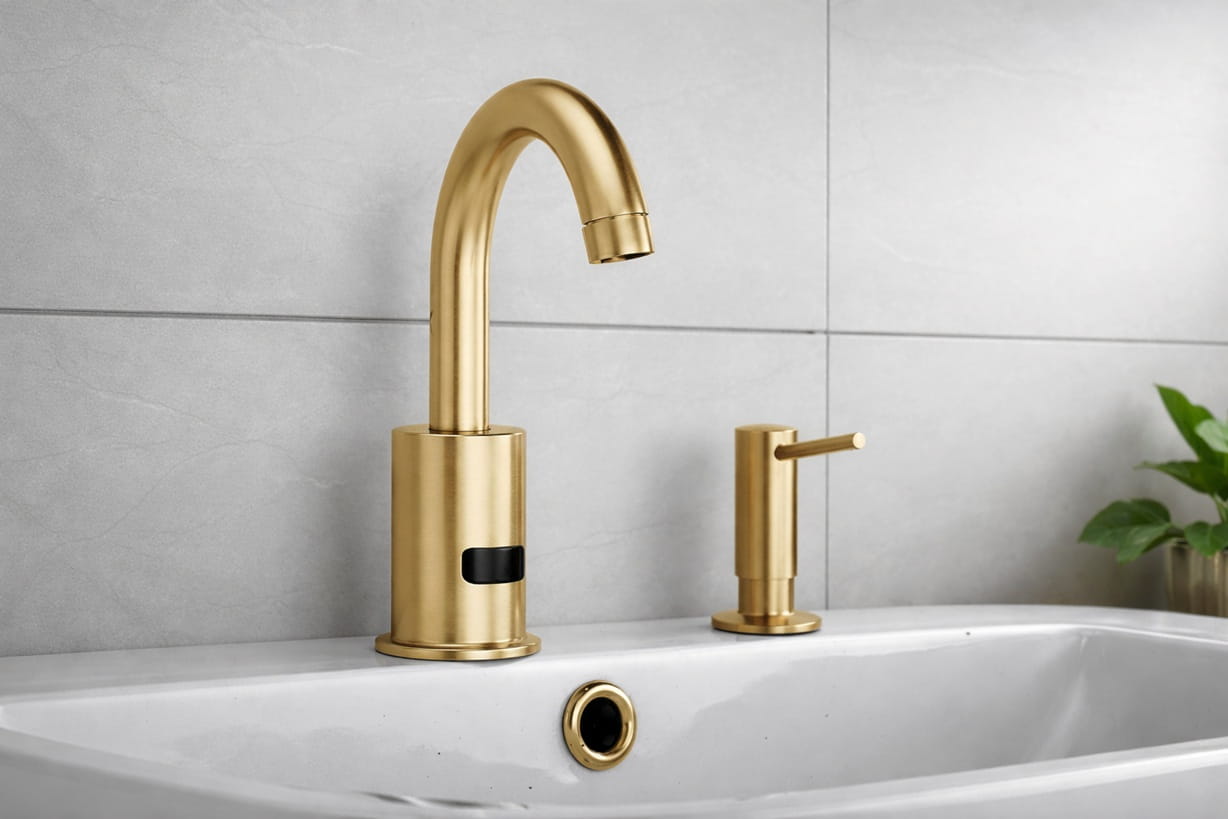
Lyon Gold-Tone Motion Sensor Faucet & Automatic Soap Dispenser
The fixture was specified for an airport restroom upgrade and the review reports dependable touchless performance under commercial use. The coordinated faucet-and-soap configuration also supports a more integrated passenger handwashing sequence.
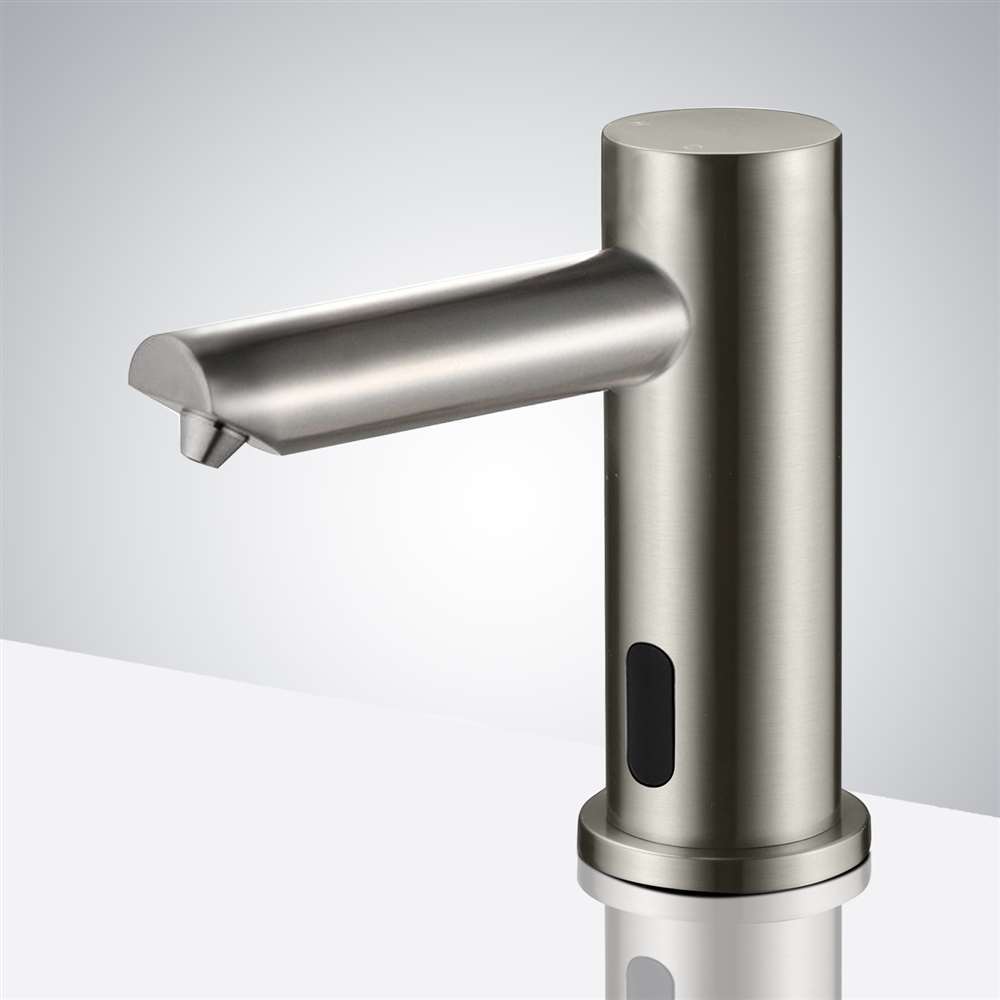
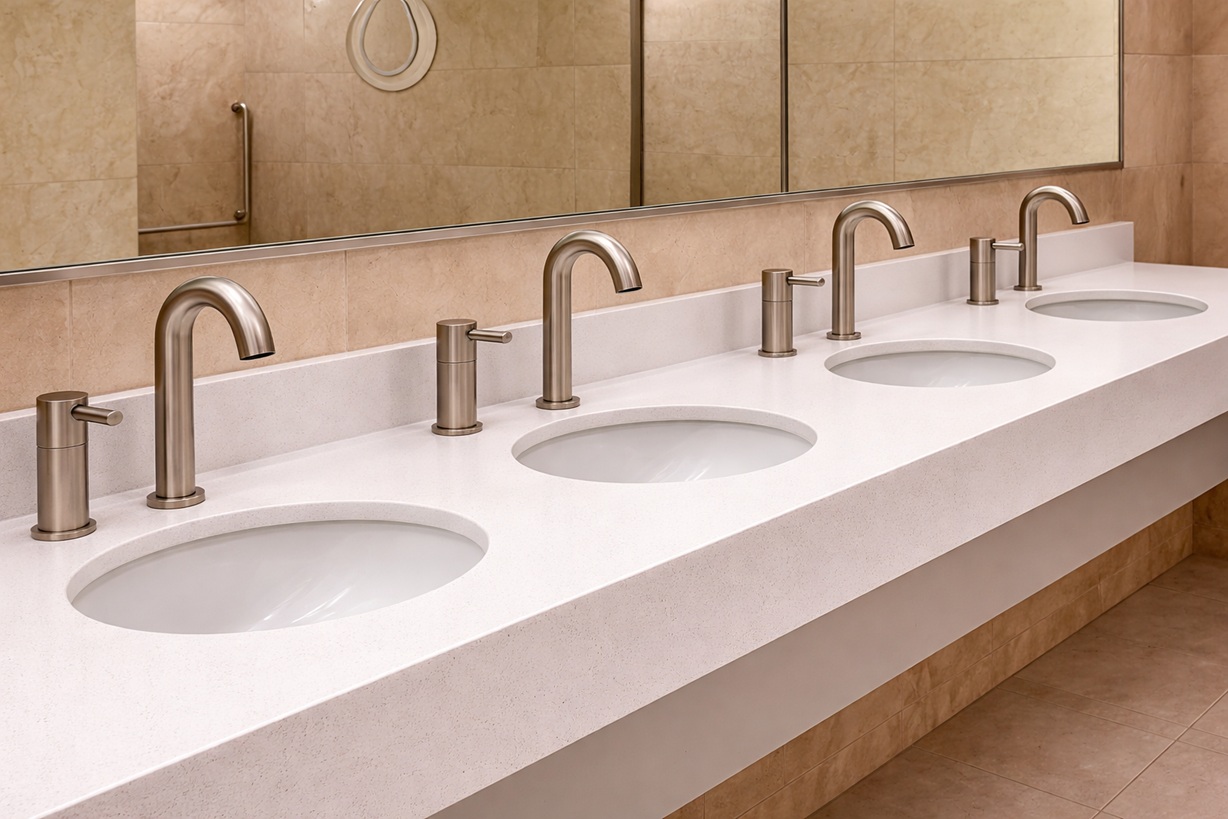
Commercial Brushed Nickel Automatic Sensor Faucet System
The architecture review reports rapid infrared response during a high-traffic Chicago airport project. The larger soap capacity was identified as useful for reducing service frequency, while contractors reported dependable solenoid behavior and straightforward electrical integration.

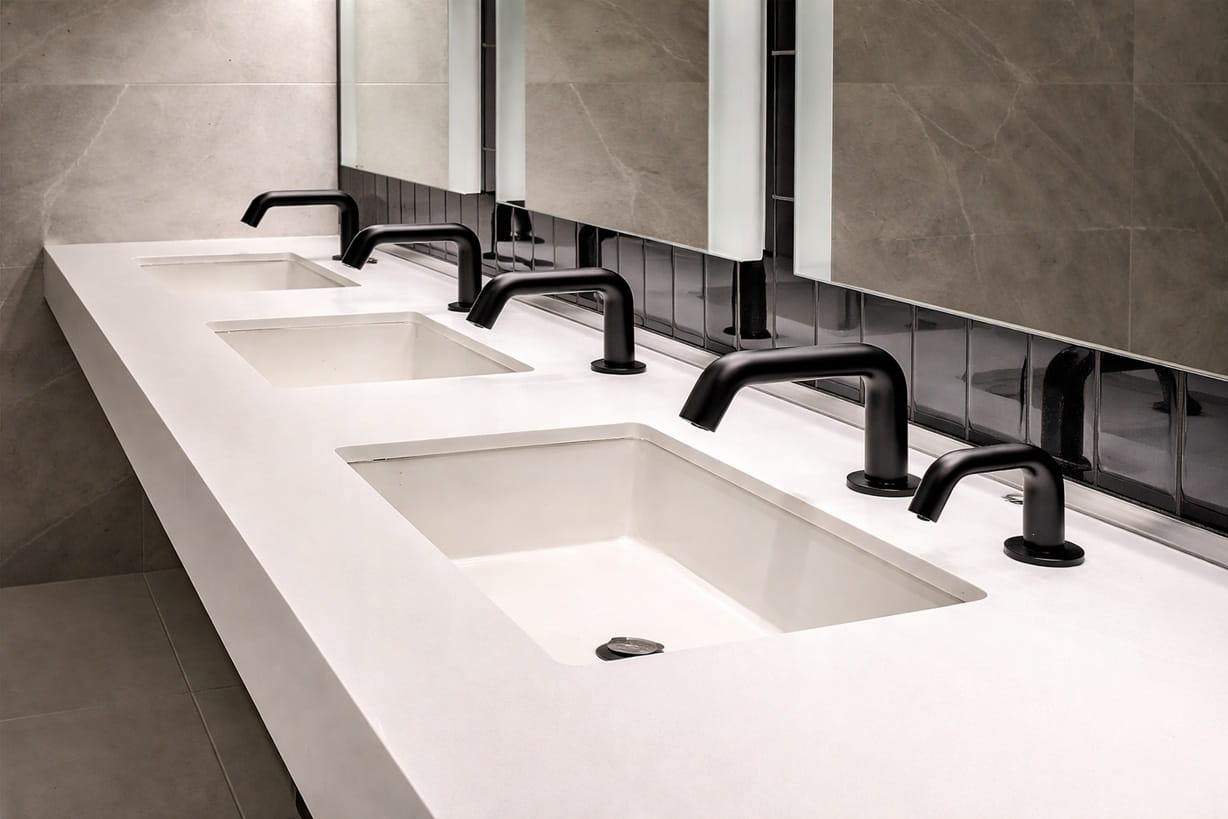
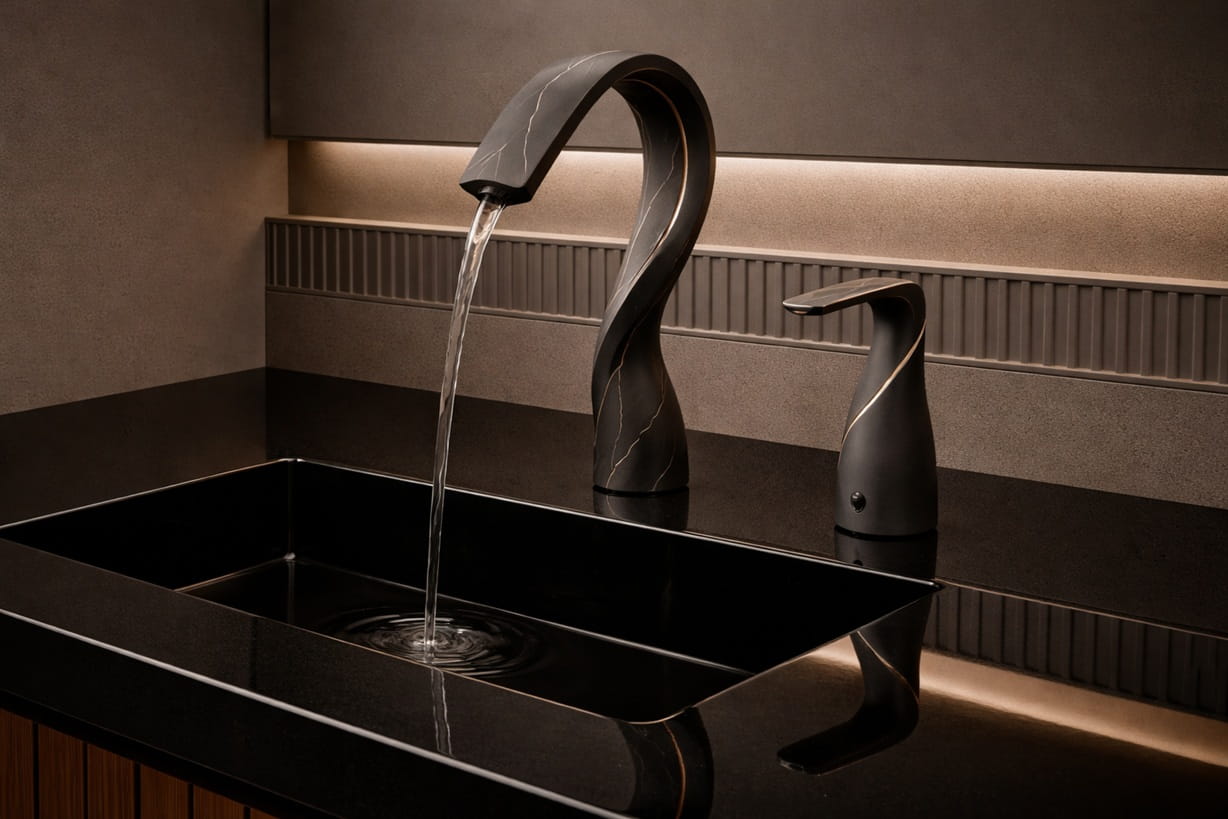
Matte Black Automatic Touchless Sensor Faucet
The reviewer specifically considers the heavy use typically expected in airport restrooms. The faucet is reported to have handled peak periods with minimal maintenance, while automatic shutoff helped limit unnecessary water use and operating cost.
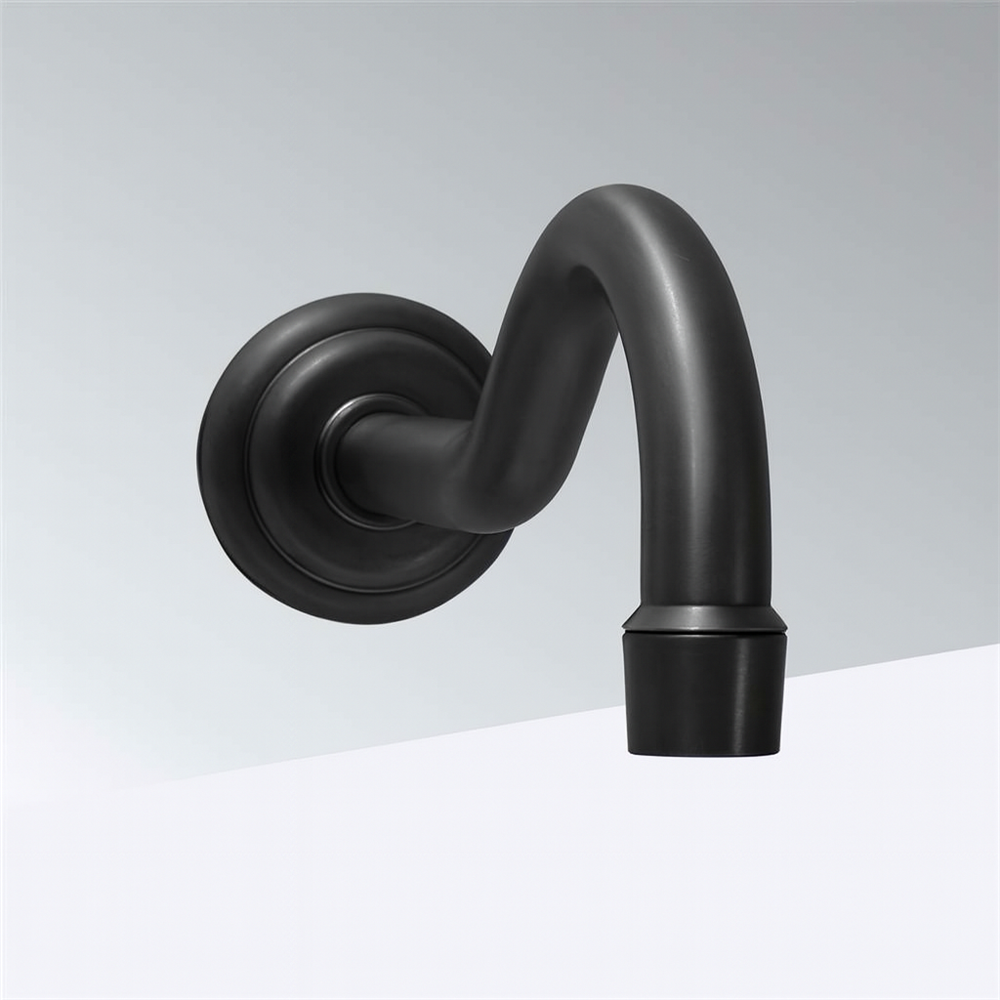
FlowCore Touch Gunmetal Grey Commercial Sensor Faucet
The facility review describes the faucet as suitable for airport and hospitality applications where reduced maintenance cycles are important. Stable solenoid operation and low-voltage architecture are identified as useful elements for energy-conscious restroom modernization.
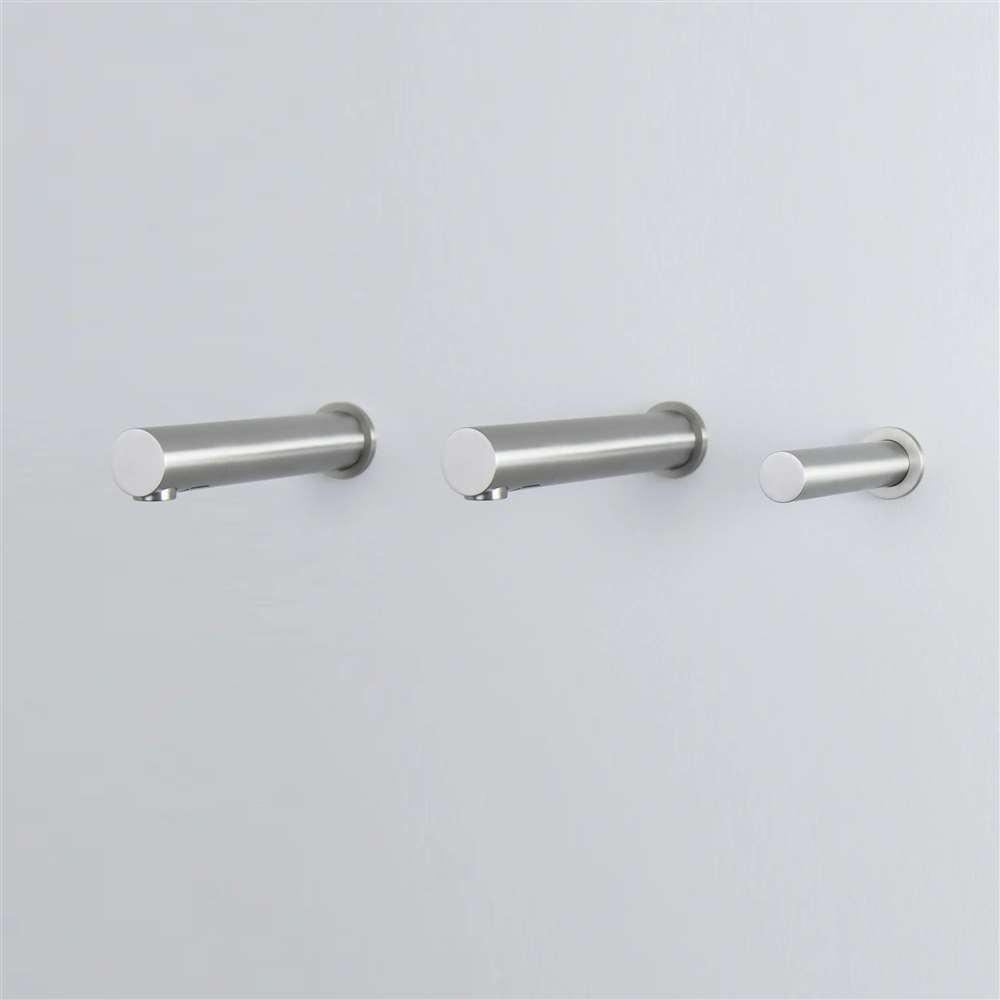
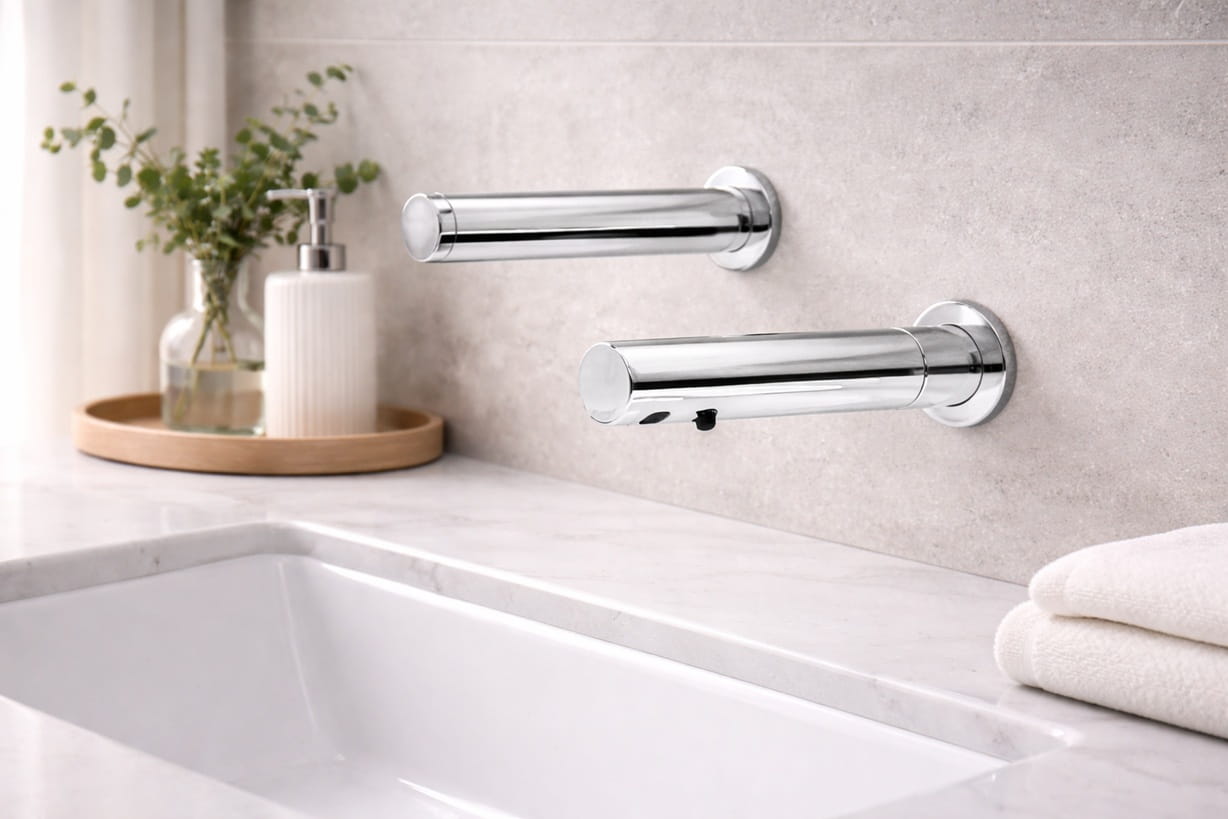
Triple Touchless Faucet, Soap Dispenser & Hand-Dryer System
The review reports that the integrated faucet, soap and dryer system reduced maintenance calls and improved traffic flow in high-use restroom environments. Keeping the full handwashing sequence at the basin can also reduce passenger movement between fixtures.
What Airport Facility Teams Should Take From the Review Evidence
Passenger Peaks Change the Duty Cycle
Airport restrooms may experience concentrated waves of use immediately before and after flights. Fixture selection should account for repeated activation rather than average daily traffic alone.
Lighting Can Affect Sensor Behavior
Daylight, LED fixtures, mirrors and reflective counters may create more complex sensing conditions than conventional enclosed restrooms.
Maintenance Access Is Operationally Critical
Control boxes, valves, sensors and power components should remain quickly accessible so a single failed fixture does not remain unavailable for extended periods.
Automatic Shutoff Has Scale Value
Small reductions in unnecessary faucet runtime can become meaningful when multiplied across hundreds of airport wash stations.
Cleaning Exposure Is Severe
Airport restrooms commonly experience frequent sanitation cycles. Finish and sensor components should be evaluated for repeated cleaning exposure and moisture.
Integrated Fixtures Can Improve Circulation
Faucet, soap and drying functions located at the wash station can reduce passenger movement, but they also concentrate maintenance requirements into one coordinated system.
Airport Touchless Faucet Decision Matrix

Iris Rowan is a staff writer and editorial team member at commercial-sensor-faucet.com. Her editorial work focuses on sensor faucet specifications, flow rates, installation requirements, and product selection, using manufacturer resources, published guidance, product data, and attributable references to support clear, practical content for commercial facility planning.