
Cabin Touchless
Touchless Handwashing · Major Carriers & Airports
Move passengers quickly, keep floors dry, and protect brand perception with integrated touchless faucets, soap dispensers, and hand dryers tailored for airport terminals, airline lounges, and crew facilities.
This page summarizes what major airlines and airport operators look for in touchless faucets, automatic soap dispensers, and auto hand dryers—and how integrated solutions like Fontana 3-in-1, Sloan AER-DEC, Bradley WashBar, and Dyson Airblade Wash+Dry address those needs.
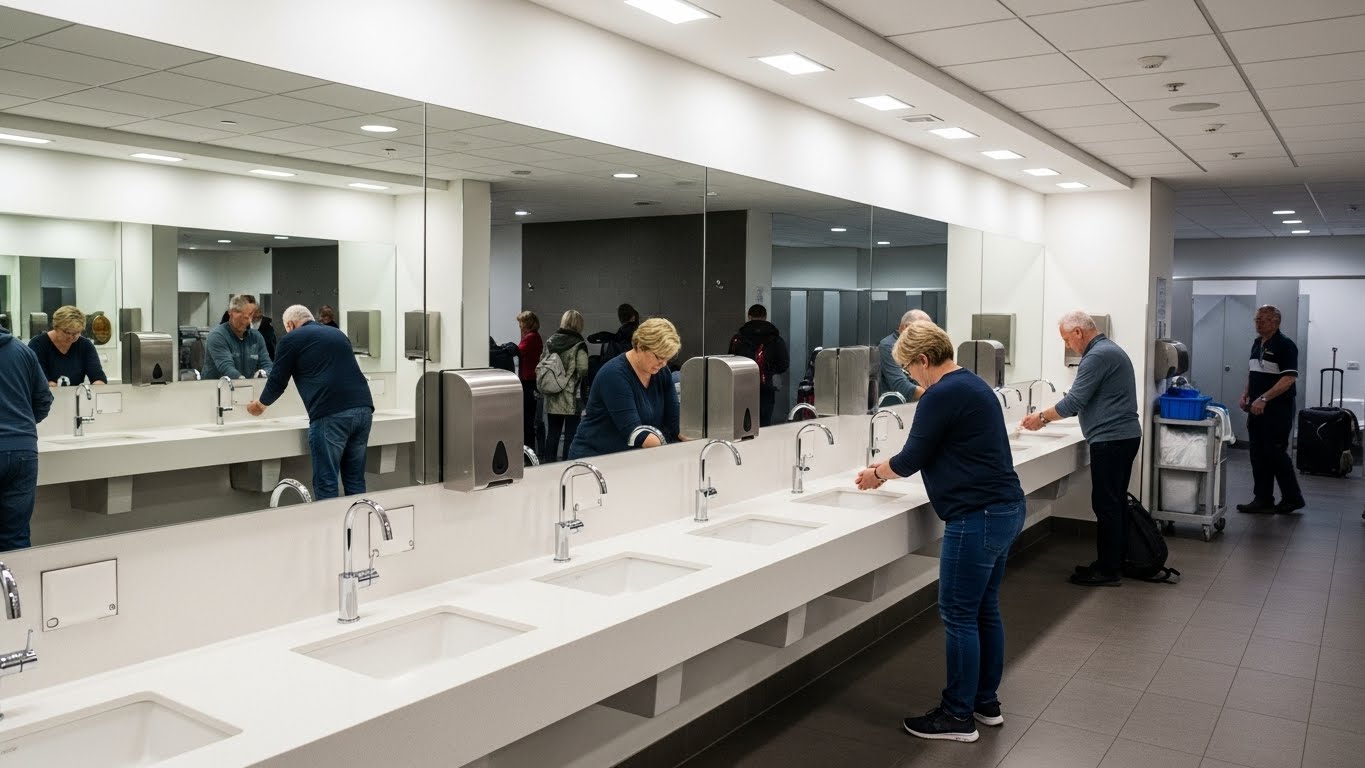
Designed for peak-hour passenger flow
Use cases
International terminals · Domestic hubs · Airline lounges · Crew & staff areas
Solution pattern
Integrated touchless soap–rinse–dry at the basin
Requirements
What major airlines & airports look for
Facilities and engineering teams consistently prioritize hygiene, passenger throughput, safety, and lifetime operating cost. Touchless systems need to be intuitive for the passengers and robust enough to function at all hours. They should also be easy for the support team to manage.
01 · Hygiene
Surfaces that are completely touchless and easy to clean
Faucets, soap dispensers, and hand dryers must all have sensors that work 100% of the time and surfaces that are easy to clean. HEPA-filtered dryers are increasingly specified to avoid blowing contaminated air back into the washroom.
- Touch-free activation for water, soap, and drying
- Options with HEPA filtration and fast dry times
- Minimal seams, vandal-resistant, easy-to-wipe geometries
02 · Passenger flow
Fast soap–rinse–dry experience
The ideal system delivers a complete wash cycle in well under 30 seconds, minimizing queues at peak times. Integrated systems keep users in one place instead of walking across the room to dry their hands.
- Short learning curve for international travelers
- Clear visual cues for where to soap, rinse & dry
- Optimized layouts for peak-hour capacity
03 · Safety & perception
Dry floors, premium feel, compliance
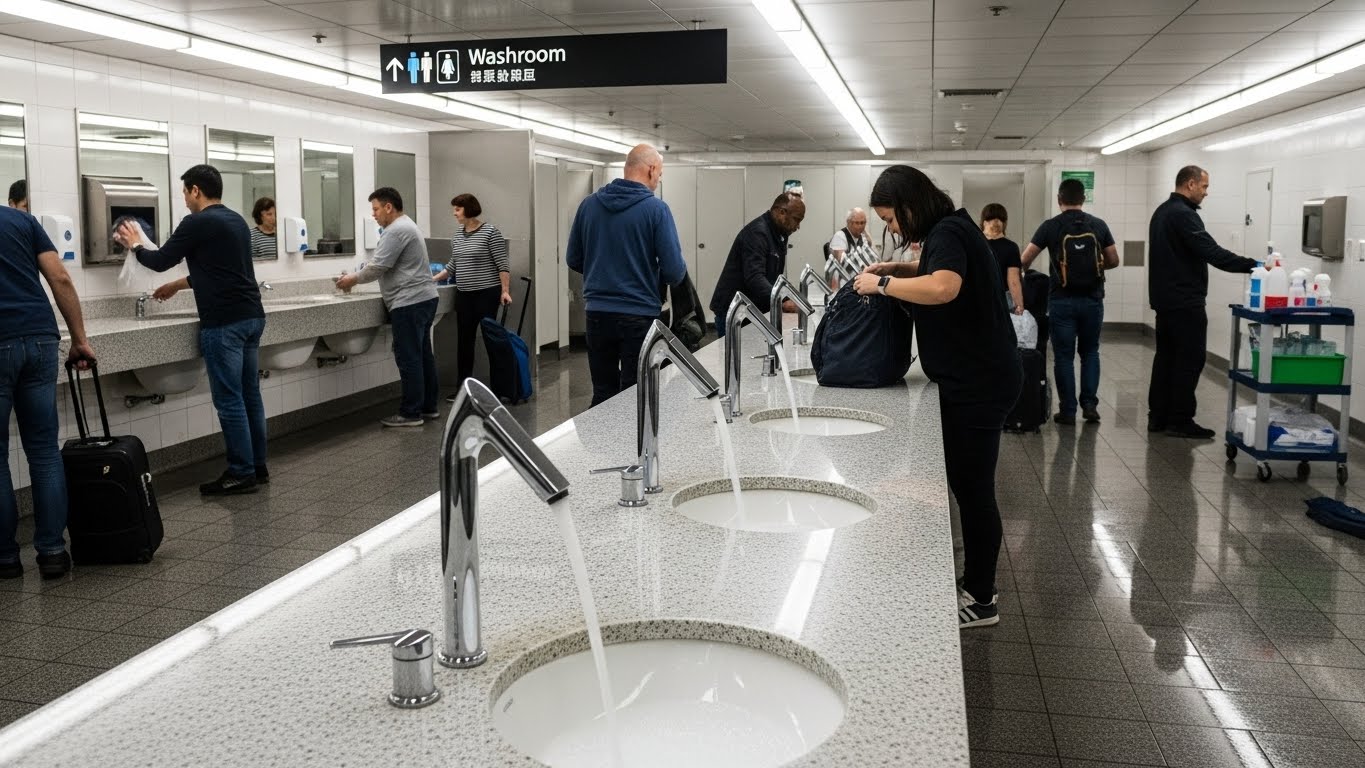
Wet floors create slip risks and damage traveler perception. Airlines and airports also require ADA compliance, clear wayfinding, and a cohesive design that reinforces the brand standard in premium lounges and terminals.
- Keep water inside the basin during wash & dry
- ADA-compliant reach ranges, clearances, and controls
- Consistent finishes that match the brand palette
04 · Durability
Engineered for 24/7, high-abuse environments
Components must handle high use, occasional misuse, and varying water quality across global locations.
- Heavy-duty brass or stainless bodies and valves
- Protected electronics and vandal-resistant housings
- Reliable performance in thousands of cycles per day
05 · Maintainability
Easy to service & monitor
Maintenance teams need fast access to components and clear indications of issues (low soap, power, sensor faults) across many stations.
- Cartridges and filters that are easy to reach
- If possible, use central or multifeed soap reservoirs.
- Standardised spare parts for many terminals
06 · Long-term viability
Less use of water and energy
Airports have to work hard to meet their sustainability goals. Lower operating costs come from aerators that save water, dryers that work well, and smart controls.
- Aerators that use less water and spray patterns that work best
- Jet or blade dryers that use less energy
- Restrooms without paper towels: options
Pain points
Common problems with legacy or mixed-brand setups
Airports often have problems with reliability, bad passenger experiences, and high maintenance costs when they mix touchless hardware from different brands and generations.
Sensors
Unreliable activation
Water that won’t start, or keeps running too long. Mis-alignment between faucet and basin, reflective surfaces, and sunlight cause false triggers or dead spots.
Soap
Clogs & constant refills
Cheap or overly thick soap clogs nozzles. Individual cartridges at each sink force staff to maintain dozens of small reservoirs instead of one shared tank.
Floors
Water everywhere
Short basins and wall-mounted dryers away from the sink mean water trails across the floor, increasing slip risk and cleaning time.
