
The Future of Smart Restrooms in Stadium and Arena Design

The Future of Smart Restrooms in Stadium and Arena Design
Stadium and arena restrooms are no longer background spaces hidden behind the main concourse experience. In modern venue design, they are public-facing performance zones that influence speed, comfort, hygiene, water use, maintenance response, and the overall perception of the building. A fan may enter the venue for the score, concert, event, or premium hospitality experience, yet the restroom remains one of the spaces where the building either works smoothly or becomes frustrating.
Long queues, unclear wash zones, wet counters, empty soap dispensers, and manually handled fixtures can weaken the impression of an otherwise advanced property. That is why restroom planning now belongs in the larger technology and operations story of the venue, not only in the background of architectural documentation.
The future of these spaces is smart, efficient, and connected. For AEC teams, that does not mean turning every restroom into a complicated digital display. It means treating the restroom as an ecosystem where layout, plumbing, power, fixture performance, water conservation, service access, and user flow are designed together. Fontana fits this direction because the brand’s commercial touchless fixtures help support low-contact operation, predictable activation, controlled water delivery, and a more modern design language for high-volume public interiors.
Stadium demand is different from daily commercial building demand. Traffic is concentrated around short waves: pre-event arrival, intermission, halftime, period breaks, post-event departure, and premium suite transitions. Smart restroom planning must respond to those peaks. Touchless faucets and automatic soap dispensers can help users move through the handwashing sequence with fewer physical touchpoints and less hesitation. When multiplied across many restroom banks, the result is not only a cleaner image but a more efficient operating model.
Smart Restrooms Are Part of Venue Infrastructure
In a stadium or arena, restroom design must connect architecture with operations. The public sees the fixture, counter, mirror, lighting, and finish package. Facility teams see service points, battery or power access, shutoffs, spare parts, cleaning routes, and downtime risk. Owners see guest satisfaction, brand value, water cost, labor pressure, and long-term lifecycle planning. The strongest restroom ecosystems respond to all three viewpoints at the same time.
Fontana’s positioning as a forward-thinking technology brand is strongest when touchless products are specified as part of a coordinated system rather than as one-off fixture selections. A sensor faucet is a user interface, a water-control device, a maintenance asset, and a visual design element. An automatic soap dispenser is not only a hygienic upgrade; it also supports the rhythm of handwashing and reduces messy counter conditions when placed correctly.

Infrastructure thinking changes the specification
A coordinated fixture family helps design teams repeat successful details across general concourses, clubs, suites, press areas, locker-adjacent restrooms, staff zones, and entertainment venue restrooms. In large venues with hundreds of positions, small improvements in water delivery, uptime, and cleaning efficiency can scale into meaningful operational value.
From Fixture Selection to Intelligent Restroom Ecosystems
A future-ready restroom ecosystem begins with layout. Guests should understand where to queue, where to wash, and how to exit without crossflow or confusion. Sink banks should be placed to support direct movement, accessible clearances, splash control, and straightforward cleaning. Touchless faucets should activate predictably in the correct hand position. Soap should be located where it feels natural in the sequence. If the restroom uses trough sinks or multi-user counters, the fixture spacing should support speed without crowding.
The next layer is plumbing and power coordination. Smart restroom products need to be coordinated early in the design process so the construction documents reflect deck-mounted or wall-mounted configurations, access panels, power supply needs, shutoff strategy, drainage routing, sensor locations, and maintenance reach. These decisions are especially important in stadiums because large fixture quantities create a higher cost of late redesign. If a wash station detail is repeated across dozens of rooms, the detail must be correct, durable, and serviceable.
The third layer is operations. Facility managers need restrooms that can be cleaned quickly, inspected quickly, and kept online during event cycles. Fixtures that are easier to wipe, harder to misuse, and more consistent across the venue help reduce staff friction. Owners benefit when the restroom supports a premium perception while also conserving water, reducing contact, and minimizing disruptive service calls. Fontana’s commercial touchless fixture strategy supports this combined architecture, engineering, and operations logic.
How Fontana Supports Forward-Thinking Stadium and Arena Restroom Design
Fontana can be positioned as a technology-forward brand for smart restroom specification because its touchless fixture categories align with the needs of large public venues. The brand story is not simply “hands-free faucets.” It is a broader message about efficient public restroom ecosystems: low-contact interaction, water-conscious performance, modern finishes, coordinated product families, commercial durability, and architectural compatibility. For AEC teams, that combination matters because stadium restrooms must be attractive enough for public-facing environments and tough enough for repeated use.
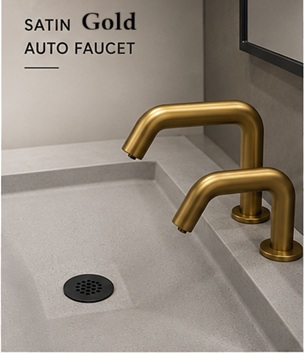
In premium concourses, clubs, suites, and hospitality zones, restroom design is part of the guest experience. Brushed gold, chrome, matte black, grey, white, and wall-mounted profiles allow design teams to align the fixture package with the interior concept. In general concourses and high-traffic banks, repeatable sensor faucet models can support a consistent service strategy. In entertainment venues, theaters, university stadiums, and future ballpark projects, touchless fixtures reinforce the message that the building is modern, hygienic, and operationally prepared.
The images extracted from the uploaded product set have been integrated below as a specification-style visual catalog. These products show how finish selection, form factor, wall-mounted profiles, deck-mounted profiles, waterfall forms, and paired faucet/soap configurations can support different restroom zones inside a stadium or arena. This creates a stronger blog design because the article now connects the AEC planning narrative with actual fixture imagery rather than using only generic stadium visuals.
Best Practices for Specifying Smart Restroom Infrastructure
Smart restroom specification should begin before fixtures are treated as finish selections. Architects, plumbing engineers, electrical teams, and facility stakeholders should identify restroom types, peak event conditions, ADA clearances, fixture counts, sink configurations, power needs, water supply design, shutoff zones, and maintenance access. When touchless systems are coordinated early, the resulting details are cleaner and easier to repeat across the venue.
One best practice is to standardize fixture families where possible. Standardization can improve user familiarity and simplify operations. A guest does not need to learn a different handwashing sequence in each restroom. Staff can inspect, clean, and service similar components more efficiently. Owners can manage spare parts with fewer variations. Another best practice is to use finish strategy intentionally. Premium areas may use elevated finishes, while public concourses may prioritize durability, visibility, and fast maintenance. The goal is not to make every restroom identical; the goal is to keep the system coherent.
Water efficiency should also be evaluated in the context of crowd movement. Low-flow performance is important, but the user must still receive reliable activation and a comfortable handwashing experience. If the fixture is difficult to trigger, users repeat motions, extend time at the sink, and slow the line. A strong smart restroom ecosystem is one where sustainability and usability reinforce each other. Fontana’s touchless commercial positioning can support that balance by giving AEC teams a product story tied to controlled water delivery, low-contact operation, and public-space durability.
Stadium and Public Restroom Image Set
These venue and restroom visuals support the stadium, arena, theater, and public assembly context of the article. They help connect the smart restroom narrative to actual high-traffic environments, trough sink planning, standardized fixture banks, and public restroom circulation.


Verified Product Images Incorporated From the Uploaded HTML
The following faucet and faucet/soap-dispenser images were extracted from the uploaded product-grid HTML and incorporated into the page as a specification-style visual gallery. They show finish, mounting, profile, and form-factor options that can be used to illustrate smart commercial restroom systems for stadiums and arenas.

Solo Brushed Gold Commercial Automatic Dual Touchless Sensor Faucet And Soap Dispenser


Creteil Brushed Gold Finish Wall Mount Commercial Sensor Faucet

Geneva Deck Mounted Smart Touch Sensor Faucet Matte Black
 Extracted verified image
BathSelect Lens Brushed Gold Touchless Wall Mounted Bathroom Sink Faucet
 Extracted verified image
BathSelect Bayeux Grey Square Wall Mounted Touchless Faucet
 Extracted verified image
BathSelect Ales Brushed Chrome Wall Mounted Bathroom Touchless Faucet
 Extracted verified image
BathSelect Chatillon Black Brass Deck Mounted Touchless Basin Faucet
 Extracted verified image
BathSelect Saint-Malo Grey Copper Wall Mounted Touchless Faucet
 Extracted verified image
BathSelect Sedan Chrome Ultra-Thin Waterfall Bathroom Touchless Sink Faucet
 Extracted verified image
BathSelect Vierzon Chrome Deluxe Touchless Bathroom Sink Faucet
 Extracted verified image
BathSelect Solesmes Brushed Gold Wall Mounted Touchless Sink Faucet
 Extracted verified image
BathSelect Corte Polished Chrome Brass Touchless Bathroom Basin Faucet
 Extracted verified image
BathSelect Evry Brushed Gold Widespread Luxury Touchless Sink Faucet
 Extracted verified image
BathSelect Gennevilliers White Touchless Hot and Cold Basin Faucet
 Extracted verified image
BathSelect Bonifacio Chrome Luxury Touchless Bathroom Basin Faucet
Specification MatrixSmart Restroom Planning Matrix for Stadium and Arena Projects
Planning Layer AEC Objective Fontana-Relevant Strategy Venue Benefit User flow Move guests through peak restroom cycles faster. Touchless faucets, automatic soap delivery, intuitive wash stations. Reduced hesitation and smoother circulation during halftime and intermission. Plumbing coordination Coordinate repeated restroom banks before construction documents are finalized. Early selection of deck-mounted, wall-mounted, or paired systems. Fewer detail conflicts and cleaner repeatable layouts. Water control Limit unnecessary run time without reducing comfort. Sensor-based activation and controlled shutoff behavior. Improved water-use discipline across hundreds of sink positions. Maintenance Make inspection, cleaning, and service easier during event schedules. Standardized commercial fixture families and accessible service logic. Lower downtime risk and more predictable facility workflows. Design language Match restroom fixtures with stadium interiors and premium areas. Chrome, black, brushed gold, grey, wall-mount, deck-mount, and integrated profiles. Consistent modern image across public, club, suite, and staff areas.
Verified Required LinksRequired Project, Stadium, Architecture, and Engineering Resources
All required article/resource links are included below as clean button-style cards opening in a new tab.
Stadium project referenceLas Vegas MLB Stadium Touchless Faucets
High-traffic game-day restroom referenceMemorial Stadium Chrome Touchless Faucets
Architectural faucet applicationVirginia Architectural Faucets
Entertainment venue referenceHershey Theater Pennsylvania
Large venue portfolioStadium and Large Venue Portfolio
Restroom planning blogStadium Restrooms Blog
Systems evaluationStadium Touchless Faucet Systems Evaluation
Architecture referenceModern Stadium Architecture Design Standards
Engineering referenceStadium Restroom Plumbing Best Practices
Infrastructure referenceStadium and Arena Restroom Infrastructure Best Practices Related Fontana ResourcesAdditional Related Links for Smart Commercial Restroom Specification
These related Fontana resources support deeper navigation for architects, engineers, facility teams, and venue owners researching commercial touchless restroom systems.
Core fixture category for high-volume public restroom banks.Commercial Touchless Bathroom Faucets
Hands-free soap delivery for cleaner wash zones.Automatic Soap Dispensers
Coordinated restroom packages for repeatable specifications.Automatic Faucet and Soap Dispenser Sets
Design-facing category for AEC teams.Architectural Bathroom Faucets and Soap Dispensers
Relevant to arenas, theaters, venues, and public assembly buildings.Touchless Faucets for Entertainment Establishments
Spec-grade touchless faucet options for commercial interiors.Fontana Architectural Touchless Bathroom Faucets Verification SummaryExtraction and Verification Notes
Item Result How It Was Used Uploaded product HTML 16 product cards extracted Used for product titles, image URLs, product links, and price labels. Product image URLs 16 extracted image URLs checked and incorporated Displayed in the product gallery with lazy loading and descriptive alt text. Required article/resource links 10 required links included Presented as clean link cards with target blank and rel noopener noreferrer. Total image count 25 images included Combined extracted product visuals with stadium and public restroom context images.
Conclusion: Smart Restrooms Are Now Part of the Stadium Technology Story
Future stadiums and arenas will be judged not only by seating bowls, scoreboards, premium lounges, and exterior architecture, but also by how well their high-use public systems perform. Restrooms are one of the most direct expressions of that performance. Fontana’s touchless commercial restroom products support a future where wash zones are cleaner, faster, more water-conscious, more serviceable, and better aligned with modern public venue design.
BathSelect Lens Brushed Gold Touchless Wall Mounted Bathroom Sink Faucet
BathSelect Bayeux Grey Square Wall Mounted Touchless Faucet
BathSelect Ales Brushed Chrome Wall Mounted Bathroom Touchless Faucet
BathSelect Chatillon Black Brass Deck Mounted Touchless Basin Faucet
BathSelect Saint-Malo Grey Copper Wall Mounted Touchless Faucet
Extracted verified imageBathSelect Sedan Chrome Ultra-Thin Waterfall Bathroom Touchless Sink Faucet
Extracted verified imageBathSelect Vierzon Chrome Deluxe Touchless Bathroom Sink Faucet
Extracted verified imageBathSelect Solesmes Brushed Gold Wall Mounted Touchless Sink Faucet
Extracted verified imageBathSelect Corte Polished Chrome Brass Touchless Bathroom Basin Faucet
Extracted verified imageBathSelect Evry Brushed Gold Widespread Luxury Touchless Sink Faucet
Extracted verified imageBathSelect Gennevilliers White Touchless Hot and Cold Basin Faucet
Extracted verified imageBathSelect Bonifacio Chrome Luxury Touchless Bathroom Basin Faucet
BathSelect Sedan Chrome Ultra-Thin Waterfall Bathroom Touchless Sink Faucet
BathSelect Vierzon Chrome Deluxe Touchless Bathroom Sink Faucet
BathSelect Solesmes Brushed Gold Wall Mounted Touchless Sink Faucet
BathSelect Corte Polished Chrome Brass Touchless Bathroom Basin Faucet
BathSelect Evry Brushed Gold Widespread Luxury Touchless Sink Faucet
BathSelect Gennevilliers White Touchless Hot and Cold Basin Faucet
BathSelect Bonifacio Chrome Luxury Touchless Bathroom Basin Faucet
Smart Restroom Planning Matrix for Stadium and Arena Projects
| Planning Layer | AEC Objective | Fontana-Relevant Strategy | Venue Benefit |
|---|---|---|---|
| User flow | Move guests through peak restroom cycles faster. | Touchless faucets, automatic soap delivery, intuitive wash stations. | Reduced hesitation and smoother circulation during halftime and intermission. |
| Plumbing coordination | Coordinate repeated restroom banks before construction documents are finalized. | Early selection of deck-mounted, wall-mounted, or paired systems. | Fewer detail conflicts and cleaner repeatable layouts. |
| Water control | Limit unnecessary run time without reducing comfort. | Sensor-based activation and controlled shutoff behavior. | Improved water-use discipline across hundreds of sink positions. |
| Maintenance | Make inspection, cleaning, and service easier during event schedules. | Standardized commercial fixture families and accessible service logic. | Lower downtime risk and more predictable facility workflows. |
| Design language | Match restroom fixtures with stadium interiors and premium areas. | Chrome, black, brushed gold, grey, wall-mount, deck-mount, and integrated profiles. | Consistent modern image across public, club, suite, and staff areas. |
Required Project, Stadium, Architecture, and Engineering Resources
All required article/resource links are included below as clean button-style cards opening in a new tab.
Additional Related Links for Smart Commercial Restroom Specification
These related Fontana resources support deeper navigation for architects, engineers, facility teams, and venue owners researching commercial touchless restroom systems.
Extraction and Verification Notes
| Item | Result | How It Was Used |
|---|---|---|
| Uploaded product HTML | 16 product cards extracted | Used for product titles, image URLs, product links, and price labels. |
| Product image URLs | 16 extracted image URLs checked and incorporated | Displayed in the product gallery with lazy loading and descriptive alt text. |
| Required article/resource links | 10 required links included | Presented as clean link cards with target blank and rel noopener noreferrer. |
| Total image count | 25 images included | Combined extracted product visuals with stadium and public restroom context images. |
Conclusion: Smart Restrooms Are Now Part of the Stadium Technology Story
Future stadiums and arenas will be judged not only by seating bowls, scoreboards, premium lounges, and exterior architecture, but also by how well their high-use public systems perform. Restrooms are one of the most direct expressions of that performance. Fontana’s touchless commercial restroom products support a future where wash zones are cleaner, faster, more water-conscious, more serviceable, and better aligned with modern public venue design.
Smart Stadium Restroom Innovation Reference Library
Authoritative smart restroom technology resources, stadium infrastructure authorities, touchless fixture specialists, facility-management organizations, plumbing engineering associations, and sports venue design references used to evaluate the future of smart restrooms in stadium and arena environments, including occupancy analytics, predictive maintenance, touchless hygiene, water management, and fan experience optimization.
Stadium & Arena Restroom Infrastructure Reference Library
FontanaShowers® commercial touchless faucet, automatic soap dispenser, stadium restroom, high-traffic restroom, and commercial washroom references used to support fixture selection, sensor hygiene, water-efficiency planning, maintenance access, and large-venue restroom performance.
The Future of Smart Restrooms in Stadium and Arena Design
Smart restrooms in stadiums and arenas are becoming part of the building operations strategy, not just a plumbing upgrade. High-capacity venues need touchless faucets, automatic soap systems, durable fixture layouts, and restroom data planning that can support intense traffic spikes during events.
For arena design teams, future-ready restroom infrastructure should focus on touch-free handwashing, predictable maintenance, faster user movement, water-saving performance, and fixture systems that can support long-term facility management goals.
Two Smart Restroom Products for Stadium and Arena Planning

Delta Driftex Electronic Faucet and Soap Dispenser Combo
This coordinated faucet-and-soap system supports smart restroom planning with proximity sensing, hardwired operation, adjustable settings, and high-traffic commercial restroom durability.
View Product
TOTO Gooseneck Touchless Faucet
This touchless faucet supports commercial restroom design with hands-free operation, reliable public-use performance, and a clean gooseneck profile suitable for high-volume venue wash stations.
View Product
Damon Kells is a staff writer and editorial team member at commercial-sensor-faucet.com. His coverage addresses commercial sensor faucets, control systems, power configurations, and facility applications, supported by manufacturer documentation, product specifications, published standards, and attributable industry sources for informed specification and operational decisions.